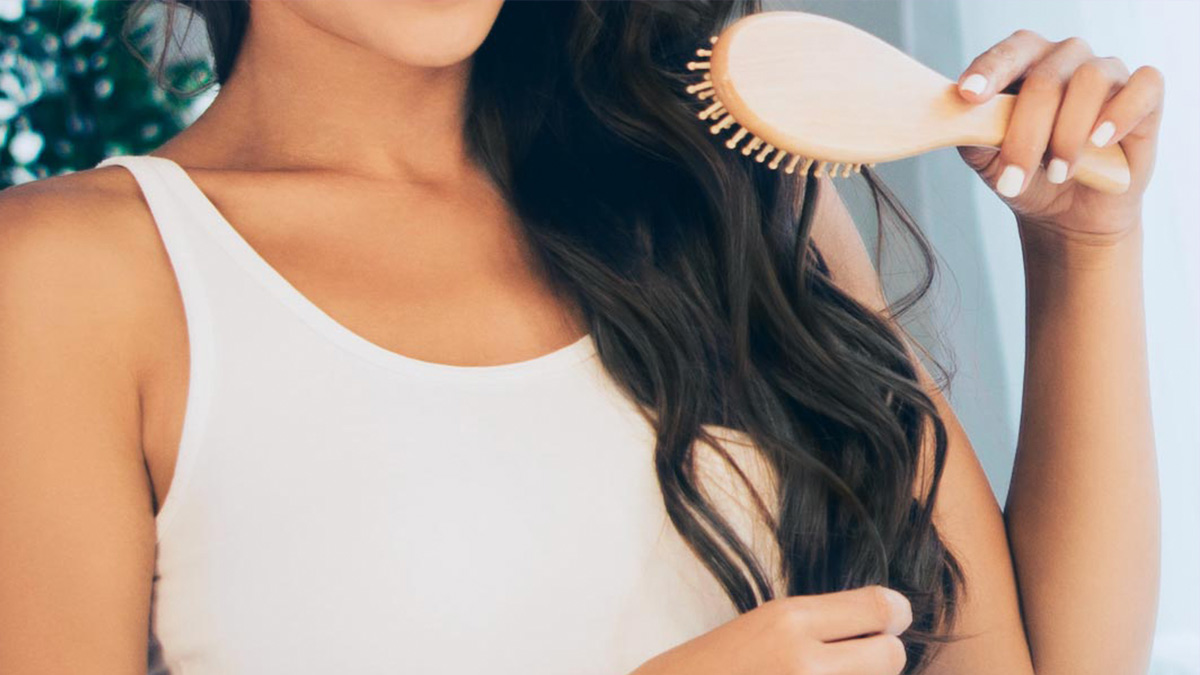
If you've done any extensive research into what's good to put on your curls, you’ve probably already come across the term SLS. Sodium Lauryl Sulfate (better known as SLS), is a cleansing agent found in many soap-based products. Its role is pretty simple—the ingredient breaks down and removes dirt and grease from the hair and scalp, leaving it feeling squeaky clean.
Doesn't sound too scary, right? Wrong. When it comes to our curls, SLS is a no-go. This is because our locks are naturally drier than most other hair types.
The best example of this? Freshly washed curls. Have you ever noticed how your hair tends to look softer, shinier, and less "poofy" the day after you've washed it? I always schedule in my hair-washing at least a day or two before an event—never on the day, because I know I'll have to deal with frizz and fluffiness. This is because my freshly washed hair doesn't have enough natural oil in it—it's too clean, so to speak, and this is exactly what happens when you use sulfates. They strip the hair of every last drop of oil, which leaves it feeling dry as a bone and looking dull and coarse.
Sulfate-free products still clean the hair, but they use milder cleansing agents that help to maintain moisture rather than stripping it out. If there is one piece of advice I could give it would be this: only use products that are sulfate-free.
Doing this made the biggest difference to my hair and now I wouldn't dream of using anything else. Most companies catering to curly hair have picked up on this, so you won't find any sulfates in them, but, if in doubt, always read the label to double-check. (You may also check out these locally available sulfate-free shampoos here.)
Other ingredients to avoid
Now that you've knocked sulfates on the head, it's time for a little lesson on what else you should be steering clear of. Lizzie Carter, founder of Only Curls, explains: "Many conditioners contain silicones (examples include Cetearyl Methicone, Cetyl Dimethicone, Dimethicone, and Stearyl Dimethicone) these feel lovely and smooth, but only sit on the surface. This silicone coating then blocks any moisture entering the hair. Silicones can also build up without the use of a clarifying shampoo and over time this build-up will start to weigh your curls down and cause dryness. It's important to choose a silicone-free conditioner with ingredients that penetrate the hair."
Loretta De Feo, founder of Dizziak, agrees. "It's best to avoid anything containing sulfates, parabens, and silicones. It can be tricky to identify if a product contains these because of the use of industry names on labels. The easiest way to avoid them is to look for products that clearly state 'no sulfates, parabens, or silicones.'"
***
This article originally appeared on Cosmopolitan.com/uk. Minor edits have been made by the Cosmo.ph editors.