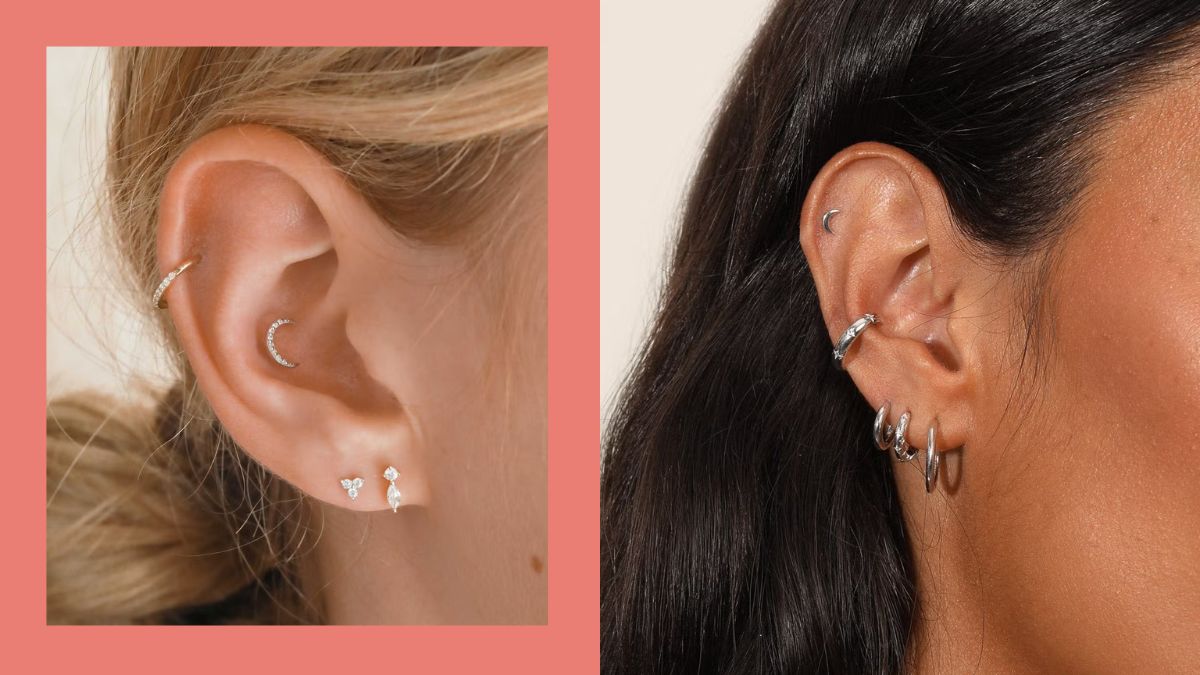
They say piercings, like tattoos, are addictive. That's something I can say for certain is true after my latest ear addition: a conch piercing.
After feeling the pull to add to my growing ear stack—which currently consists of a helix piercing and several lobe piercings—but with no idea on what exactly it was that I wanted to get pierced next (I can be indecisive at times), I spontaneously booked an appointment. I spent hours poring over Pinterest and looking at celebrity earring stacks for inspiration in the run-up to my piercing date, but given that everyone's ear anatomy is different, I wasn't sure which piercings would work for me.
Luckily (read: intentionally), I'd booked my appointment with Svetlana, an expert piercer at Lark & Berry. Having pierced the likes of Joy Crookes, Eleanor Tomlinson, and Fearne Cotton over the years, it's safe to say Svetlana is a pro. Case in point: about five seconds after walking in the door and one look at my ear later, she said, "You should get a conch piercing." So, that's exactly what I did.
You'll most likely have seen conch piercings doing the rounds lately, thanks to their ability to induce serious ear envy plus their major versatility. The options are endless: double, triple, inner, outer, stud, ring, simple, OTT...the world really is your oyster when it comes to these ear adornments.
Which begs the question, what are you waiting for? Scroll on to find out everything you need to know about conch piercings, including Svetlana's expert tips and my firsthand POV.
What is a conch ear piercing?
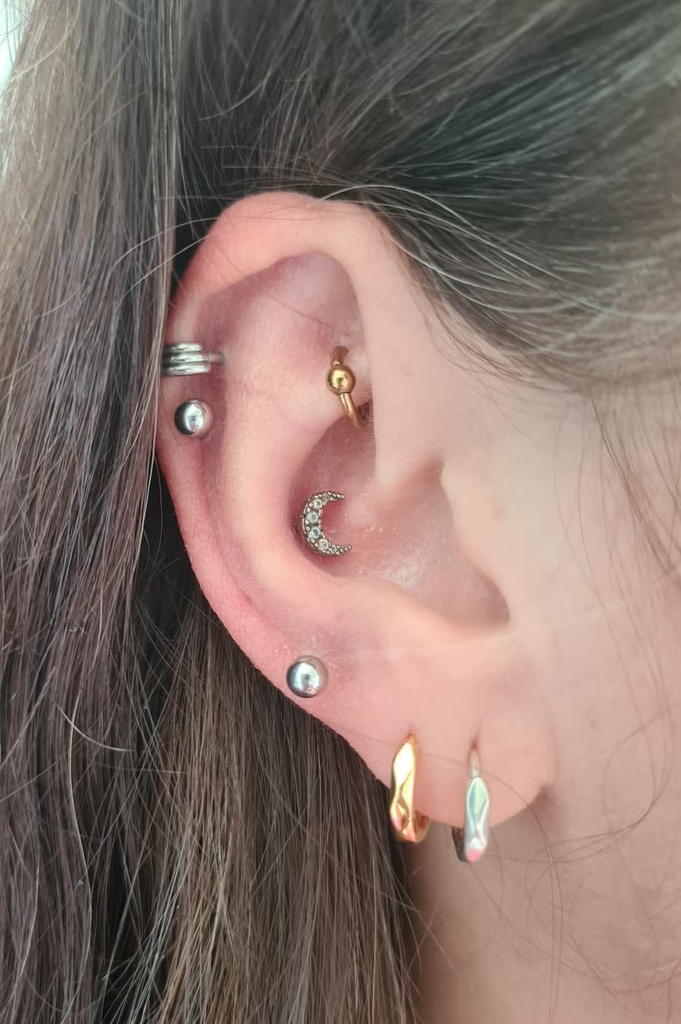
When we say conch, do you think about the shell you press against your ear in an attempt to hear the sea? Us, too. But that's not it. Instead, a conch is the area of sunken cartilage in the centre of your ear that you've probably never thought twice about. I certainly hadn't.
This region of cartilage found in the middle ear near the opening of the ear canal is called the conch (or concha if you want to get all anatomical) because it resembles the previously mentioned conch shell. Still not sure where your conch is? The helpful diagram below should simplify things and maybe spark inspiration for a rook, tragus, or daith piercin,g too.
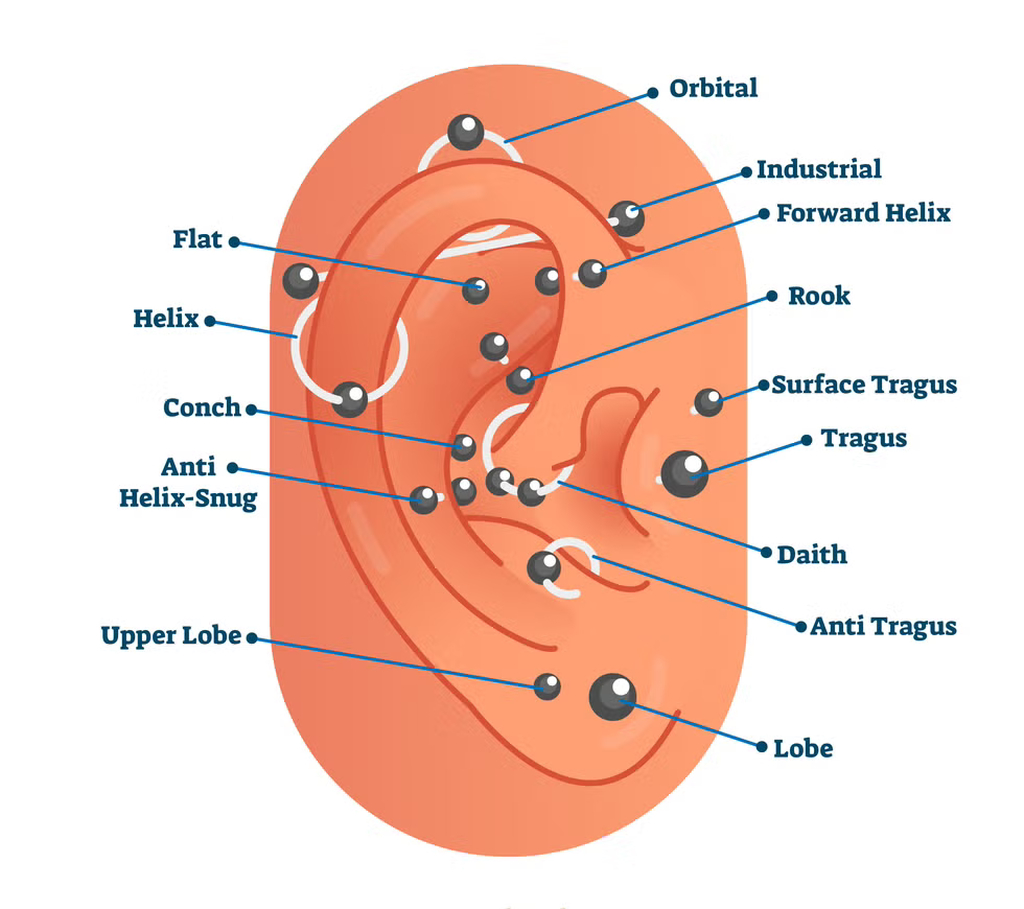
Depending on your anatomy, you should be able to get an inner conch piercing, an outer conch piercing, or both.
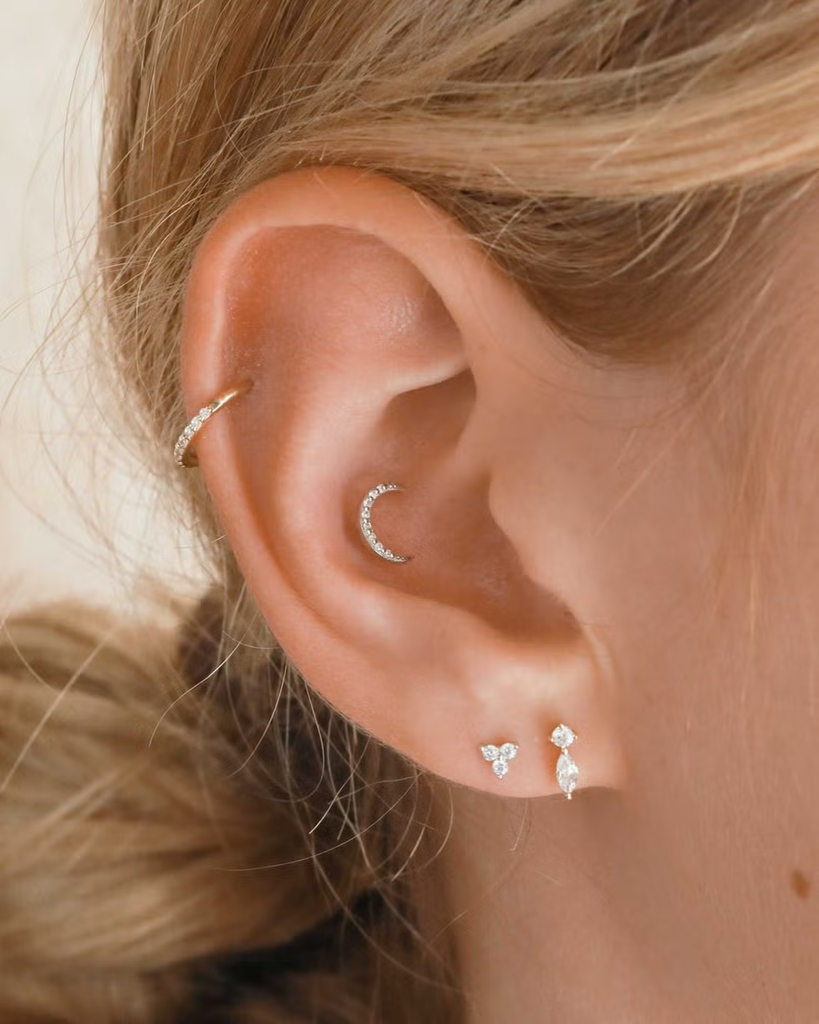
Inner conch ear piercing
An inner conch piercing, usually done slightly higher on your conch parallel to your daith, is mostly accessorised with a stud.
Outer conch ear piercing
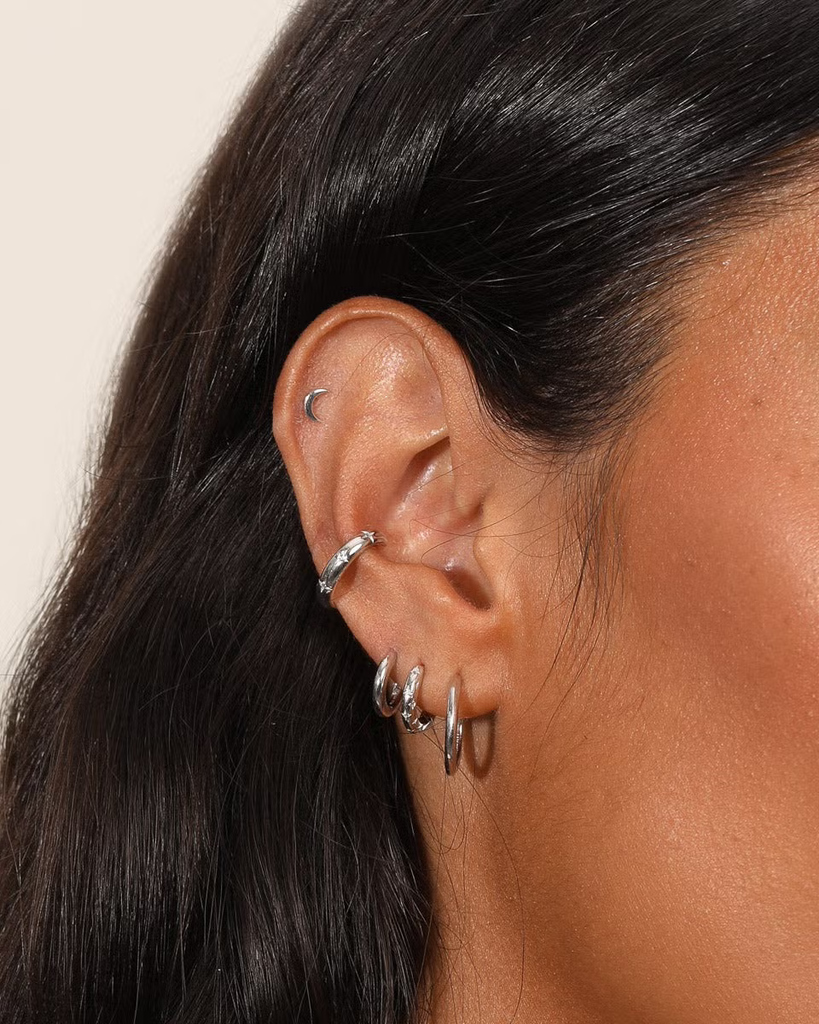
An outer conch piercing occurs lower down and closer to the curved cartilage of your outer ear, known as the antihelix. This means it's perfectly positioned for a hoop – and who doesn't love a hoop?
Multiple conch ear piercings
If your dream ear look is one that involves more than one conch piercing, you can opt for double or triple details, provided the shape of your ear will allow it. You'll want to decide this before your first one, though, to make sure it leaves room for the correct spacing. We'd also suggest getting them done one at a time rather than all at once to help the healing process.
Florence Pugh reps the double conch piercing, so you'll be in good company.

Are conch and orbital ear piercings the same?
An orbital piercing goes through the ear at two points with one piece of jewelry. So while a conch piercing is not exactly the same, it's possible to get an orbital conch piercing where two holes are made in the conch, and a ring is placed through both.
How to pierce your conch
You might want to skip this section if you're a little squeamish or prefer to remain in the dark before the big day, but if you're curious, we'll tell you that conch piercings are done exclusively with a needle.
After cleaning my ear and confirming the piercing position, marking the spot with a tiny pen dot, Svetlana used a sterile needle to create a hole in my cartilage before inserting the earring. She then cleaned the area a final time, and it was as simple as that.
For those who prefer larger-gauge earrings, the process is the same, but a dermal punch is used instead of a needle. This is a small tool that will remove a ring of cartilage from your ear in the same way a paper punch would a ring of paper. Scrunching your face up right now? We told you it wasn't for the faint of heart.
Does a conch ear piercing hurt?
The question we've all been waiting for: Will a conch piercing hurt? I reluctantly confessed to Svetlana that I have a pretty big needle phobia and was worried about the actual piercing hurting, but she was quick to reassure me. Conch piercings do tend to be more painful than lobe piercings as they involve cartilage, which is thicker and harder than the soft tissue of the ear lobe, but pain levels vary from person to person, depending on your threshold.
After making sure I was comfortable and relaxed, with my hair tied up and out of the way, it was crunch time—literally. The sharp pressure I felt from the needle was accompanied by a crunching sound from my cartilage being pierced. A little gross, yes, but nothing I couldn't handle. My ear did also bleed a little bit, something Svetlana assured me was not abnormal and quickly cleaned up before fitting my selected earring.
It was the days following the actual piercing that I found most painful. My ear throbbed quite a bit and was very tender to the touch. Hugging a friend was incredibly painful when their head inadvertently pressed against my ear, and adjusting my glasses meant the arm kept knocking against the back of the earring, which instantly inflamed it. Luckily, all of these symptoms calmed down after a few days.
Remember that dermal punch we mentioned earlier? Piercings done with one of those are often more painful than piercings done with a needle.
How long does a conch ear piercing take to heal?
According to Astrid & Miyu piercer Candice Batt, "healing times differ per individual but generally speaking take between six to nine months."
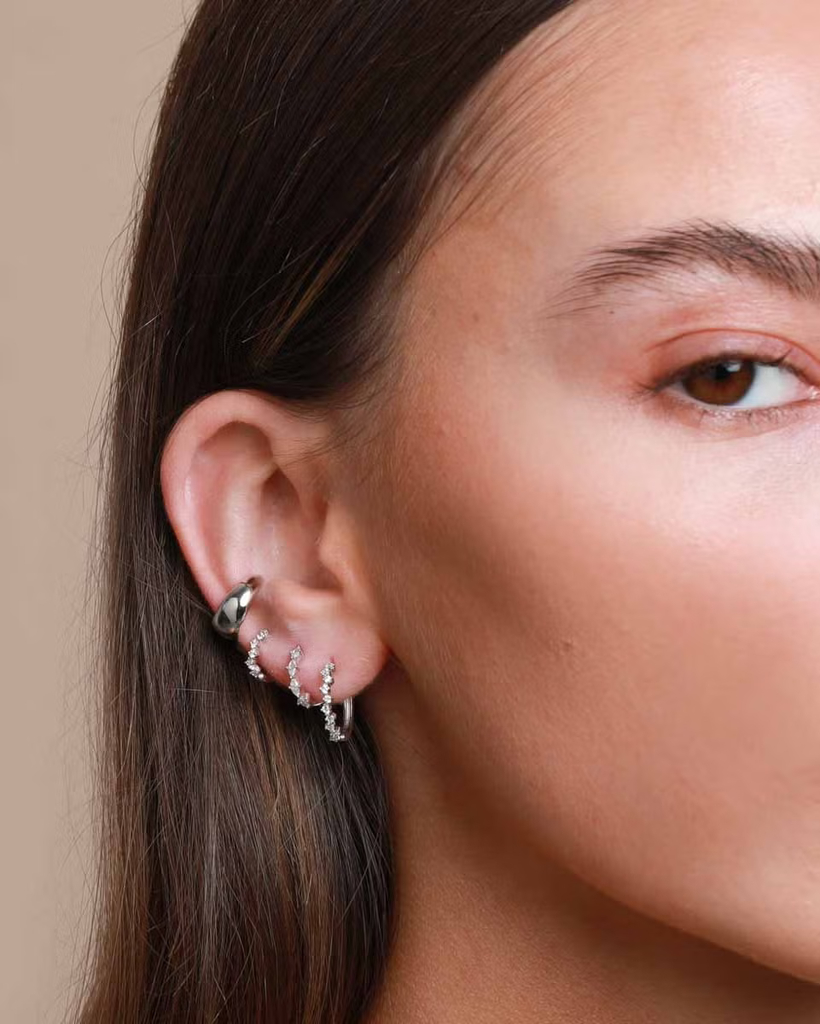
The exact time will depend on your overall health, how well you follow the aftercare advice, and the type of conch piercing you get. Dermal punch piercings will take longer, while outer conch piercings tend to heal faster than inner conch piercings.
Svetlana agrees, stressing the importance of cleaning your piercing to speed up the healing process. Which brings us nicely to...
How to clean a conch ear piercing
One of the most important things to note when you get your conch pierced is how to clean it, as this will help with healing and prevent inflammation and infections. Seriously, do not skip these steps.
After I was all done with my piercing, Svetlana sat me in front of a mirror and talked me through how to clean my conch piercing in three simple steps. Lark & Berry provides a cleaning solution with all piercing appointments, making it super easy to look after your new bling.
- Apply one drop of the cleaning solution to a cotton bud and wipe it around the entire piercing at the back of your ear.
- Using the cotton bud, push the end of the earring from the back to create a space around the front of the piercing.
- As you did before, wipe the cotton bud around the entire piercing at the front until it is clean.
It is a little gross, but as your ear heals, the skin will attempt to regrow over the top of your earring, so it's important to make sure you're pushing the earring forwards and backwards through the hole to prevent this from happening. It will feel stiff at first, but the solution will loosen things up and remove any scabs that have formed. Other helpful advice from Svetlana included making sure your hands are clean before starting this process.
Astrid & Miyu suggest "cleaning your new piercing twice a day with a sterile saline solution for four to six weeks. After that time, only clean when necessary. Spray the piercing with saline solution and pat the area dry with clean gauze or a paper towel."
How to care for a conch ear piercing
Caring for your conch piercing doesn't just involve cleaning it—it also relates to when it might need a little extra TLC on your part, whether in the daytime or throughout the night.
I avoided sleeping on my pierced side for the first two nights, which I'd really recommend. As tempting as it is, try not to twist or play with your new earring either, except for pushing it forward and backward when cleaning.
When it comes time to hop in the shower, let the hot water and steam do their thing, but be careful about any skincare, soa,p or shampoo that may have snuck its way over to your piercing. A final thorough rinse-off before drying the area properly—don't skip this step as too much water in a new piercing won't help it heal—will do the job.
How soon can you change a conch ear piercing?
We've all been there: A few days after our new piercing, the ear is still tender from the deed, and already we're itching to swap our simple stud or barbell for something a little more exciting. It's hella tempting to rush the process, but changing it too soon can delay healing or make reinserting your chosen earring tricky if a proper channel hasn't formed just yet.
Lark & Berry offers a wide range of fine piercing jewellery to rectify this. I chose the Interstellar Starburst Diamond stud earring in silver 14k gold featuring lab-grown diamonds. I love it so much that I can't imagine changing it anytime soon. I did, however, return to Lark & Berry six months later to swap it for a shorter bar once my piercing had fully healed.
Svetlana explains further, "We initially use an 8mm bar as your ear will swell following the piercing. After your piercing heals, if necessary, we offer free bar shortening services should you find the longer length irritating or if your hair is getting caught on it."
Upon my return visit, I felt like an A-star student when Svetlana commented on how well my piercing had healed. She removed my piercing completely to give my earring a thorough cleaning, a process that took about 15 minutes in total, before the stud was reinserted, this time with a 7mm bar. Svetlana suggested I clean my piercing with the solution for another week, just as I had done when I was first pierced, as changing the earring could have caused a little irritation. She also said if I still found the new bar too long, I could return in another few weeks to go down a further millimetre to a 6mm bar. This is generally the shortest bar conch piercings will take.
Candice at Astrid & Miyu adds, "If you want to change to a ring, we recommend six months at least—but always check with your piercer to see if it is ready to be changed."
Can you get a hoop conch piercing right away?
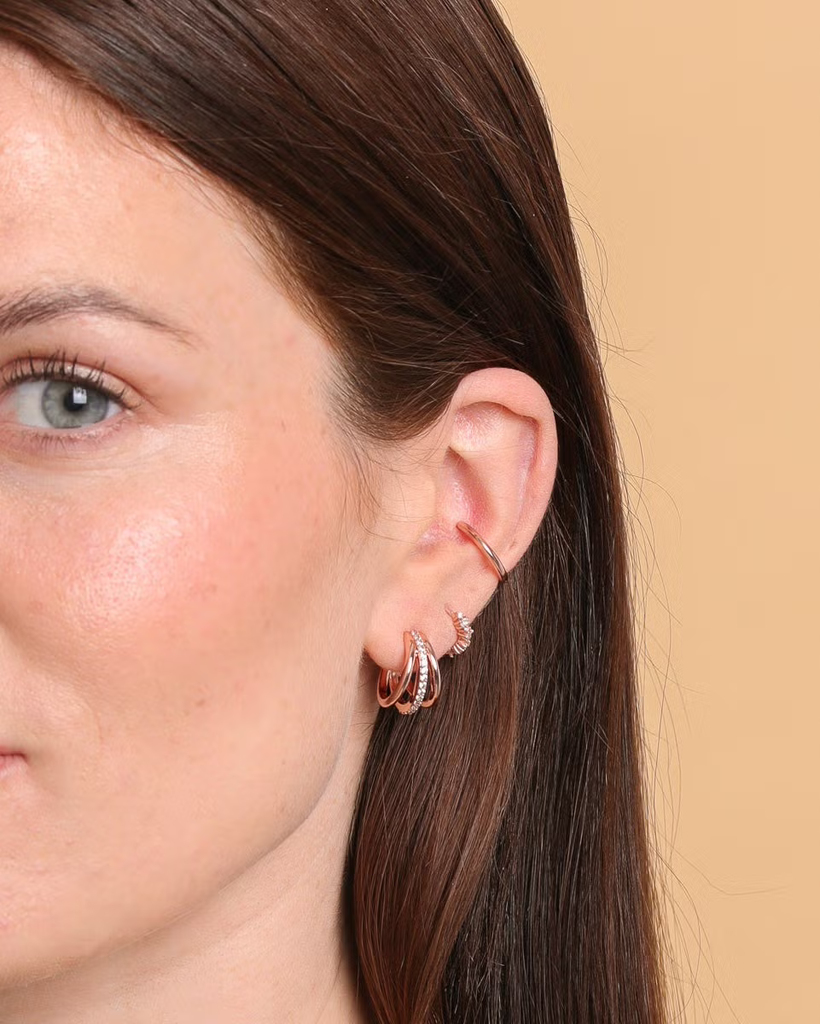
Us hoop lovers really are ready to slip one in from the get-go, but should we? Turns out, not quite. Rings allow for much more movement and can easily get caught on clothing, hair, or other items throughout the day, so getting a ring put in straight away will only lengthen the healing time and increase the chance of irritation. Not good.
Most studios recommend getting a barbell initially, as these allow space for swelling, are easier to clean, and don't get caught on things as easily. But once you're piercing has fully healed and you're ready to change your stud, jewelry brand Maria Tash recommends opting for a hoop with a diameter of 9.5mm to 12.5mm for your conch piercing.
How thick is a conch ear piercing?
A 16-gauge (1.2mm) needle is common, but it is always best to check with your piercer to know what size jewelry to get and ensure your piercing aligns with the type of jewelry you want to wear in the future.
How much is a conch piercing?
At Astrid & Miyu, piercing appointments start at £20 (approx. P1,506.87) for 20 minutes, and the cost of piercing jewelry starts at £35 (approx. P2,637.02).
At Lark and Berry, piercings are complimentary with the purchase of piercing jewelry. All of its designs are 14k gold and feature lab-grown diamonds and gemstones starting at £115 (approx. P8,664.50).
IMO, it's worth paying more if it means that your piercing will be done by an experienced piercer at a reputable studio or jewelry brand. The type of jewelry and material you choose will also affect just how much cash you have to part with on the day.
Does a conch ear piercing get in the way of headphones?
Don't worry, you won't have to spend long stretches of silence alone with your thoughts for the rest of eternity—unless you want to. Depending on the location of your conch piercing, inner versus outer, you should be able to use either earbuds or over-ear headphones without irritating your ear. Turn up the Chappell Roan!
I didn't have an issue with earbuds, but I did avoid over-ear headphones at first to prevent putting any unnecessary pressure on my ear or the back of the earring. Consult your piercer regardless, as you don't want to aggravate the area during the healing stage.
Is a conch ear piercing dangerous?
As with all piercings, there is the risk of infection, inflammation, and other complications, such as allergic reactions. But if you have it done at a reputable salon by a licensed professional in a sterile environment using proper equipment and following the cleaning instructions your piercer gives you as well as any aftercare tips they might have, the risks are significantly reduced.
If you're worried about reacting to the material, implant-grade stainless steel, 14K and 18K pure gold, and niobium are the best options. For those allergic to nickel, try implant-grade titanium or nickel-free sterling silver.
Check with your piercer or doctor if you have a sudden increase in pain whilst your piercing is healing or if you think you might have an infection. And definitely don't remove your earring before consulting them.
What does a conch ear piercing help with?
Word on the street, and one of the reasons conch piercings are so popular, is that they're said to help alleviate chronic pain and anxiety. But despite the rumours, there's unfortunately insufficient scientific evidence to back these claims, so we wouldn't suggest getting one for these reasons alone.
***
This article originally appeared on Cosmopolitan.com/uk. Minor edits have been made by the Cosmo.ph editors.