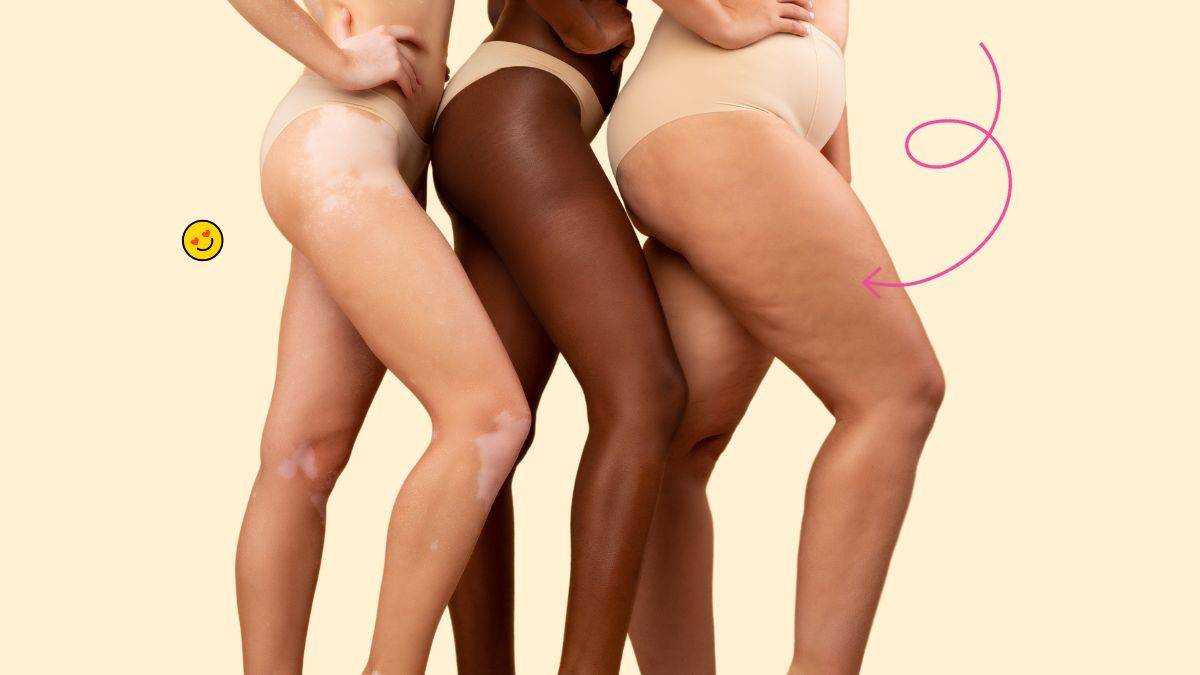
If you’re not pregnant and you have stretch marks, don't worry—it's completely normal! Research says 90% of the human population has stretch marks. It doesn’t just occur among pregnant individuals, as some netizens may assume because they commonly appear especially during weight changes, puberty as a sign of growth, and other pathological conditions. Plus, they aren’t even harmful to anyone’s health.
So next time you see someone with stretch marks, don’t immediately assume they’re pregnant because there's probably a more likely reason behind it. Here are some myths and common misconceptions about stretch marks everyone should unlearn:
Debunking Myths With Facts About Stretch Marks
Myth 1: “Only women, especially pregnant women, have stretch marks.”
Wrong. Stretch marks know no gender. They occur among men and women because anyone goes through hormonal changes, weight gain and loss, and changes to skin cells which are huge factors that cause stretch marks. Everyone should unlearn the notion that only a "pregnant" person can have stretch marks. While it is true that pregnancy does cause stretch marks, it is not the only indicator of why a person has them.
Myth 2: “Stretch marks only occur in the boob area.”
Imagine a garter being stretched beyond its limit all the time. The result? It becomes looser over time. The same concept applies to how stretch marks occur. Stretch marks are a type of skin scarring that occurs when the skin rapidly stretches or shrinks. This rapid change damages the skin's collagen and elastin. As the skin heals, stretch marks can develop due to this damage.
With that said, stretch marks can appear anywhere, especially around the:
- Stomach
- Arms
- Legs / Thighs
- Hips
- Buttocks
These areas are often targeted by stretch marks because they are where most growth occurs, especially during periods of rapid change.
Myth 3: “There is only one kind of stretch mark.”
Stretch marks vary greatly from person to person. They have a distinct appearance which means there's no need to compare your body to anyone else's. According to Healthline, stretch marks can appear as:
- Indented lines or streaks on the skin, varying in length and width;
- Streaks in colors such as pink, purple, red, bluish, or dark brown, depending on your skin tone;
- Thinned, glossy lines that may become whitish over time;
- Itching and irritation of the skin before stretch marks appear.
The appearance depends on what caused it. A pregnancy stretch mark may look different from one that came out of puberty or muscle growth. Stretch marks caused by medications or medical conditions may also appear differently from stretch marks that come from weight gain.
Myth 4: "Stretch marks mean you're not healthy."
The appearance of stretch marks is not an indicator of a person's health status. Stretch marks often occur as a sign of growth in a specific area due to the skin stretching. Therefore, assuming that having stretch marks means you are unhealthy is incorrect.
However, if individuals notice unusual stretch marks accompanied by other concerning physical symptoms, it is advisable to consult a dermatologist or healthcare professional for further evaluation.
How To Treat Stretch Marks
Treatment varies per individual and according to experts, there are a lot of remedies one can opt for when trying to improve its appearance, including:
1. Tretinoin cream: This works wonders by restoring collagen, making it highly effective on recent stretch marks that appear red or pink. Be cautious, though—it is not recommended for use during pregnancy.
2. Hyaluronic acid cream: Apply this consistently once you start to notice the appearance of stretch marks, and you may see a noticeable improvement in their appearance. It's a safe option for most people.
If you want to explore a more robust option for your stretch marks concern, you may consider these advanced treatments:
1. Pulsed dye laser therapy: This stimulates the growth of collagen and elastin, making it particularly effective on newer stretch marks. However, individuals with darker skin tones might experience some skin discoloration.
2. Fractional photothermolysis: Targeting small areas of the skin, this laser treatment offers similar benefits to pulsed dye laser therapy but with a reduced risk of skin damage.
3. Microdermabrasion: By polishing the skin with tiny crystals, this procedure reveals new skin beneath the stretch marks, which can help improve the appearance of older marks.
4. Excimer laser therapy: This treatment boosts melanin production, helping stretch marks blend more seamlessly with the surrounding skin.
Stretch marks do come and go. And regardless of what people say, everyone is prone to having them. However, one is encouraged to seek a dermatologist and healthcare professionals for unusual stretch marks that may be caused by other health conditions.