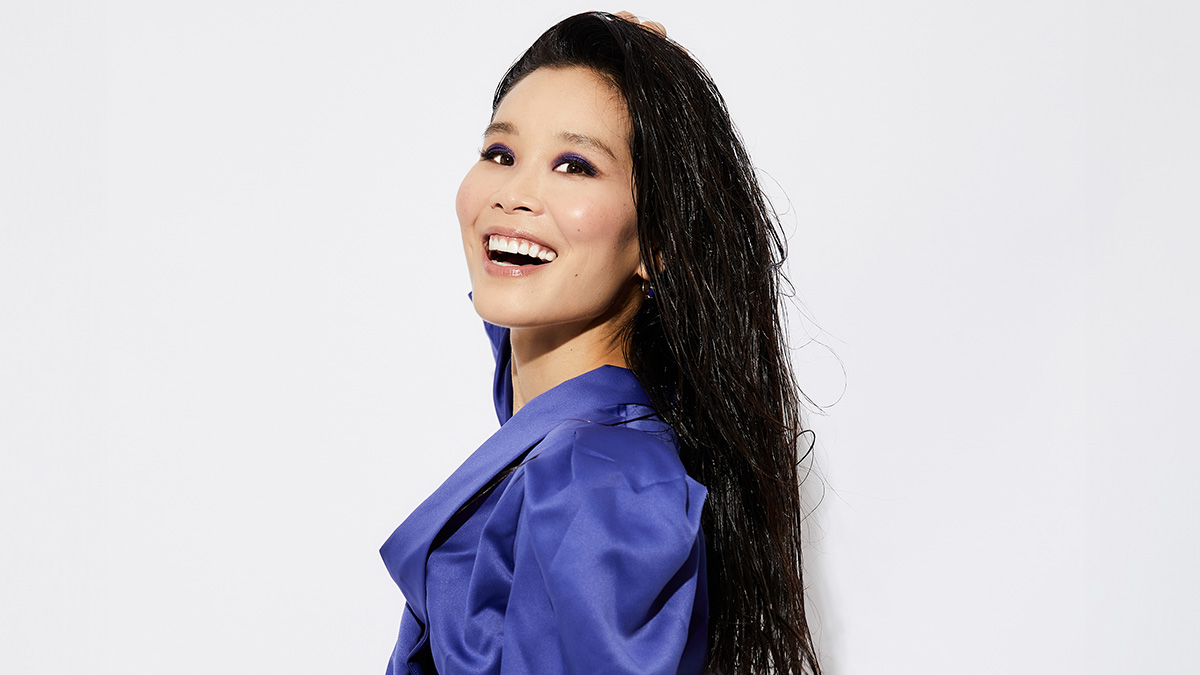
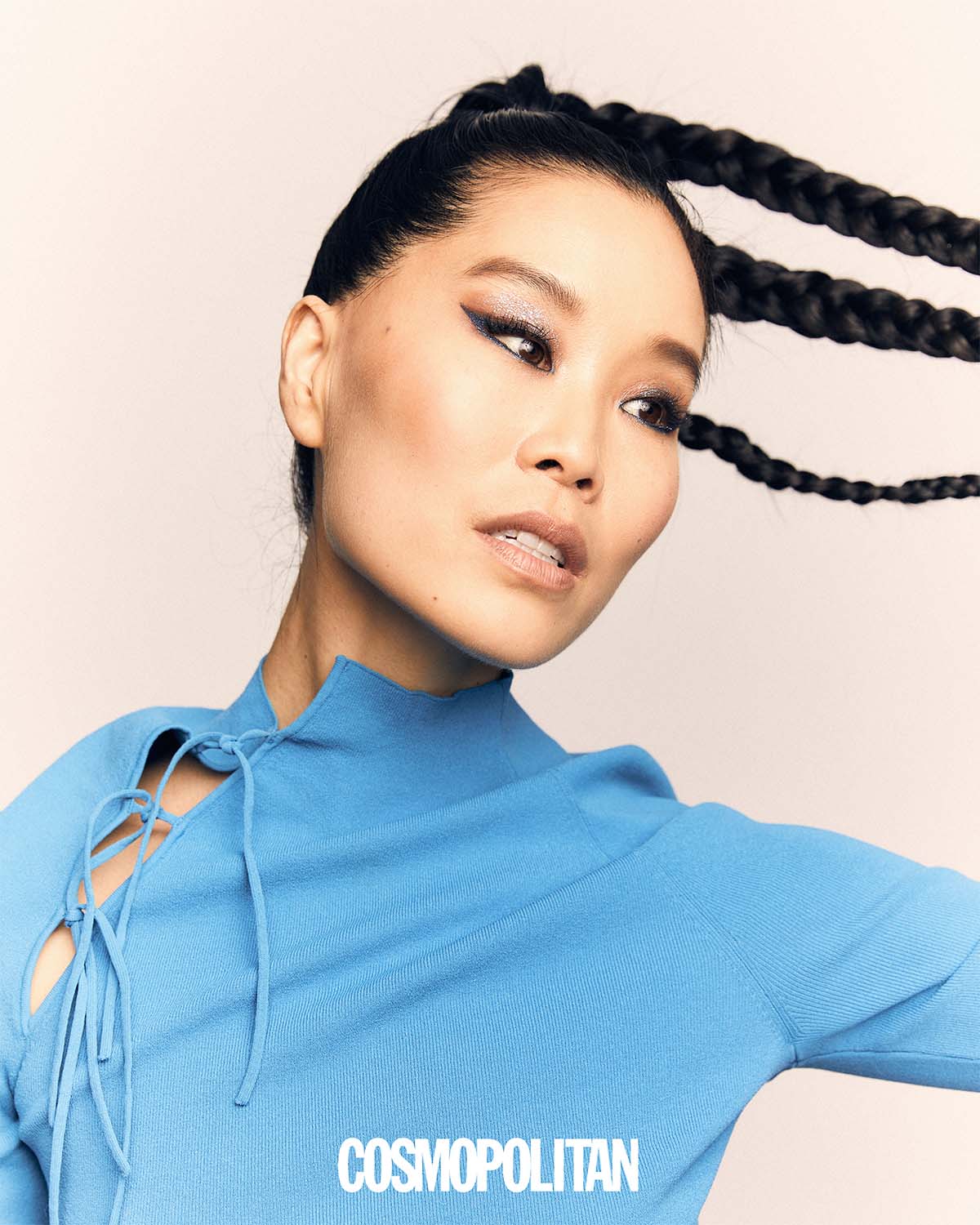
"Alicia Hannah-Kim is a ball of great sunshine energy." That's the first thing that came to my mind when Alicia popped into our Zoom interview. It was just a few days before the release of the last season of Netflix's Cobra Kai where she stars as Kim Da Eun—the first female sensei in the Cobra Kai and The Karate Kid universe. And so, naturally, our chat would have gravitated around the series that everyone's stoked about. It did—and then some.
"Don't cry, because then I'll cry," she said, just before we both burst into laughter. I teared up a little after having what seemed to be a heartfelt conversation about Asian representation in media. Some might call it old news—even Alicia agreed how the entertainment industry had already caught up with the times and made efforts to authentically portray the Asian community. But there are still stories to be told, and Alicia is one great storyteller of her time.
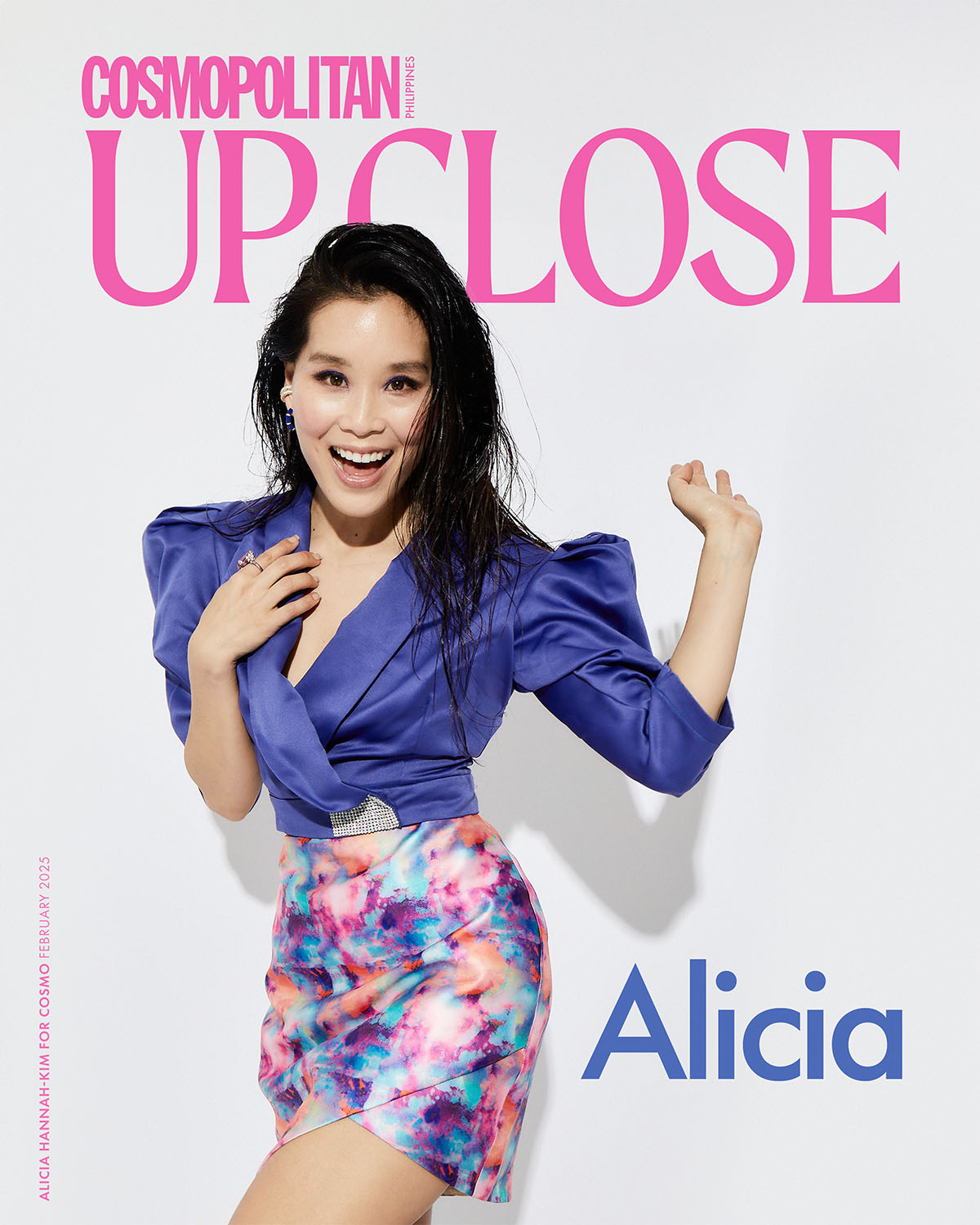
"I really wanted to be specific about her accent and have a backstory for her that represented a global background that was familiar to me and how I grew up. And so [in] that I felt a responsibility for. Also being the first female sensei—let alone the first Asian female sensei—I just want to do my best. I want to do my best and hope that that can be translated," the 37-year-old Australian-Korean actress told Cosmopolitan Philippines as she looked back on how much of a responsibility it was to portray Kim Da Eun in Cobra Kai.
"It's just an honor for me to be there. I mean, Sandra Oh was always like: 'It's such an honor to be Asian,'—no, it totally is! It's such an honor to be Asian and understanding the difference between playing that [role] and then thinking back to myself as a young child and knowing that I didn't have that representation when I was a kid," Alicia declared.
Alicia Hannah-Kim: The Third Culture Kid
At first glance, Alicia's physical attributes strongly lean towards her Korean descent (and that's no surprise given that both her parents are Koreans). And yet, Alicia craved to see more of her Asian identity in many ways that she could, both as an actress and as an individual. After all, she defines herself to be a "third culture kid" who grew up with Korean parents but never really got to learn more about her Asian heritage. Add to that the fact that she had only consumed either Australian, British, or American media while growing up.
Her curiosity and desire to connect with her Asian identity were unexpectedly sparked when her friend's father—whom she described as "white"—turned out to be a huge fan of the South Korean drama Crash Landing On You. Seeing someone who wasn’t Korean wholeheartedly admire a Korean show was what did the magic for Alicia.
But first, it hit her hard. "As soon as that door was opened, it hit me like a ton of bricks. It left me with so many conflicting emotions. You kind of have a grief for a culture that you know, but didn't live. The only place I heard Korean was in my home. So it's very personal and it was such a watershed moment for me and such a turning point in my life. And it completely changed my life," Alicia illustrated.
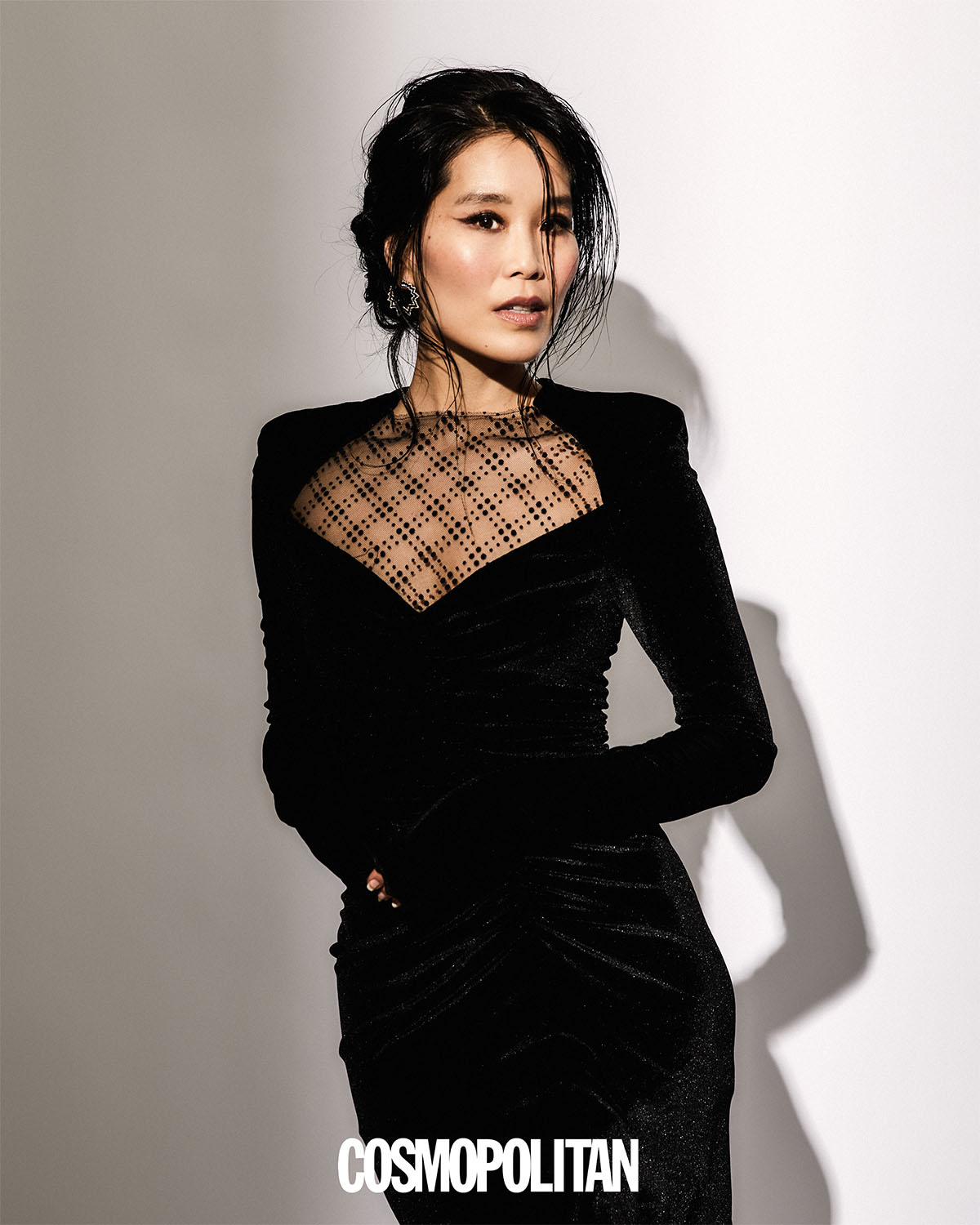
At that moment, the actress spiraled down into the world of K-dramas and K-pop. She's now a fan of IU, a.k.a. uaena, and also a fan of the global boy group, BTS—though she's still undecided on her bias, LOL. "I never know who my bias is. Like I want to pick one. And I'll be in like Suga camp for a little while and then I'm like, do I love Jungkook more? The struggle is very real for me because they're all so talented," she giddily divulged.
And then she met her Cobra Kai character. She joined the series sometime in 2022 for its fifth season and stayed until the end of its last and sixth season, which was released this February. Admittedly, there was some pressure for Alicia as she came in the middle of the show, bringing a brand-new character. But other than the thought of having to tell the story of an Asian female sensei, Alicia is also all about the fun and warmth of having to be part of the Cobra Kai cast—which she thinks has manifested a lot onscreen, allowing fans to also enjoy the show from start to finish.
"The thing that I'll take away is the warmth and that feeling of camaraderie. We have a little [group] chat where we dropped photos from the set and that was really fun during filming. It's super cute. I actually need to go in there and save all of them because I don't know what's gonna happen to that chat now and it's a lot of candids from behind the scenes," she shared.
Alicia Hannah-Kim: The Actress
As she gushes about starring in a major Netflix series, I can't help but wish I were in a group chat—or even a room—with her. She's undeniably fun, outgoing (an ENFP, she disclosed), and lively. She's a natural at keeping a conversation going, with no dead air.
The authenticity she exuded throughout our conversation is the very essence that she strives to bring into every room she enters or every work that she does. "If there's one thing that I'd like people to remember me for—if they even do remember [me]—is the quality of truthfulness and power and lack of vanity," she says, explaining that it's a quality that she admires the most in other actresses, too.
Whether it's about acting or producing and writing some new projects in the future, Alicia knows that she has a long way to go. But the 37-year-old is just happy to be here, thriving and signing up for challenges. "I'd like to be doing something that is scary and challenging to me. 'Cause I think that's the only way that I learn and grow," she proclaimed.
In between laughs, Alicia told us a candid yet inspiring statement on how she's planning to face the next five years of her life. "I'm generally scared all the time... I think I would be somewhere in a corner scared—and trying. Just cowering in the corner afraid, but trying my best." We may have laughed (a lot) the moment she said it—but as women, we understood the weight of her words all too well.
Editor's note: Cobra Kai spoilers ahead!
Alicia Hannah-Kim On Cobra Kai Season 6
Can you let us in on how you prepared for the role? Was there a signature pose or movement you made for Kim Da Eun to better represent her character in the show?
Alicia: The training for me is a little bit different because everybody has their own fighting style. Based on the look of my character and also her feelings, we really wanted to create this sort of radius of danger around her, especially since she can use her hair as a weapon. And so having that very circular movement, that was really incorporated into the training.
For us women, our hair is like the crowning glory for us. It's interesting to see that your character can use hair as a weapon. How did you feel about that?
Alicia: Yeah, that was a direct idea from Hayden Schlossberg. He's one of our co-creators, and showrunners—that was his unique idea. That's so true. As a woman, your hair is your crowning glory. And I think it's very telling how she arranges her hair. There's absolutely no movement and it's so unyielding and it takes up so much space and she wears it with so much pride and it's very aggressive. It really is her crowning glory.
Gearing towards the end of Cobra Kai’s last season, Kim Da Eun faced the dilemma of taking charge of her own destiny or just following in her—harabeoji—grandfather's footsteps. Take us through Kim Da Eun’s thought process before she makes that decision.
Alicia: That's a great question. I also love your pronunciation of harabeoji. It was pitch-perfect (laughs). I guess it does seem obvious why she takes the eventual route of independence and freedom and establishing her own Dojang (Korean martial arts training school). But it's not as easy as it seems. It's a very fraught decision for her because it requires her to effectively dethrone her harabeoji, her grandfather, by killing him.
But that's also a very twisted relationship because he builds that scenario for her in her mind and he's quite pleased that she does it. That's what he wanted her to do. That's why with his dying breath he gives her this long-awaited approval and tells her that she's perfect, which I think to any Asian child is so deep for us. She's finally getting approval. So it's a very complicated thing because she's essentially killed her last living relative, but he's really proud of her for doing it.
Now that Kim Da Eun's the head sensei, how would she handle her own Dojang?
Alicia: She's really into more positive encouragement. Definitely, no more need to break your hand on this block [as a punishment]. I think it's always going to be excellence. I don't think she's ever going to compromise on the results. I think she's now learned and been enlightened that there are more flexible, sort of gentle, mindful ways of getting to that.
I don't know if you've ever trained in a Dojang or if you've ever done martial arts—but there are plenty of ways to be punished that don't involve getting your hand broken. I think a classic punishment from any trainer or any sensei is a hundred push-ups—the drop and give me 20. I think that is, but that's two-fold. It's punishment, and it's also teaching you to be stronger, but it's also not cruel. It's probably quite militaristic actually, but I think she would probably rely on those things, which again, are sort of striving for excellence, just a little less death and a little less assault and violence.
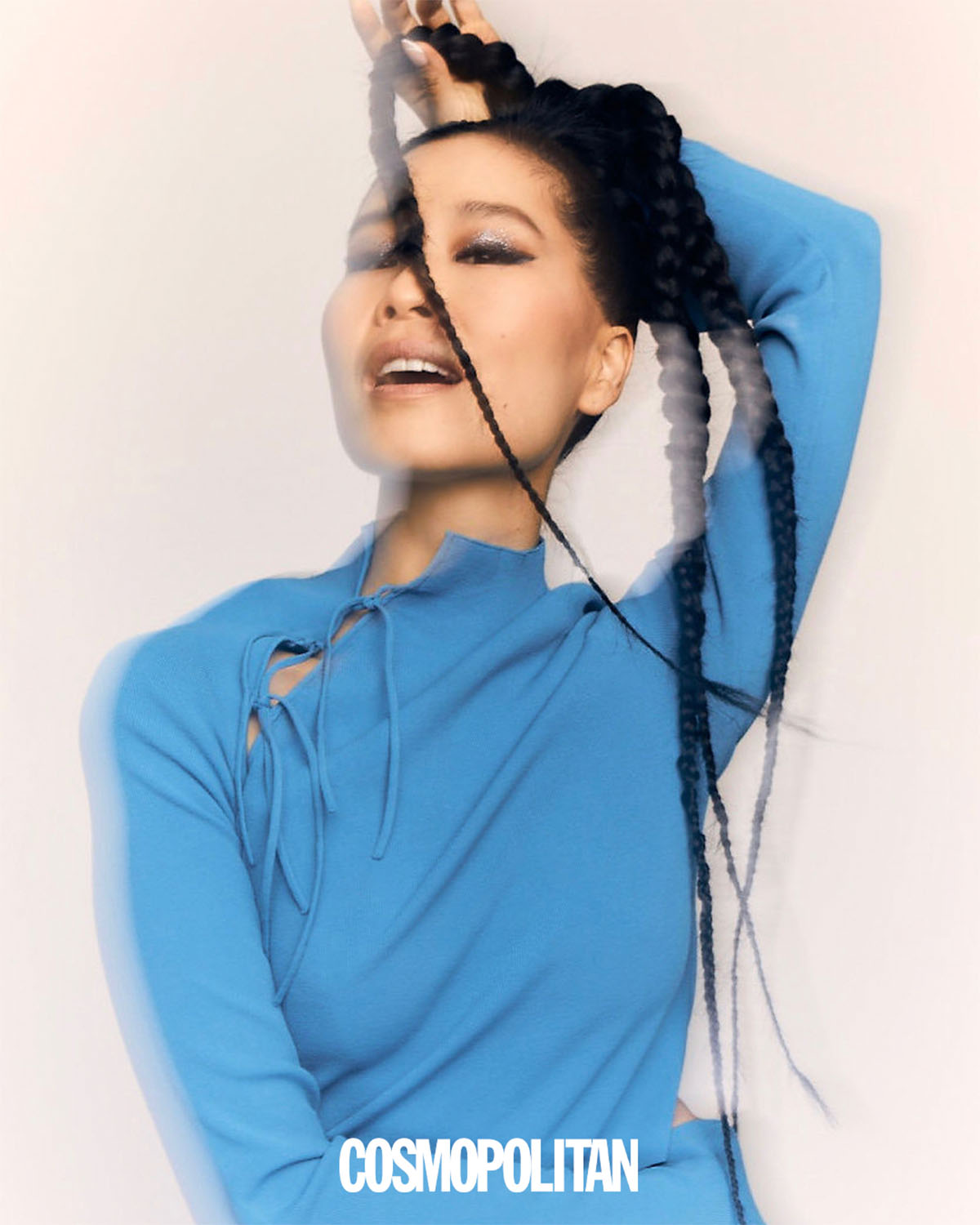
Alicia Hannah-Kim on embracing her Korean heritage
How did watching Crash Landing on You become the moment that shifted your perspective on your Korean roots?
Alicia: Such a good question. You know, my parents are brilliantly fluent in English. And so when I was growing up in Australia, we didn't have Netflix back then, and they weren't spending any time at home watching Korean series or movies. All of the media and entertainment that I consumed as a child was Australian, British, or American, with the very few exceptions of some Asian movies that I might've seen as a child. But it was as if, unbeknownst to me, Korea's rising and having this incredible golden age of culture and expression and just creative output—and I was just living under a rock.
Was it something that also triggered you to be more open to roles that embrace the Korean culture or more projects working with Koreans and Asian productions?
Alicia: I mean, I've never not been open to it before, but the industry had never really embraced diversity and representation or even Korean culture to the extent that we do now... I think culture has shifted and the industry has caught up to the fact that we do have this entertainment giant that's happening in Asia, in Korea. So it definitely feels more blended than before.
When I first started out acting, there were not a lot of roles that, you know—we didn't have something like Crazy Rich Asians, for instance. I remember going to Crazy Rich Asians in the cinema—and I was like, oh, I realized I've never seen a movie like this before. And then off the back of that, we get Shang-Chi and we get all these other things now. I've always wanted to be able to play roles that were more authentic to me but it wasn't available to me, to be frank, when I first started out. I had to sort of take what was available to me.

Are there Korean or Asian actors or filmmakers you'd like to work with? And would you like to see more collaborations between Hollywood and the Korean entertainment industry?
Alicia: Yes, that's literally all I'm interested in! I just filmed a Korean series called Tempest. We have such an international cast and getting to work with director Kim Hee Won, who's so celebrated in Korea. She did Vincenzo, Little Women... So, you know, getting to now bridge that connection between Korea and Hollywood is really exciting to me.
I have a wishlist of people that I wanna work with. I have great respect for the director Kim Won Seok. I want to work with him so badly. He directed my favorite series, My Mister. And there are so many actors that I'd love to work with. I love Son Suk Ku. He's an incredible actor. I loved his work in My Liberation Notes. And I love Yeom Hyeran (The Glory)—she's a celebrated Korean actress that I just admire so much, and obviously I'm a huge IU fan.
OMG, same!
Alicia: You know it! I adore her. Off-the-charts talented!
She has an upcoming series with Park Bo Gum. It's coming up next month.
Alicia: She does. It's actually directed by Kim Won Seok. And a big spoiler alert: I did actually visit that set when I was in Korea. So I did actually meet the great IU. And she was overwhelmed by me (laughs). And then for the entirety of 2024, I was working. So I wasn't able to attend a single concert [of IU]. To this day, I'm still devastated. She's wonderful and talented. I have so much respect. She's a once-in-a-generation artist.
I know you can't say much about your upcoming K-drama, Tempest, but was it your first time filming with a full-blown Korean production—and how was your experience?
Alicia: Yes, it was my first time filming on a Korean set with a Korean crew. Super joyful, wonderful experience. Korean crews are unbelievably professional and fast. The crews are just off the charts. But one thing that I do have to say is that: Korean craft service—the catering? The best! The literal best in the world! I was so happy! So that was a huge highlight for me last year. The food is everything to me.
Then getting to bring all of these American actors on and introduce them to Korean food and Korean culture and everybody learned the bowing and then take everything with two hands and you know the sugohaesseoyo [which means 'good job' in English] at the end of the day—I mean that's really cool. It's nice to exchange those little bits of culture and include everyone.

Alicia Hannah-Kim on moving forward in her career
How has becoming an actress shaped your personal growth? Was it something that you wanted to pursue early on in life?
Alicia: I just had this conversation with my husband today... I was like, I did not think about that [becoming an actress] when I was a child. I knew I loved movies, I loved to read. I was sort of like lost in my own imagination. But I never thought that it was a possible thing for me.
The only way that I felt that it was possible was when I started going to a drama school called the Australian Theatre for Young People in Sydney. And that started me on my journey. I think it took somebody who was very shy and unsure and insecure about herself and made me sort of the biggest version of myself where I feel like I can express my views and I'm empowered to reach for things that I think otherwise wouldn't have.
[Acting] made life fun—really fun—and also really scary. It's really scary to be a creative. I don't know, I feel like I'm on a rollercoaster. I should have a rollercoaster in the [Zoom] background, not space (laughs).
There are a lot of Asian actresses who stood up and talked about "Asian representation." For you, what's the overarching message nowadays when it comes to Asian representation? What advice would you give to aspiring Asian actors looking to break into Hollywood while staying true to their cultural roots too?
Alicia: That's a great topic of conversation. I think the fear of scarcity always exists for any actor, whether you're Asian or not. And I would tell younger actors, especially Asian actors, don't be afraid. There's room for all of us. There's room for the very particular type of Asian that you are, whatever ethnicity you are, whatever you're bringing to the table. We've progressed. We've moved forward. We have space for everyone. Show us what you've got because storytelling is and should be open to everyone.
Do you have a particular role or genre that you want to work on?
Alicia: I would love to do a romantic comedy in K-drama because I had my taste of romantic comedy in Cobra Kai—and I was like, wait, this is so fun. Why are kissing scenes so much fun? I had no idea (laughs). I [would also] love an American political show. I don't know, but I love that. I grew up watching The West Wing.
***
PHOTOGRAPHER: Timothy Fernandez
ART DIRECTOR: Ica Del Mundo
ASSOCIATE EDITOR: Ida Aldana
PRODUCER: Kate Sarmiento
STORY: Kate Sarmiento