"Ate Pia." When I read or hear those words from my family, my usual internal response is "What now?". Still, no matter what it is—from sending GCash credit to accompanying a family member to the hospital—rest assured I will be ready to accommodate that request. It's almost always a "Yes." For me, it's an eldest daughter thing, and for some reason, it feels wrong to say "No."
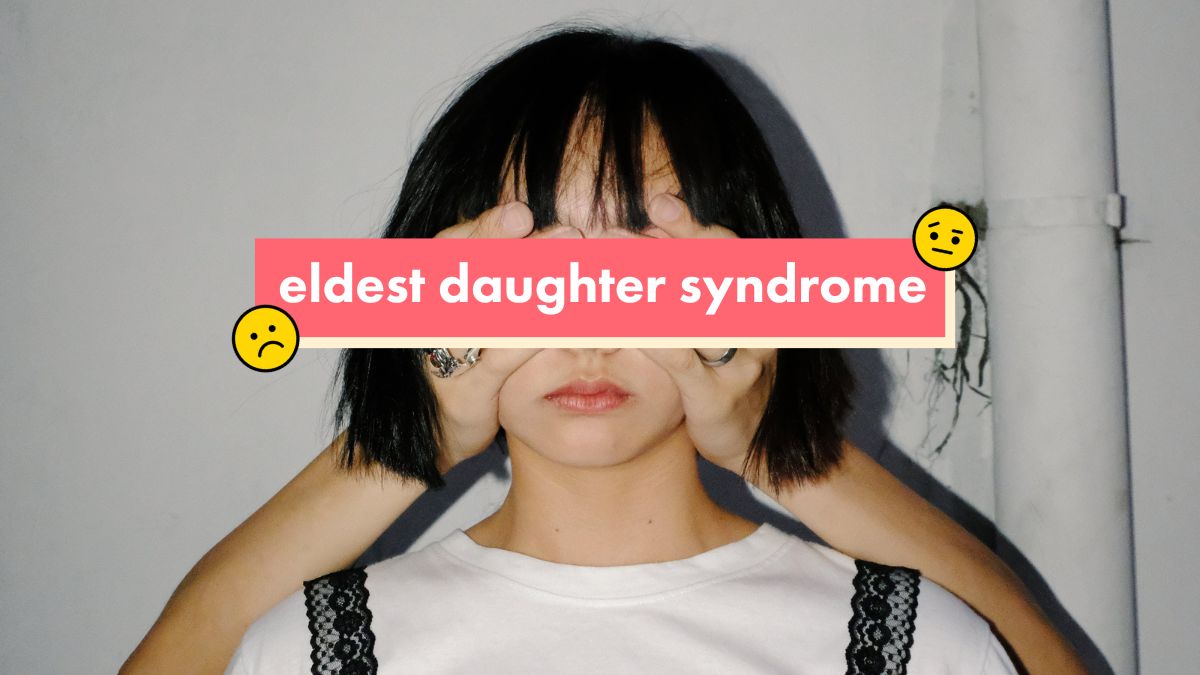
And it's not just a me thing. This feeling of carrying too much responsibility is so common—especially among Asian households—that it has its own "syndrome", albeit an unofficial one: Eldest Daughter Syndrome, that unique feeling the first-born girls have as the panganay, or what a psychologist called the "parentified" sibling for all the responsibilities they have in the family—just because we were the first ones out of our mothers' womb who happened to be born female.
It's hard enough to be the oldest kid, much more so if you're the eldest daughter
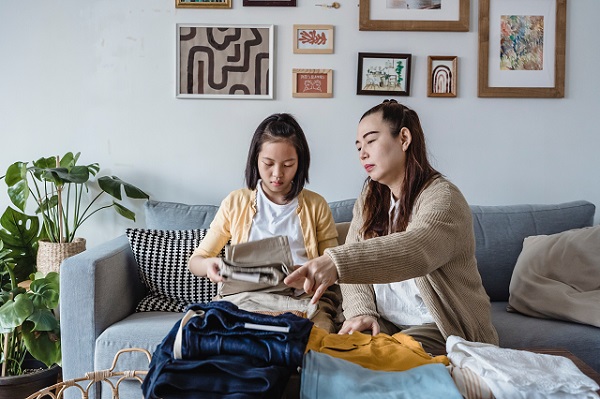
It's expected for eldest children—despite gender—to carry the burden of caring for their younger siblings, especially in the Philippines where some households can barely afford to hire help for domestic care. So who is in charge of household needs whenever mom's away or busy doing something else? More often than not, it's always the Ate that is expected to act like a proxy for mothers thanks to gendered tasks. Ate the peacekeeper, Ate the advice giver, Ate the shoulder to cry on, Ate the dishwasher, Ate the task manager, Ate the baon provider. Why not kuya? They're more like father—the disciplinarians. Yes, these gendered expectations still persist, especially at home.
"Eldest daughters, or our 'ates', have to bear the brunt of domestic responsibilities: they are expected to cook, clean, run errands, and babysit their siblings while the parents are out working," Mind You senior psychologist Rea Celine Villa tells SPOT.ph.
Rue*, who works as an HR specialist during the day and as an academic commissioner at night, has to juggle two jobs to fulfill her role of being the breadwinner of their five-person household. Her mom beats her, her father was absent for more than seven years of her life, and recently, she was diagnosed with major depressive disorder and severe anxiety. While juggling all this, who remains to be the constant familial presence for her other siblings? Rue.
"I have been teaching my mom and dad how to properly raise [my siblings] without any form of aggression because I knew how it felt like," she told SPOT.ph.
"Mahirap kasi, siyempre, gusto ko makatulong sa family ko but it was hard because I was going through something heavy. It felt like I was being useless because I'm supposed to be the one to carry all the burden para hindi sila maabala or mahirapan."
Chelle Buenaventura said it felt like it was her "utang na loob" that she is the first-born female. Her mother constantly reminds her that she could be working in Japan now if not for Buenaventura being born 33 years ago. So to avoid being a burden as the eldest of eight children, she has to carry some of her parents' responsibilities.
"Pag nagkaproblema 'yung family mo, nasa iyo nakapasa lahat. Early age, nag-aalaga ka ng kapatid mo. Then, a-attend ka ng Christmas party, pupunta ka sa groupings, may kasama kang maliit na kapatid at hindi ka puwede tumanggi. Kasi kapag tumanggi ka, hindi ka makakasama," she told SPOT.ph.
During her second year in high school, she was told that she had to work or quit schooling. Her other siblings, even the second one who happens to be a guy, were free to go to school without having to shoulder the cost.
"I thought 'yung kikitain ko doon [as a golf caddie] is for me para maka-survive sa pag-aaral ko pero hindi. It's an income para sa aming lahat. Pagdating pa rin sa bahay, hindi ka puwedeng matulog agad. Kailangan mo munang maghugas ng pinggan, maglampaso, magwalis, magbantay ng kapatid mo kasi wala 'yung mama mo, umalis."
And it's not just hugot; it has roots in psychology which explains how eldest children are brought up differently than their other siblings. Remember the Birth Order Theory when the eldest kids have a stricter upbringing compared to the younger kids? By being the leader of the household, they also have to share—if not shoulder entirely—the responsibilities of adults at home even at a young age.
The domestic burden always falls on mothers, and sometimes, the only time they get to be free from these burdens to pursue what they want—a career, for example—is if another female member of the family can pick up the slack. Just think how a household runs without their mothers who work as domestic workers. If it's not the grandmother or aunt, it's always the eldest sister.
Giana*, the eldest child in their household, has to act like the parent in her family of four—including her parents. This she has to do while juggling law school, work, important household decisions, and taking care of her sick mom.
"My mother depended on me for emotional support and stability. I would always be on the lookout for my father’s frequent triggers of violent bouts. As to my sister, I always made sure I looked strong and formidable despite our hardships so she has a decent role model later on in life when it was her time to take on life’s challenges. All in all, the hardest struggle I had to face as a kid was to be a parent to both my mother and sister starting from a young age," she told SPOT.ph.
"If I get to choose, I’d like to be the middle child and be invisible so I can be my true self."
Changing the mindset to address the Eldest Daughter Syndrome
While it's an unofficial syndrome, its effects are real. We as the first-born daughters are born into a life of responsibilities we subconsciously embrace because it's what we are taught to do, and are used to doing. So if you're a panganay, a parent, or a younger sibling who wants to help your Ate, here's what can be done, according to psychologist Villa:
Split responsibilities among all members of the household
Elder brothers and younger siblings can be taught to split duties with their ate. It's also a lesson on household chores: taking care of the home is not a gendered responsibility. Who knows, this can eventually break generational practices of women forced to carry the triple burden at home, work, and community.
"I was raised na nakatatak sa isip ko is ang gawain bahay is pambabae lang. Kasi kung lalaki daw ang uutusan mo, mas mabibigat daw kasi ang gawain lang sa lalaki. Siguro nandun nga 'yung sinasabi nila na 'yung makalumang culture natin na sa babae is pang lighter work lang: bahay, laba, alaga ng anak. Dapat siguro 50-50," said Buenaventura.
Ask the eldest daughter or sibling how they are
When was the last time you asked your Ate "kumusta?" We may appear tough, but there's hugot buried deep under that dismissive "Okay lang naman." The emotional and physical burden of being a first-born daughter can be too heavy, and by acknowledging our feelings, we can feel a bit more seen and our contributions seem less overlooked.
Seek profesional help
When Rue the breadwinner was diagnosed with major depressive disorder and severe anxiety, she had to resign from her job. Leaving her work meant there was less money coming in, even when she needed medicines to help her deal with her inner demons.
It's not a weakness to seek professional help. We first-born daughters are so used to being the strong ones that when the pressure comes to the surface (hello, Luisa Madrigal?), we just burst—stress, anxiety, depression. By reaching out to a professional, we can make sense of what's happening, and we can process our feelings more effectively.
"Sometimes, it gets exhausting that you always have to carry the burden by yourself because if no one does it, then who will? Sometimes, you just want to go and leave it all behind. Your struggles and your emotions about it are always valid," Rue said.
Being the eldest daughter is tough, but we've learned to appreciate it
For Buenaventura, her experience being the eldest daughter taught her how to become a better parent to her only child and to her nieces and nephews.
"Ang gagawin ko noon para makapag-aaral ako, I needed to beg. I needed to work at an early age. Tapos sa buhay nila ngayon pagdating from school what they only needed to do is ayusin 'yung gamit, i-check kung may assignment, then maghiga na. Not unlike me na pagdating from school, alagaan mo itong kapatid mo, mag-ayos ka ng bahay. So I'm showing them na i-enjoy nila 'yung years nila as teenagers."
"Whenever I see my siblings happy and they thank me for the things I do, it makes my heart full. Being the eldest daughter means that you should always be willing to sacrifice your own well-being for the sake of others because that's what you're supposed to do," said Rue.
So when you feel like giving up, take time to rest, said Rue.
"Your existence is always important and you always matter. All of us are born with the weakness to fall down but we are gifted with the strength to rise."
With all its heavy responsibilities—which usher in the occasional panic and anxiety attacks—being the eldest daughter is still the best title I can boast of. The skills I've learned and applied in work and school were honed at home, trained by my supportive parents and other girl bosses in the family: multitasking, communication and negotiation skills, leadership (as the boss of one younger, albeit bigger, brother). In my next life or maybe in a different universe, would I still choose to be a panganay given a choice, knowing what I know now? Yes. I wouldn't have it any other way.
Editor's note: Some interviewees asked to use pseudonyms, marked by asterisks. names have been changed.
***
This story originally appeared on Spot.ph. Minor edits have been made by the Candymag.com editors.