
Traveling to the United Kingdom is a dream for many. Whether it’s because you fell in love with literary classics like Pride and Prejudice, obsessed over films like Notting Hill or Bridget Jones’s Diary, or grew up waiting for your Hogwarts letter, there’s truly something nostalgic for everyone.
But before you can embark on your British adventure, there’s one crucial step you have to accomplish: obtaining a UK visa. There are many types of visas you can apply for, from a Standard Visitor to a Skilled Worker visa, but this comprehensive guide is geared towards higher education.
So if you’ve received an official offer from your university and plan to study abroad, here is all the information you need to know about how to apply for a UK Student visa, including the requirements and fees involved.
How To Apply For A UK Student Visa As A Filipino
1. Apply for and get accepted into your university of choice.
The first step in applying for a UK Student Visa is getting an official offer. So you have to actually apply for—and get accepted into—a program. In the UK, all university applications are done through a centralized system called UCAS, which has an application fee of £28.50 (P2,096.48) for 2025 entry. When applying through UCAS, you have the option to apply to up to six universities. Tip: Take note of the UCAS application deadlines though, since a traditional academic year in the UK runs from September to May/June!
An undergraduate degree is usually a three-year program in England, Northern Ireland, and Wales unless you do a “sandwich course” (meaning you spend one year at a work placement related to your field of study) or joint MA/BS course. In Scotland, the educational system more closely follows the US college program which lasts four years.
Meanwhile, postgraduate programs (like a Masters degree) are usually 1-2 years long, with the second year involving a work placement requirement. The length of time required to pursue a PhD depends on the kind of research you’re doing.
2. Accomplish all academic prerequisites.
In order to confirm your admission, you must ensure that all prerequisites are fulfilled. You don’t need to make an initial deposit for CAS for *some* universities, especially for undergraduate programs, but it’s best to check just in case.
3. Fulfill the financial requirements.
You must have enough money to pay for the course fees for the first year of your course. One of the application requirements for both your CAS letter and Student Visa is "proof of living/maintenance funds." These are bank statements that show the required funds have been in your or your parents'/legal guardian's personal bank account for at least 28 consecutive days. The end date of the 28-day period must be within 31 days of the date you apply for your visa.
Note: If you're providing bank statements from your parents or legal guardian/s, you must also provide scanned copies of your Birth Certificate, a signed Letter of Sponsorship, and a copy of their valid ID.
Unless you’ve been in the UK with a valid visa for at least 12 months on the date of your application, you'll also need to prove you have enough funds to support yourself during your time abroad. This "financial requirement" depends on the location of your schooling:
- £1,334 per month (for up to 9 months) for courses in London. That means living costs of £12,006 (approx. P883,170) on top of your tuition and other academic expenses
- £1,023 per month (for up to 9 months) for courses outside London. That means living costs of £9,207 (approx. P677,273.55) on top of your tuition and other academic expenses.
However, if you’re boarding at a residential independent school, you'll need to pay boarding fees instead.
4. Take an English Proficiency test.
You must prove your knowledge of the English language when you apply by passing a Secure English Language Test (SELT) from an approved provider. As of writing there are 49 accredited testing centers in the Philippines, and the British Council states that an IELTS Academic for UKVI test in center (paper or computer) will cost you P13,100.
However, you *can* be exempted from taking an English Proficiency test. According to the UK government website, you do not need to prove your knowledge of English if you've completed a qualification equivalent to a UK degree in countries including Australia, the British overseas territories, Ireland, New Zealand, the UK, or the USA (here is the full list of exempted countries).
You also do not need to prove your knowledge of English if one of the following applies: "You're a national of Canada, you’re applying to come to the UK for a study abroad program as part of a university degree course in the USA, or you proved your level of English in a previous visa application."
5. Request your CAS letter.
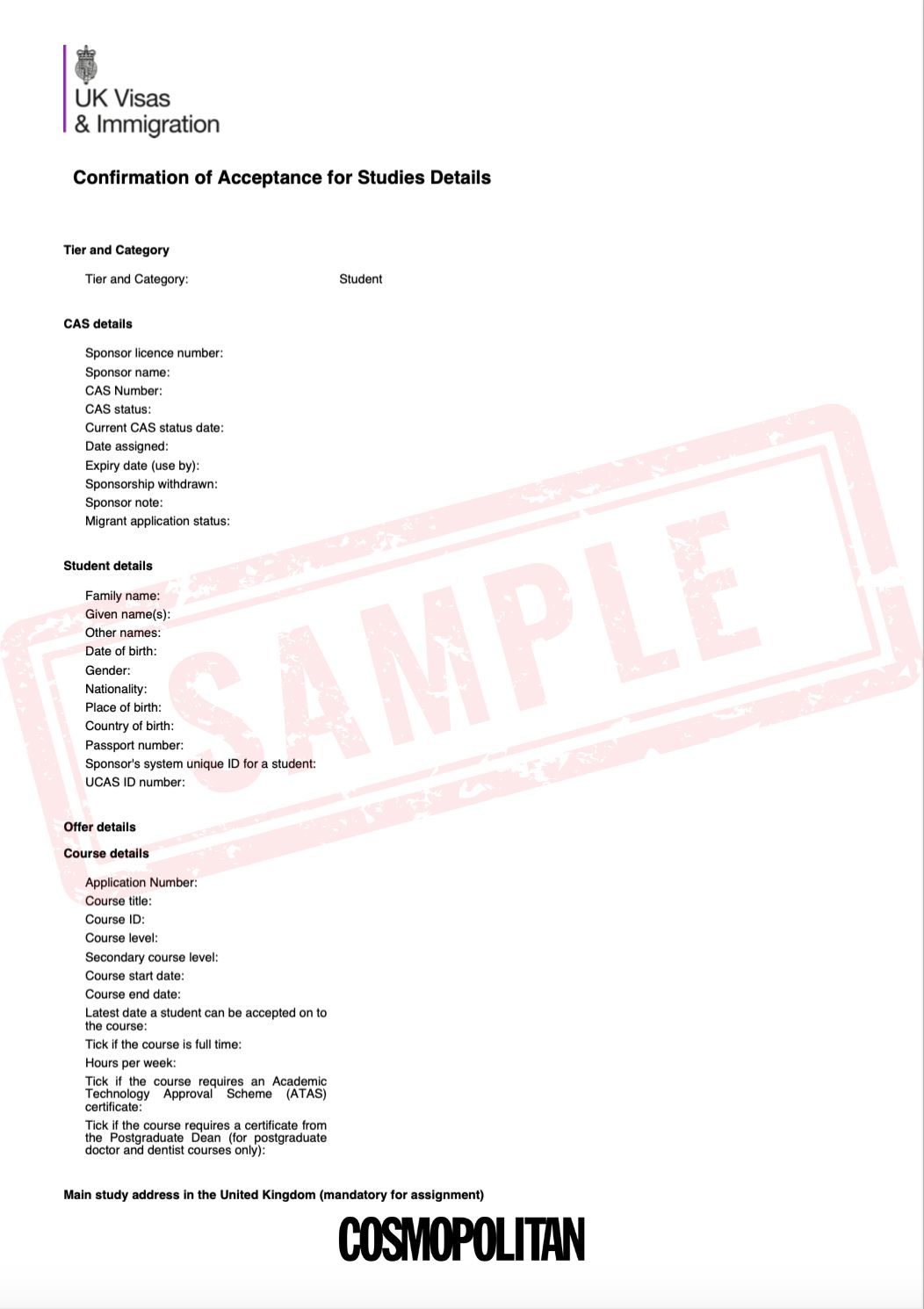
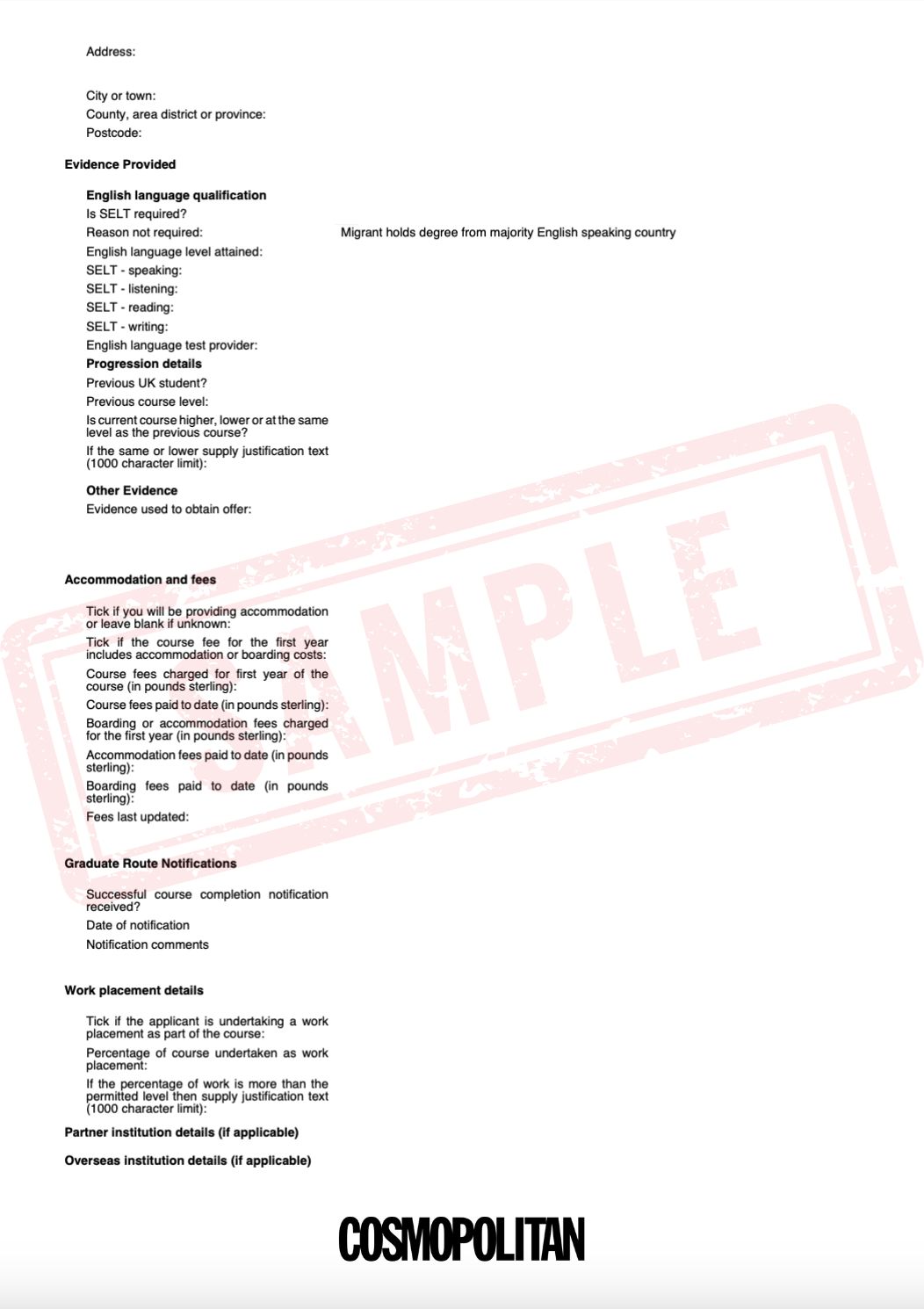
Once you receive your offer from the university, you'll need to request a CAS letter from the Admissions Office. The CAS or "Confirmation of Acceptance for Studies" letter contains a unique 14-digit reference number number, along with information about you and your course of study.
Take note that your CAS number is only valid for six months and can only be used once. This means that you should apply for your UK Student Visa within six months of it being issued. Additionally, if you decide to transfer to another university in the UK, you will have to request a new CAS from your new school (aka new Student Visa Sponsor).
Requirements to request the CAS letter:
- A scan of the details page of your passport (the one you are going to use when you apply for visa)
- A scan of your confirmation/certificate of enrollment letter
- Scholarship confirmation (if applicable)
- Receipt of fees already paid for your study in the UK (if required)
- Evidence of English Proficiency (if applicable)
- A transcript of your academic records. This could be either your high school results (for undergrad), or your college results (if you have been accepted for a postgraduate program).
- A copy of your college diploma (if you have been accepted for a postgraduate program)
- Proof of living/maintenance funds
- Any additional documents relevant to your visa and immigration history, e.g. previous visa rejection
5. Book a Tuberculosis Test.
The Philippines is one of the countries required to present a Tuberculosis (TB) test result when applying for a UK Student Visa. Your test must be from a clinic approved by the Home Office, and as of writing there are only six accredited testing centers in the country.
After booking your appointment, on the day you have to bring the following documents:
- Actual and valid passport
- A photocopy of the passport bio page
- UKTB Biodata and Checklist (printed form)
- UKTB Pregnancy Declaration Form (printed form)
- One (1) Government-issued ID
In the testing center, make it clear that you're getting a TB test for your UK Student Visa application. The fee for TB screening in the Philippines is P3,600, which you will have to pay in cash. Take note of the prohibited attire at the testing center (usually they do not allow sando, sleeveless, shorts, slippers/flip flops).
If your test shows that you do not have TB, you'll be given a certificate which is valid for six months from the date of your x-ray.
6. Choose the correct type of UK Student Visa.
ICYDK, there are actually *four* types of student visas you can apply for if you’ll be studying in the United Kingdom. The Student Visa is for students aged 16 or above who have been offered a place in a UK educational institution. Essentially, apply for this if you're planning on spending your freshman to senior year in the UK.
However, if your course is no more than six months long, and provided by an accredited UK institution, then you will pay £115 (approx. P8,444.06) to apply for a Standard Visitor Visa.
There is also the Short-Term Study Visa for short-term study programs or English language courses between six to 11 months long. It costs £200 (approx. P14,685.32) to apply plus the health surcharge (so you can use the National Health Service (NHS) in the UK).
Lastly, if you're between 4 and 17 years old and plan to study at an independent school then apply for the Child Student Visa. However, for this guide we'll focus on the Student Visa.
7. Apply for the UK Student Visa online.
Once you receive your CAS letter, proceed with the UK Student Visa application online. Make sure that the email and contact number you provide are correct, because UK Visas & Immigration (UKVI) will be using them to contact you about your application status. You can also save a draft version of your application multiple times, if you need to cross-check important information—don't forget to double-check everything before submitting!
You will be required to pay an application fee of £490 (P36,044.75), as well as a healthcare surcharge. To calculate the healthcare surcharge that you are required to pay, you'll need to know your course start and end date, what type of course it is, and the course location. For example, an 18-month master's degree in London would cost £1,552 (P114,166.24).
The final step of the online process is booking your in-person Biometrics appointment.
8. Attend your Biometrics appointment.
After you've paid for your UK Student Visa application fee, the Immigration Health Surcharge fee, and any additional fees needed, you should receive email transaction confirmations from UKVI and VFS Global.
You can upload your documents yourself after booking your appointment, or bring your supporting documents to the visa application center and pay for "Document Upload Assistance" service (P1,165). Just make sure to bring originals or good-quality copies of all necessary paperwork. Here are the required documents:
- Printout of the Appointment Confirmation letter confirming the details of your appointment. VFS Global will send this to you via email.
- Printout of your document checklist as part of your completed online application on GOV.UK
- Valid passport. Ensure your passport is valid at least six months beyond your planned period of stay in the UK.
- Confirmation of enrollment. Your acceptance letter from the university.
- Confirmation of Acceptance for Studies. This is your CAS letter.
- Qualification evidence for the issuance of CAS. This includes any academic paperwork, such as your academic transcript, diploma (if required), etc.
- English Language Proficiency (if required)
- Proof of finances. Show evidence of sufficient funds to cover your expenses during your stay in the UK. If your parent/legal guardian is paying for your studies, aside from their Bank Statement, include your Birth Certificate, Letter of Sponsorship, and a copy of their valid ID.
- Tuberculosis test
You might also be asked to provide proof of lodging, photocopies of old passports and visas (as proof of travel, especially if you have expired UK visas), and other important information. Try to arrive at least 15 minutes before your appointment time. If you are more than 30 minutes late for your time slot, you will need to pay P3,600 in cash.
You can also avail of select Premium Services to speed up the application process:
- Priority Visa (P38,238) - UKVI will aim to make a decision on your application within 5 working days from when you submit your biometric information.
- Super Priority Visa (P76,476) - The fastest way to secure a visa decision, eligible applicants will receive a decision by the end of the next working day after their appointment.
- Keep My Passport While Applying (P5,499) - You can keep your passport while your application is being processed, and only need to submit it once a decision has been made. This service is not available to anyone applying for a Super Priority Visa (SPV).
Visa applications normally take between 3-4 weeks to be processed, but this may be prolonged during peak times. So apply as soon as possible!
9. Wait for your visa application results.
You've done all the hard work, so now all you have left to do is wait. Eventually, VFS Global will contact you and inform you that a decision has been made on your UK visa application. Within a couple of days, you should also receive an email from UKVI with the final result.
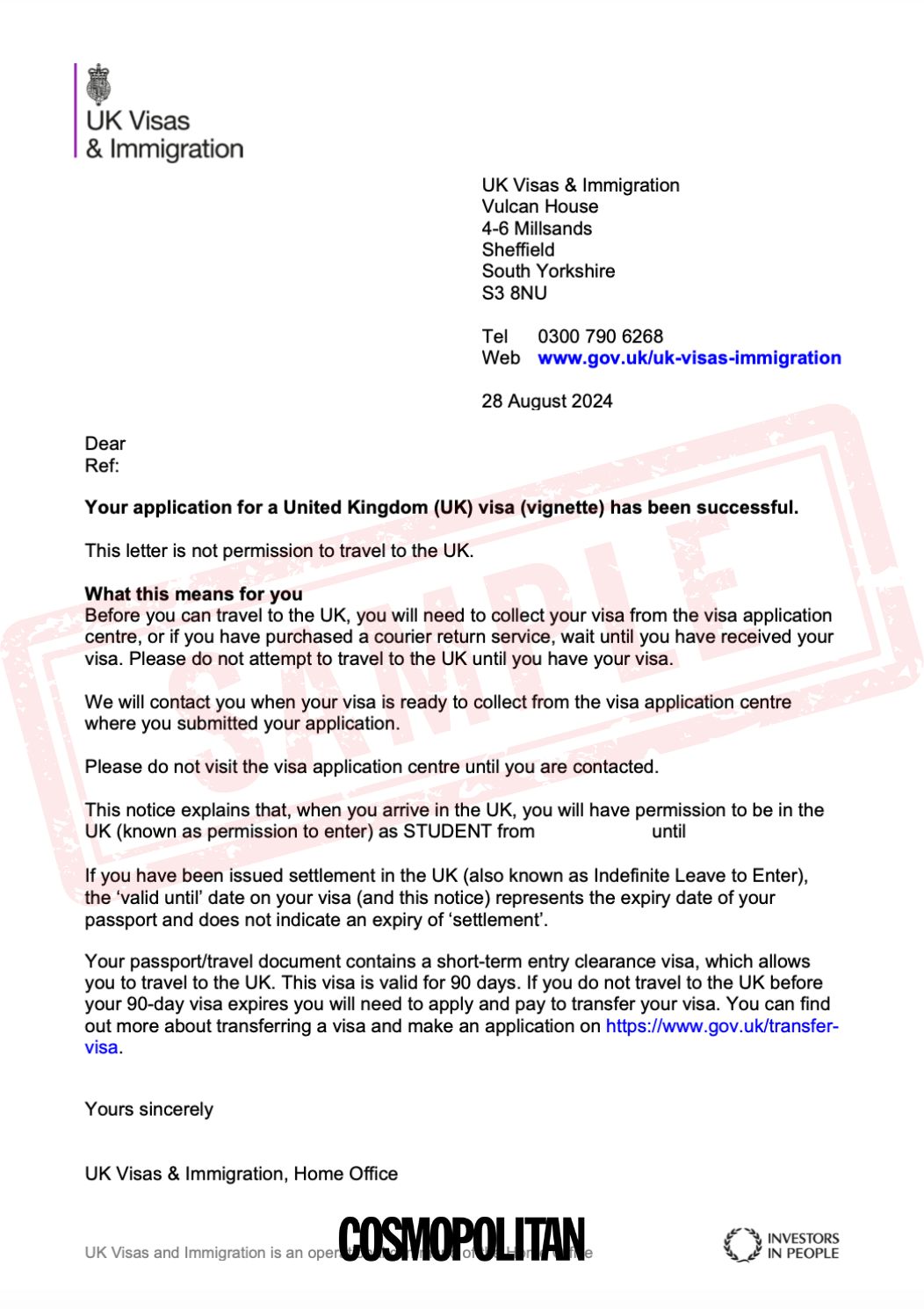
If your application was successful, you should receive your newly-stamped passport. The UK Entry Clearance will indicate the type ("D - Student"), validity period, and whether or not you are permitted to work as a student.
It's important to take note of the validity period, because the expiry date does not indicate the end of your permission to remain in the UK. Rather, your passport now contains a short-term "entry clearance" visa valid for 90 days. If you do not travel to the UK before your 90-day period expires, you will need to apply and pay to transfer your visa (which will cost you £154 or approx. P11,328.35).
Good luck applying!