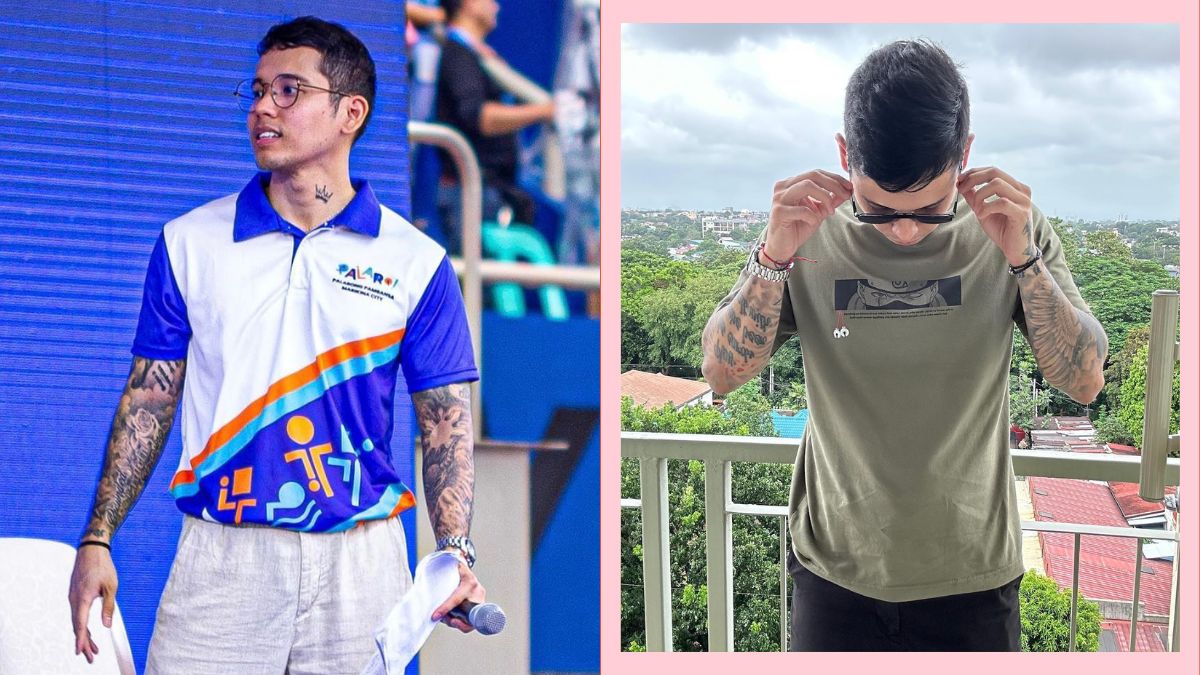
Let’s get one thing straight: Tattoos are not an indicator of one’s character, let alone their work ethic! Although this should definitely be a universal rule of decorum, some people are still prone to criticizing the appearance of inked art in one’s body, discriminating against tattooed people.
Case in point: sports anchor and former basketball player Mikee Reyes (popularly known as Tito Mikee on TikTok) sparked social media debate today after sharing a conversation between him and a potential client who asked him to cover up his tattoos for a project. Unfazed, he offered the coolest response: “Sorry to hear. I’m not really comfortable with being asked to cover my tattoos to do my job. It’s okay. Sorry, I think I’ll have to pass on this. Hope to work with you guys soon!”
ICYDK, Mikee is the first fully-tatted sports anchor on TV, making history alongside the first transwoman anchor KaladKaren in defying industry stereotypes. That said, it comes as no surprise that he declined to participate in the project after hearing the *discriminatory* ask. On Facebook, he shared more of the conversation, where the client pointed out the presence of kids in the event as part of the context behind the request.
He wrote, “I assume kilala nyo naman kung sino kinukuha niyo? 1. You could’ve just told me na ang attire is formal or need ng long sleeves, I wouldn’t look into it. Susunod naman ako. 2. My tattoos make me bad for kids? Pano kung may ma-impart pala sana akong maganda sa kanila?”
He added, “I’m sure hindi kasalanan nung kausap ko. Sinabihan lang naman siya to ask me. Pero tuloy lang tayo, guys.”
He concluded his post by expressing gratitude for all the blessings that came with freely flaunting his tattoos. “God is too good for us to worry about these things. I’ve already made more friends and achieved more things being myself than I could ever have trying to be someone else. Ika nga ng mga tito or tita, thank you, next!”
In the comments section, support for Mikee poured in, and a lot of people also shared their own experiences of being discriminated against for their tattoos.