
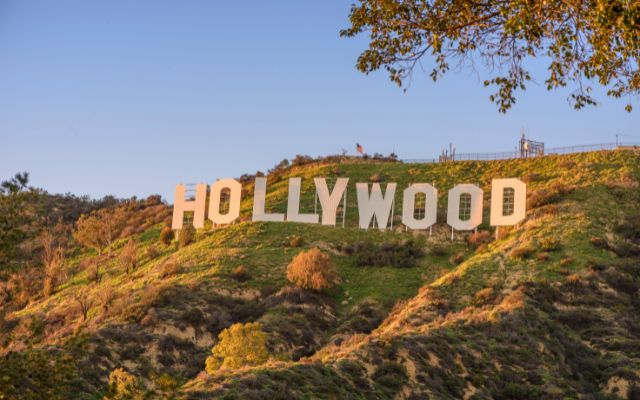
There are many reasons as to why anyone would want to travel to the United States of America. It could be to go tourist-mode and visit the many historical landmarks — think the Statue of Liberty in New York City or the Hollywood sign in Los Angeles — but realistically speaking, there are also Filipinos seeking greener pastures: A better education system or better job opportunities. For whatever reason, the first step is typically an approved visa.
The U.S. visa application process is notorious for being one of the hardest because the U.S. Embassy is known for its strict, meticulous process. To make it easier, we created this comprehensive guide that tackles the different visas you can apply for, the requirements, and other frequently asked questions to guide you through the visa application process.
How to apply for a U.S. Visa: Non-Immigrant Visa, Immigrant Visa, and more
Different Categories of U.S. Visas
There are two main types of U.S. visas. There's the non-immigrant visa which is used to travel to the United States on a temporary basis, and there's the immigrant visa that's used for those who want to migrate and live permanently in the country.
Common Non-Immigrant Visas
There are different kinds of non-immigrant visas and each specifies a purpose to travel to the U.S. We will discuss in detail the common non-immigrant U.S. visas:
- Business Visa (B-1): This visa is issued to foreign nationals traveling to the United States for business purposes, such as attending business meetings or consultations, conventions, and conferences, or negotiating contracts.
- Tourist Visa (B-2): This visa is used for foreign nationals who want to travel to the United States for tourism purposes. This is also the same visa issued for foreign nationals seeking medical treatment in the U.S.
- Student Visa (F, M): This visa is used for academic and vocational studies.
- Media Visa (I): This visa is issued for foreign media, press, and radio.
- Exchange Visitor Visa (J): This visa is for foreign nationals who are traveling to the U.S. to participate in a cultural exchange program. To be more specific, the different purposes of travel include categories of au pair, physician, professor, scholar, teacher, and exchange visitor.
- Temporary Employment Visa (H, L, O, P, Q): The Temporary Employment Visa is issued for petition-based temporary employment in the U.S. The different visa categories under these are H-1B issued for people in a specialty occupation, H-1B1 for Free Trade Agreement professionals, H-2A for temporary agricultural workers, H-2B for temporary non-agricultural work, H-3 for trainee or special education visitors, L visas are issued for the purpose of intracompany transferee, O for individuals with extraordinary ability and achievement, P-1 for individuals, team athlete, or member of an entertainment group, P-2 and P-3 for artists and entertainers, and Q-1 visas are for participants in an international cultural exchange program.
- Transit Visa (C): This visa is issued for travelers who have immediate and continuous transit that passes through the U.S. (a.k.a. layovers) en route to another country.
Common Immigrant U.S. Visas
The Immigrant Visas are categorized into three, namely family-sponsored visas, employment-based visas, and diversity visa programs.
- Immediate Relative & Family Sponsored (IR1, IR2, IR3, IR4, IR5, IH3, IH4, CRI, CR2, K-3, K-1, F1, F2A, F2B, F3, and F4): These visa categories are for applicants who are either a spouse of a U.S. citizen, fiancé/fiancée who will marry a U.S. citizen and live in the U.S., adoption of an orphan child by a U.S. citizen, or for certain family members of a U.S. citizen or lawful permanent residents.
- Employer-Sponsored (E1, E2, E3, EW3, C5, T5, R5, I5, S, SD, SR, SI, and SQ): These visas are issued for employment-based immigrants such as religious workers, Iraqi and Afghan translators and interpreters, and Iraqis and Afghans who worked for/on behalf of the U.S. government.
- Diversity Immigrant Visa (DV): This visa is issued for those who successfully registered for the Diversity Immigrant Visa (DV) Program.
- Returning Resident (SB): This visa is for permanent U.S. residents or conditional residents who stayed outside of the U.S. for more than one year or beyond the validity period of a re-entry permit, that need a new immigrant visit to re-enter the country.
For those who do not see a visa category that fits their reason for traveling to the U.S., it is best to refer to the U.S. Embassy of the Philippines' list of visas.
How to determine the right visa category to apply for?
The U.S. Embassy has what you call a "Visa Wizard" which guides you in identifying which visa category to apply for. It asks questions such as, "What country/authority or area issued your passport?" and "Why are you traveling to the U.S.?"
This does not determine if you are or aren't eligible to receive a U.S. visa. It is still up to the U.S. Embassy to decide your eligibility and the visa category suitable for your purpose of travel.

List of U.S. Visa Requirements
The specific requirements for a U.S. visa depend on the type of visa you're applying for. However, there are similar or general requirements that apply to most types of visa categories. Here is a list of those requirements:
- Valid passport: The passport must be valid for at least six months beyond the period of stay in the U.S.
- A completed visa application: Depending on the visa category you're applying for, the visa application can be accomplished online or in person at a U.S. consulate or embassy.
- Receipt of payment of visa fees: Visa fees, which are non-refundable, vary depending on the type of visa being sought.
- Photo: Most visa categories will require a colored 2x2 photo of you within the last six months. There are specific requirements for the photo, i.e. that the applicant's photo should be of in a full-face view and with a neutral facial expression, taken behind a plain white or off-white background, and wearing clothes normally worn on a daily basis. See the list of requirements.
- Evidence of ties to home country: Especially for tourist visas, it is best to have evidence of your employment or family ties in the Philippines. This is to show that you, the applicant, have a purpose to return to your home country. This may include proof of employment, family ties, property ownership, or other evidence.
- Health and character requirements: Some visa categories require applicants to undergo medical examinations and/or provide police clearance certificates. For example, immigrant visas require a medical exam in the Philippines prior to the visa interview, specifically at St. Luke's Medical Extension Clinic at 1177 Jorge Bocobo St, Ermita, Manila.
- Supporting documents: Supporting documents vary depending on the visa category, such as bank statements and travel itineraries. For those applying for a student visa (F, M), a consular officer may require documents such as transcripts, diplomas, and degrees.
U.S. Visa Application Forms and Links
The U.S. Embassy has standardized visa application forms, both in print and online, depending on the visa category you want to apply for. These need to be fulfilled before the scheduled visa interview.
Non-Immigrant Visa Forms and Links
- DS-160: Online Nonimmigrant Visa Application
- DS-156E: Non-immigrant Treaty Trader or Investor Application
- DS-158: Contact Information and Work History for Nonimmigrant Visa Applicant
- DS-1648 Online: Application for A, G, or NATO Visa
- DS-2019: Certificate of Eligibility for Exchange Visitor Status. : This does not have a downloadable form or link. It is advised that the applicant contact their exchange visitor program sponsor.
- DS-3035: J-1 Visa Waiver Recommendation
Immigrant Visa Forms and Links
- DS-117: Application to Determine Returning Resident Status
- DS-157: Petition for Special Immigrant Classification for Afghan SIV Applicant
- DS-230: Application for Immigrant Visa and Alien Registration (Cuban Family Reunification Parole applications only)
- DS-260: Immigrant Visa and Alien Registration Application (Immigrant Visa and Diversity Visa Program applications only) (Sample)
- DS-261: Choice of Address and Agent
- DS-234: Special Immigrant Visa Biodata Form
- DS-1981: Affidavit Concerning Exemption from Immigration Requirements for a Foreign Adopted Child
- DS-1884: Petition to Classify Special Immigrant Under INA 203(b)(4) as an Employee or Former Employee of the U.S. Government Abroad
FAQs on the U.S. Visa Application Process
How much does it cost to apply for a U.S. visa?
For non-immigrant visas, the fee starts at U.S. $160 or P8,929, while an immigrant visa application processing fee starts at U.S. $205 or P11,441. These visa fees are non-refundable. In some visa categories (i.e. E-1, E-2, H-1B, H4, L-1, L-2, R-1, and R-2) there is a need to pay for an additional visa issuance fee that ranges from U.S. $363 or P20,278 to U.S. $813 or P45,417.
*United States Dollar to Philippine Peso exchange rate used as of May 15, 2023.
How can I pay for my U.S. visa application fee?
You can pay for the visa application fee online via PesoNet or RCBC, or through bank transfers via RCBC. Here's what you need to know:
Online payment: All payments made from midnight to 3 p.m. via RCBC, will receive the receipt purchase date on the same day. It is best to book the interview four to 24 hours after the payment.
Bank transfer: For online payments made through RCBC and PesoNet, the receipt purchase date will be given the next day. It is best to book the interview a day after the receipt purchase date and after 11 a.m.
How to schedule a USA visa interview appointment?
There are two ways to schedule the interview: online and live chat.
Online: First, you must register and create a profile on the U.S. Department of State's website. This will ask for your visa type, visa category, visa class, and personal data (passport details, contact information, mailing address), then you can proceed to the calendar which will tell what dates are available for the interview.
Live Chat: You may also opt to schedule an appointment through the U.S. Embassy's live chat by clicking the red LIVE CHAT button. This is available from Monday to Friday, 9 a.m. to 5 p.m. (except during Philippine and U.S. holidays).
What do I need to bring to the U.S. Embassy on the day of my interview?
There are different requirements per visa category, but below are the common documents that need to be hand-carried and submitted to the U.S. Embassy by non-immigrant (B-1 and B-2) visa applicants on the day of the scheduled interview:
- A valid passport and if applicable, old passport/s with a U.S. visa
- A printed copy of DS-26
- Visa application fee receipt
- One 2x2 colored photo
- Supporting documents: current proof of income, tax payments, travel itinerary, a letter from employer detailing your employment, criminal/court records pertaining to any arrest or conviction.
- For students: latest school results, transcripts, and degrees/diplomas. Best to bring monthly bank statements, and fixed deposit slips to show financial support.
- For working adults: employment letter from employer and payslips from the most recent three months.
- For business visitors: evidence of your position in the company and remuneration.
- For those visiting a relative: photocopies of your relative's proof of status (e.g. Green Card, naturalization certificate, valid visa, etc).
- For previous visitors to the U.S.: any documents attesting to your immigration or visa status.
- For those seeking medical treatment: medical diagnosis from a local physician, a letter from a physician or medical facility based in the U.S. that's willing to treat the medical condition, and a statement of financial responsibility from the individual/organization paying for your transportation, medical, and living expenses.
ADVERTISMENT - CONTINUE READING BELOW ↓
IMPORTANT: If you're not applying for a B-1 or a B-2 visa category, check this list of requirements needed for the visa category you're applying for.
For security reasons, visa applicants are not allowed to bring any battery-operated or electronic device (mobile phones, digital watches, cameras, laptops, etc.) inside the U.S. Embassy.
The following items, but not limited to, are also not allowed inside the U.S. Embassy: large shoulder bags, backpacks, briefcases, food items, sealed envelopes or packages, cigarettes, cigars, lighters, sharp objects, weapons, and explosive materials. The embassy does not have a storage facility or lockers where you can store your phone and other prohibited items.
Where is the U.S. Embassy in the Philippines?
The interview is held at the U.S. Embassy in Manila, 1201 Roxas Boulevard, Manila, Philippines. For inquiries, the U.S. Embassy can be contacted at (632) 5301-2000.
The U.S. Consular Agency is at Waterfront Hotel, Lower Ground Floor, 6000 Salinas Dr, Lahug, Cebu City. You can contact them at 32 231-1261. The agency does not provide any visa services to Filipinos, they only assist U.S. citizens based in the area and U.S. citizens in nearby provinces who are in need of passport and citizenship services.
How much money should I have in my bank?
There is no specific predetermined amount balance needed. In fact, in some cases, the consul officer doesn't ask for the bank records, while in some, even having more than a hundred thousand pesos doesn't guarantee an approved U.S. visa application. Remember that show money isn't the only factor the consul officer considers in approving or denying your application.
How long before my U.S. visa application gets approved?
Applicants will know during the interview itself if the application is approved or denied. The consul officer who will conduct the interview will notify you of your visa status by the end of the interview. If denied, a reason for the denial is provided.
How long is the validity of my U.S. visa?
Part of the admission process is that the consul officer decides right after the interview, on the spot, whether to grant the U.S. visa. However, in most cases, the consul officer won't specify the period of validity and whether the visa is single-entry or multiple-entry.
You, the applicant, will know of the period validity and the travel permit once you receive back your passport with the approved visa.
How to check the status of receiving the U.S. visa?
In the case that your U.S. visa application is approved, you will be notified of the specific time when you can pick up your passport at the U.S. Embassy. There is also an option to check the status online via the U.S. Department of State's Consular Electronic Application Center's Visa Status Check.
To claim the passport, bring the blue ticket stub that was given after the interview.
What are the common reasons for U.S. visa denials?
The common reasons for U.S. visa denials are incomplete or inaccurate forms, insufficient financial proof that you can sustain the trip, and lack of ties to the home country. It is also important to answer the consul officer's answers honestly, as they are meticulous and will cross-examine your answers.