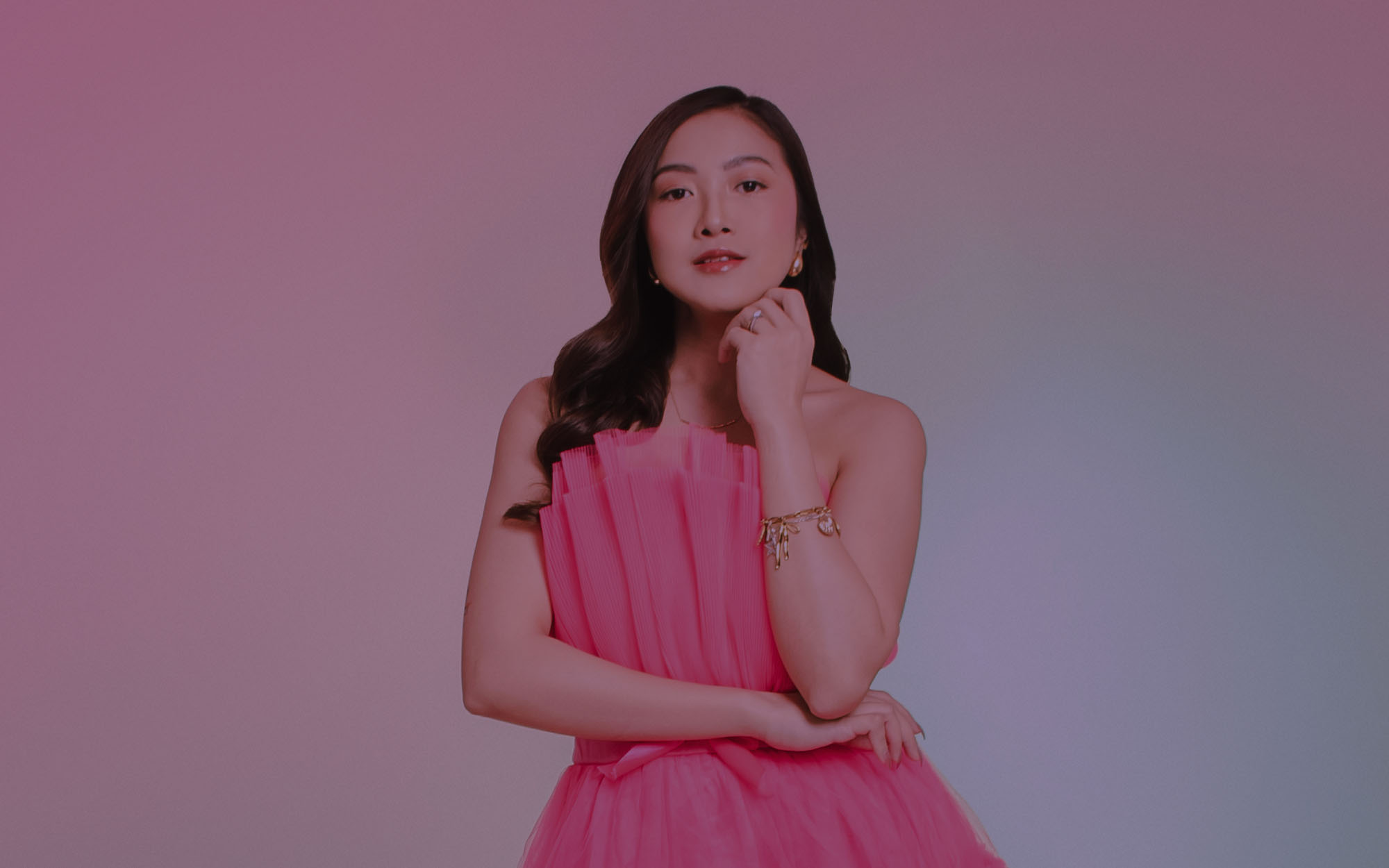
"OB-GYN On Call" Dr. Issa is making sex ed less awkward, one video at a time.

NPC Seal of Registration
Cosmo.ph has been granted the NPC Seal of Registration in recognition of the successful registration of its DPO and DPS
"OB-GYN On Call" Dr. Issa is making sex ed less awkward, one video at a time.

Sex talk in the Philippines still comes with a side of stigma.
The fear of judgment—and the culture of holding back questions—can cost women life-changing knowledge, a chance to catch a potential health issue early, or even an extra layer of protection. And let's be real: stereotypes and labels have always come for women, especially when it comes to conversations about their bodies and vulnerabilities.
"Safe space" is the buzzword of the moment, but actually finding one? That's a whole other struggle. Some women find theirs in three-person group chats with their ride-or-die besties, others in the chaotic but comforting world of Stan Twitter-turned-IRL friendships. Sometimes, it's the girl in the bar restroom who hands over a sanitary pad like a superhero without a cape. And if you're on TikTok, maybe you found yours in a two-minute Dr. Issa Matibag video—because she just answered the question you were too shy to search on Google at 2 a.m.
More popularly known as @obgynoncall.ph, Dr. Issa posts easy-to-digest videos as an obstetrician-gynecologist and sexual health content creator. These include questions sparked from misconceptions, such as, "Can females get pregnant even if they don’t reach climax?" and "Is a gynecological exam painful?" Major health concerns such as PCOS (polycystic ovary syndrome) are also fleshed out, from causes to treatment. The 33-year-old doctor also shares self-care tips involving sex organs—one of her biggest videos is a guide on bush trimming.
But making sexual and reproductive health education accessible isn't the only thing Dr. Issa does. Take a quick scroll through her comments and you'd see how she'd reply to viewers who admit to being scared of consulting an OB-GYN. After all, a real one she met when she was younger inspired her to take the career path.
"Visiting the OB-GYN with my mom back then, and reading birthing books, I feel like that's what inspired me to go into this track," she recalls. During her clinical rotations, it was also the one she was the most compelled to do.
But her focus isn't just on the challenges women face in adulthood. "It was very interesting to me—being able to care for [women] throughout their whole lives. From when they're young, when they're adolescents, to when they're in the reproductive age, and later on, when they're menopausal as well." During her residency at the Philippine General Hospital, she also took inspiration from seeing people from different socioeconomic strata. "Those who don't have access to education and to the right healthcare," she says.
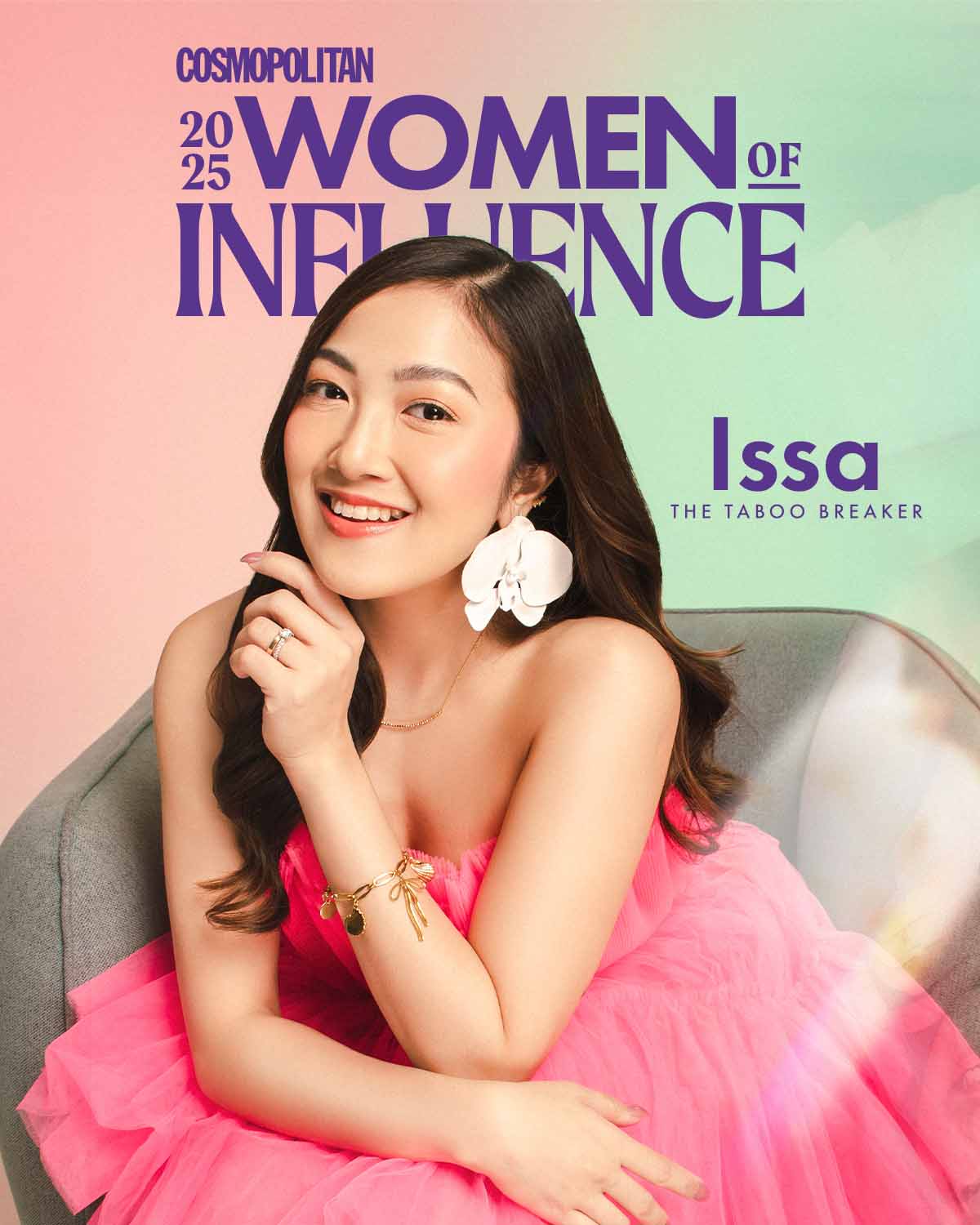
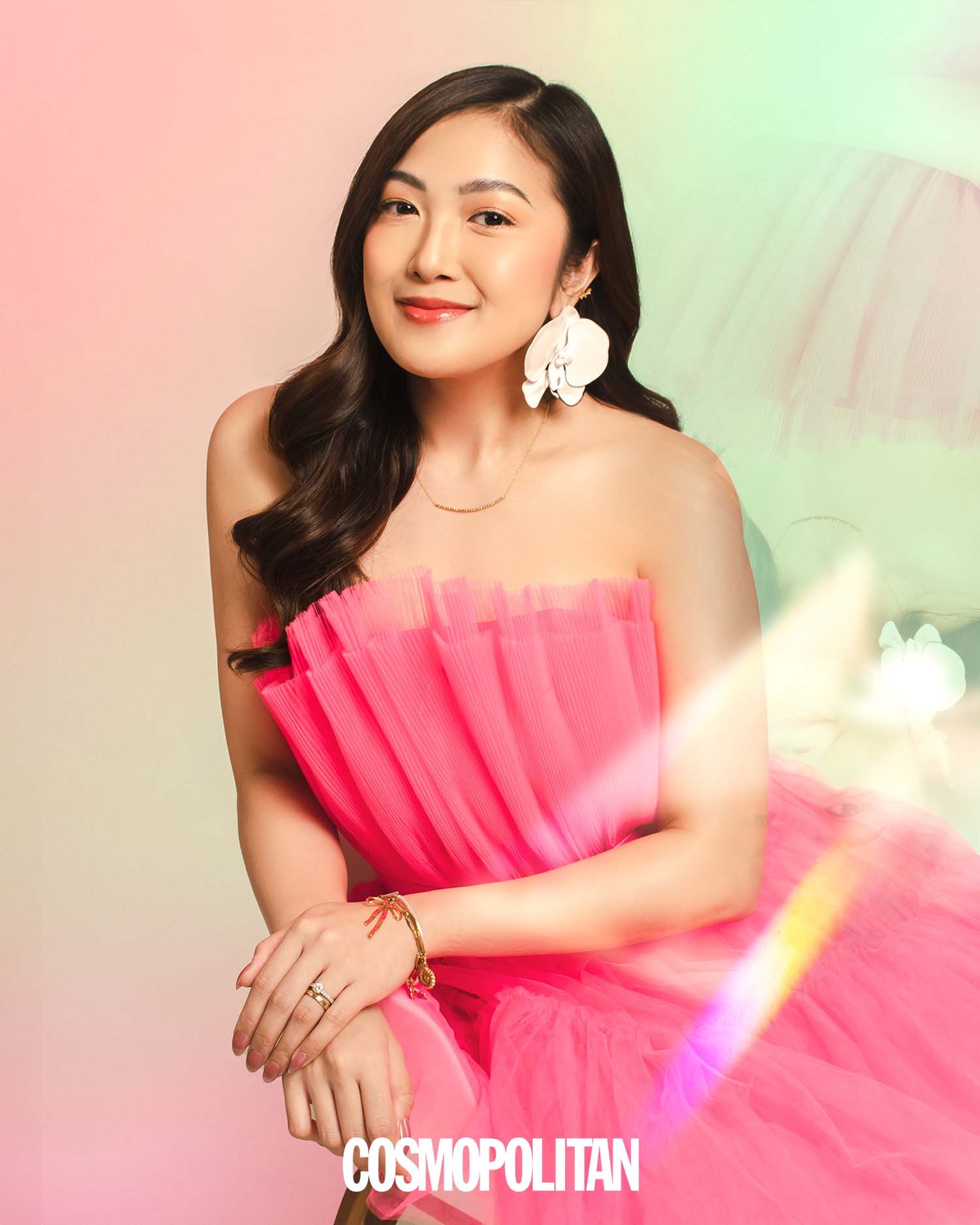
Dr. Issa Matibag for Cosmopolitan Philippines Women Of Influence 2025
Photographed by Miggy Broño
In the middle of a car ride with her husband—the person who encouraged her to create content in the first place—Dr. Issa answered our questions about sexism, the importance of information, burnout, wishes for local healthcare, and what influence means to her as one of Cosmopolitan Philippines' Women of Influence 2025. As The Taboo Breaker, she's making essential conversations about women’s health less intimidating and more accessible.
READ MORE: The Cosmopolitan Philippines Women Of Influence Awardees Of 2025
[Editor's Note: This interview has been edited for clarity. It also dives into sensitive topics about sexual and reproductive health among women.]
Dr. Issa: During high school, I had to read some encyclopedias that were out of date [in most of the libraries]. When we had our classes on reproduction, I felt like it wasn't enough. While we did have videos about reproduction and all of that, [they weren't] as comprehensive as I would have hoped. Of course, they were also trying to be as conservative as compared to now, right? I feel like maybe they also didn't know how to approach it back then.
College was a better place to be in. We had a class in psychology [that] was really dedicated to the psychology of sexual health. That was one of the times when I was [exposed] to a more open-minded conversation about sex. These were also the things that I wished my doctor talked to me about when I would go to a pediatrician or an OB-GYN.
Dr. Issa: [It's] difficult being a doctor-in-training or doing private practice while doing [content creation]. I really just take my spare time, and since I'm already comfortable in front of the camera at that time [when I was starting], it was really more of being able to select the ideas and the knowledge that would be translatable to the layperson.
The feedback that I get from the people drives me to push more [relatable] content, [like] "Doktora, thank you for putting out this content. I'm able to understand this and that."
Dr. Issa: Sometimes it's also not ethical to reply to everyone, especially when they ask questions that are a bit too personal or very situational for themselves that they might misunderstand—it's not a consultation or, like, legitimate medical advice. So baka they might say, "Eh sinabi kasi ng doctor na 'to." So I have to be very careful with what I say.

Dr. Issa: A lot of it is really what I see in the clinics. What inspires me are my patients. [For example], if they come to me with a weird vaginal discharge, and then we figure out [its cause]. Then, that's what inspires me to post something about infection. Or if a patient comes to me because she wants contraceptives [and] her concerns, that's what inspires me to make [a video about] the side effects of contraceptives.
A lot of it is also rehashed topics from before; for example, PCOS is such a huge topic, 'di ba? But then there are a lot of things that we want to learn about [further], like pathophysiology or the lifestyle changes you can do.
Dr. Issa: One of the things that inspired those videos [were] comments from other videos. When I saw that a lot of creators were talking about [the topic], they were being put down, [and] my thought process was, "What if a medical professional talks about it, in a way na hindi siya bastos? Will they think of it in another way?" Then, I saw that a lot of people were waiting for a medical professional.
A lot of females ask about self-play or sexuality, and to me, it's important to talk about it when some of my patients undergo surgery, or if they have infections. I want to be able to establish good rapport so that my patients will be able to open up [about] these things with me, which can also be important when they come in with issues. I want to be able to relay that, "Hey, you can ask your healthcare provider about these things also." It's not just because sexuality is a whole different thing; it's actually part of your health also.
Dr. Issa: A lot of people think that family planning is not accessible. A lot of people think that PCOS is something they don't have a solution to. There are a lot of medical conditions that people have misconceptions [about], like endometriosis, dysmenorrhea, vaginal bleeding, cervical cancer.
We don't put a lot of importance on [these things]. When it's already bad, that's only [when you] actually care about it, because our healthcare does not put a lot of emphasis on prevention or information. We just find out if these things are actually real when we have [them already].
I still believe in primary care and that prevention is better than cure. Having the right knowledge is the most important part, especially when it comes to healthcare. I've seen PCOS patients develop endometrial cancer because they weren't aware. I've seen endometriosis patients who have really bad adhesions when we do surgery, because they thought that their dysmenorrhea was just dysmenorrhea—or like, [it's] normalized na, "Okay lang 'yan kung masakit 'yung regla mo."

Dr. Issa: I talked about this a lot in my videos. I've made a TikTok, a video with Lauvette, and a podcast on age-appropriate sexual education. All [the time] kasi, when they talk about sexual education, for those people who are not knowledgeable about it, it's always, "Matututo 'yung bata kung paano mag-sex."
[I suggest that] as early as they are children—or toddlers, actually—we teach them the right terms to their reproductive organs, both males and females. We talk to them about how these parts should not be touched by other people. Because I've seen how rampant sexual abuse is [among] children. They're not able to comprehend it back when they were small, because they didn't know it was bad that other people would touch [their private parts], or that other people would see [them].
When I talk to these abused patients, parang they thought it was okay. Or they didn't think of it as bad, when other people would show them reproductive organs, [like] with older men. [In grade school], that's a time we can teach them about the menstrual cycle. Both males and females should be aware of what the menstrual cycle is, not just the females. And even [the] parts of the males and the females now with more anatomical details at this time. Later on, when they're in high school, we can talk about reproduction. There are various stages, and one thing has to be learned in certain stages of life. Hindi siya agad agad na, "Uy, reproduction. Uy, masturbation."
Again that's what Senator Risa has been saying—that it's culturally appropriate and age-appropriate. I talked about this in greater detail in one of my videos.
Dr. Issa: It's being able to talk about things [from] a very layperson perspective; really being able to translate medical knowledge into something that a normal non-medical person would understand. And getting everything into a minute or two [as the] attention span is very short nowadays. You really have to be able to deliver your message in a very straightforward way that wouldn't compromise the data or knowledge.
Another barrier was the language. A lot of my videos are in English, pero some people are clamoring na, "Doc, pwede Tagalog?" That's another thing that I have to work on.
Dr. Issa: [Getting] feedback from the viewers: "Hi Doc, thank you so much for this information. I learned something about my body. I'm able to seek [consultation] with my doctors because I saw your content." That gives me enough validation that what I'm doing is good and that there's value in what I do.
Dr. Issa: [Influence] is being able to create change in other [people's lives] and being able to educate.
Dr. Issa: Well, the thing is I'm an OB-GYN; we're all [women]. [laughs] We're a very female-driven career. But it does come with challenges, of course—with the whole medical field, it's still male-dominated. There are some opportunities that you don't get because you're female. The whole of the medical field is challenging already as it is—climbing the ladder requires a lot of hard work and resilience.
Dr. Issa: My gosh! Wait, I'm asking my husband[...] Optimistic, because I'm able to create change for [women] out there.
Dr. Issa: Girlhood means being able to find the right friendships. It's a community that helps each other through everything, to be honest, 'di ba? It's different with your girlfriends, eh. Girlhood is your safe space. Since I cater to female patients, girlhood is serving that community, when it comes to the reproductive and sexual sense.

Dr. Issa: I just hope that we have more of a voice especially when it comes to healthcare. I do hope that we do have a bigger platform; sharing the right knowledge when it comes to the different medical conditions [among female patients]. I just hope we're able to represent these women when it comes to healthcare concerns, and that they're able to relate to us or consult more.
Dr. Issa: Don't be afraid to ask questions. Don't be afraid to seek the right content. Open your mind to it. There's a lot of boundaries that we have as Filipino females. We have religion, we have family, we have social norms that we comply with. So we have to be open-minded, have the right sources for it. Don't be afraid to explore. I think those are the top three things [you need] before [you] dive deeper. Three things that you have to combat. A lot of females, as much as they want to explore, there's always that stigma, especially culturally. Watch OBGYN On-Call. [laughs]
***
PHOTOGRAPHER: Miggy Broño
ART DIRECTOR: Ica Del Mundo, assisted by Bea Bognot and Bea Malonzo
ASSOCIATE EDITOR: Ida Aldana
PRODUCER: Alyana Olivar
HAIR AND MAKEUP: Team Muriel Vega Perez
STORY: Jelou Galang
VIDEO: Cherrie Julian, Jino Del Mundo, and Greeko Junio
SOCIAL MEDIA: Aina Lizarondo, assisted by Elsa Macanilao