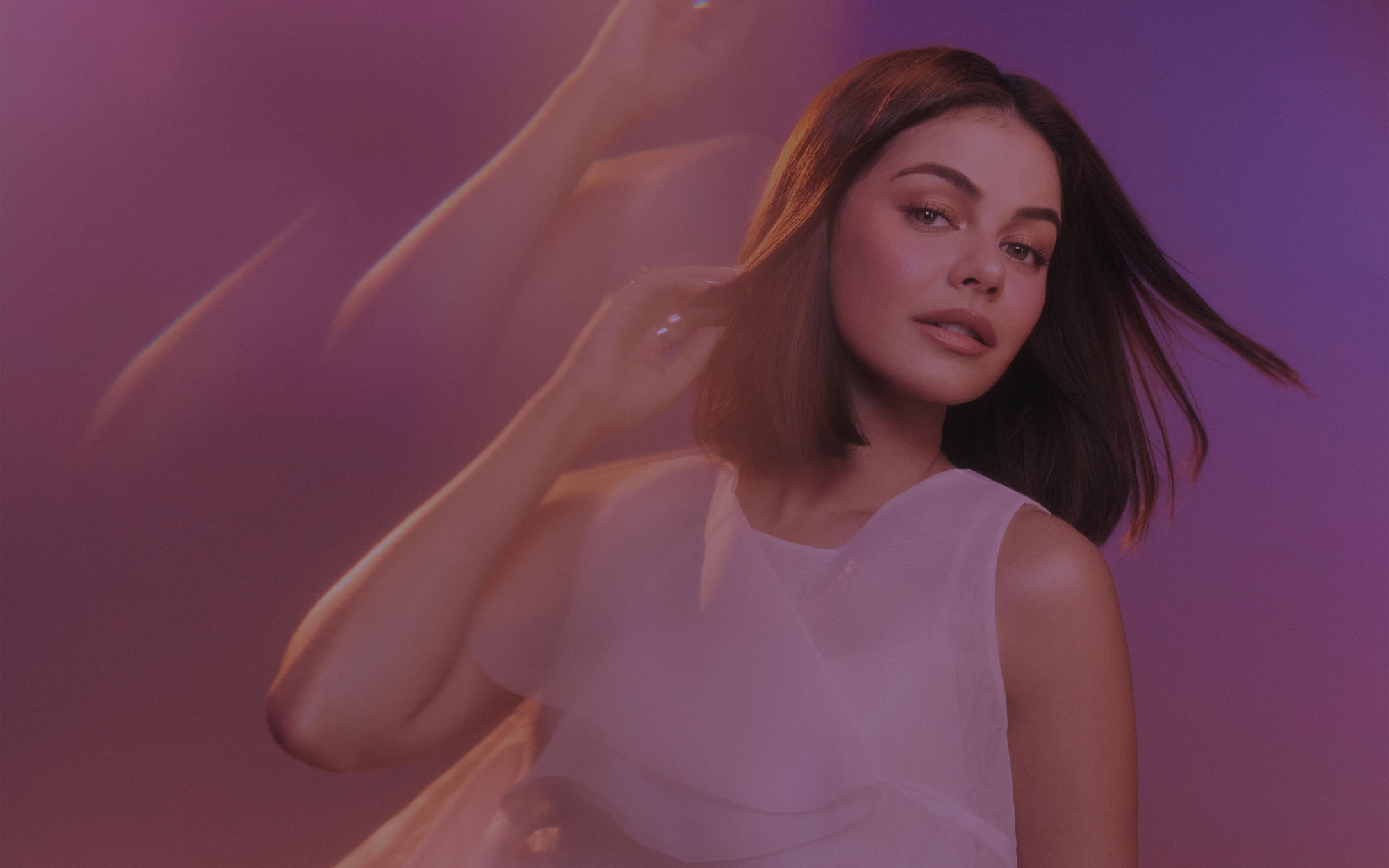
Acting is one thing, but Janine is redefining the role itself.

NPC Seal of Registration
Cosmo.ph has been granted the NPC Seal of Registration in recognition of the successful registration of its DPO and DPS
Acting is one thing, but Janine is redefining the role itself.

Janine Gutierrez has never been one to just play a role—she intentionally chooses stories that actually mean something. Whether she's portraying fierce heroines or morally complex kontrabidas, her craft is an extension of her advocacy. From the feminist themes of Babae at Baril to the justice-driven drama of Dirty Linen, she wants to challenge perspectives, spark conversations, and empower women.
For Janine, film and TV aren't just for entertainment; they're a way to make people feel, think, and even take action. She asks herself: "What values matter to you? Are you playing roles that are meaningful to you?" It's a mindset that guides every project she takes on.
That same energy carries over off-screen. As a World Wildlife Fund ambassador, she's mindful of how her industry impacts the environment, making choices that align with her values. She champions indie films that take Filipino stories to the world stage and pushes for government support for creatives. At the heart of it all? A strong sense of girlhood and sisterhood—because the stories we tell shape how women see themselves and each other.
And while Janine is proud of her family's achievements in the industry, she's carved her own path, taking charge of her career with the same conviction she brings to every role. Looking ahead, she's not just hoping to take on compelling characters—she's ready to create opportunities for more women behind the camera, too.
As Women of Influence 2025's headliner and The Creative Catalyst, Janine is proof that when art and advocacy come together, the impact is impossible to ignore.
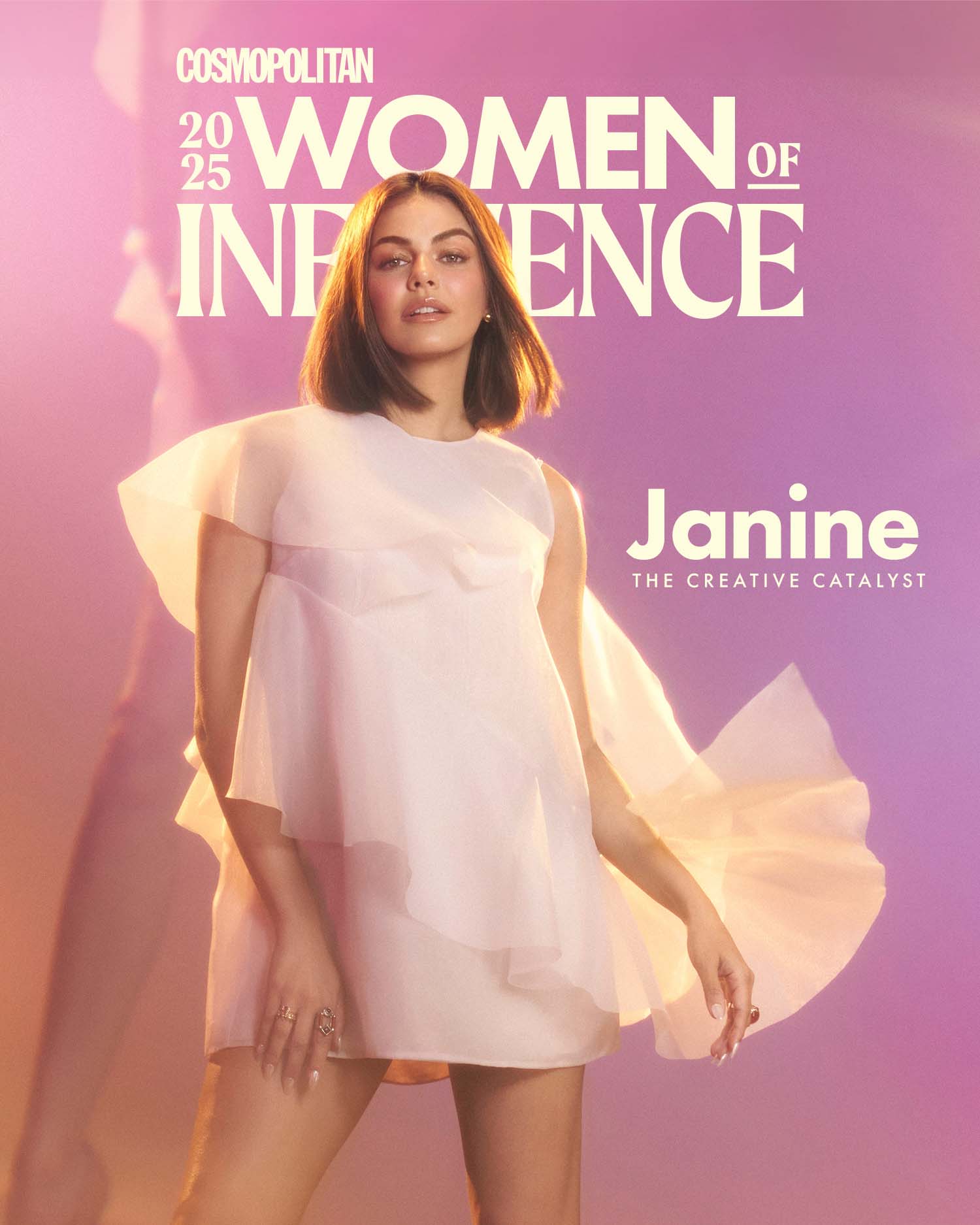
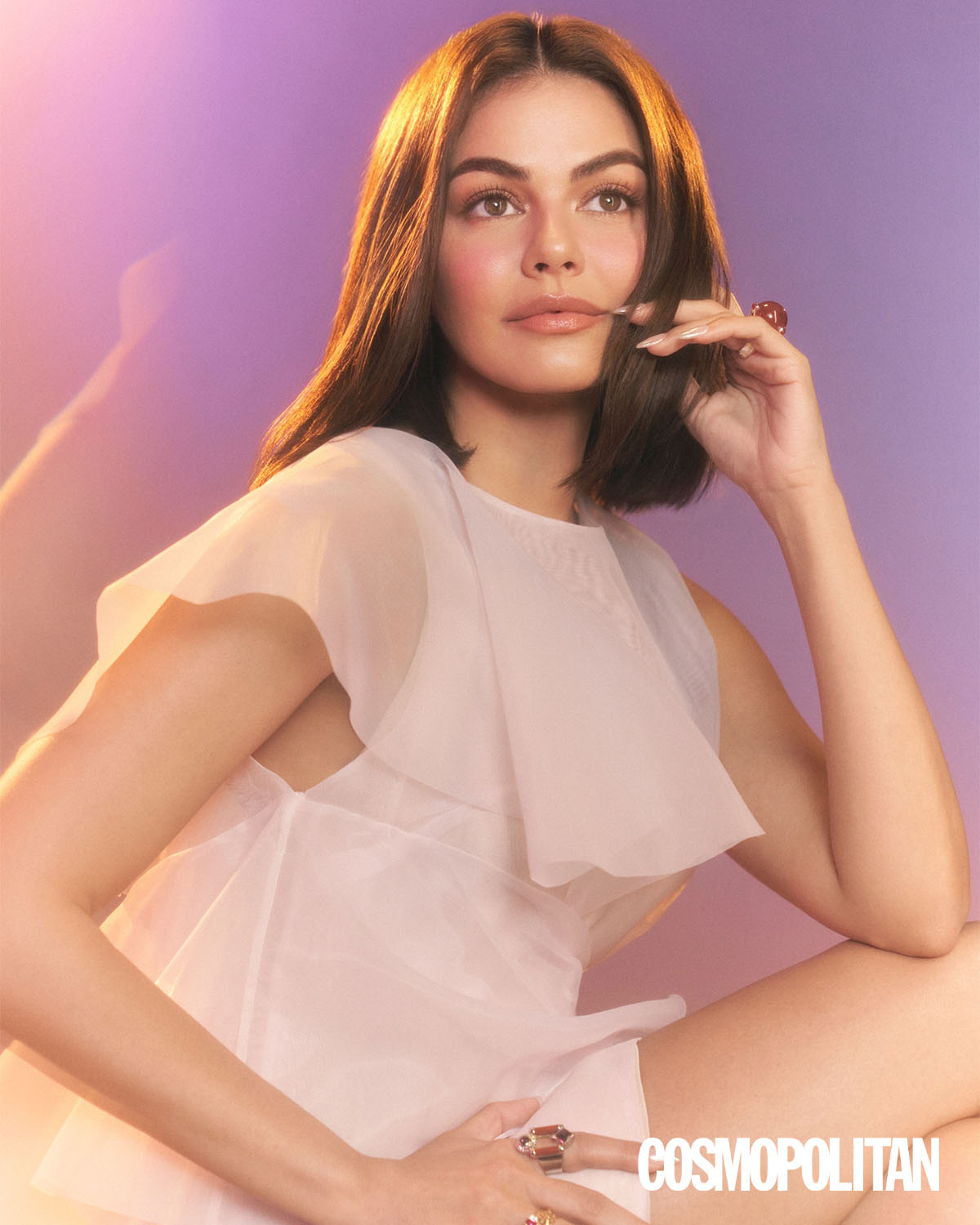
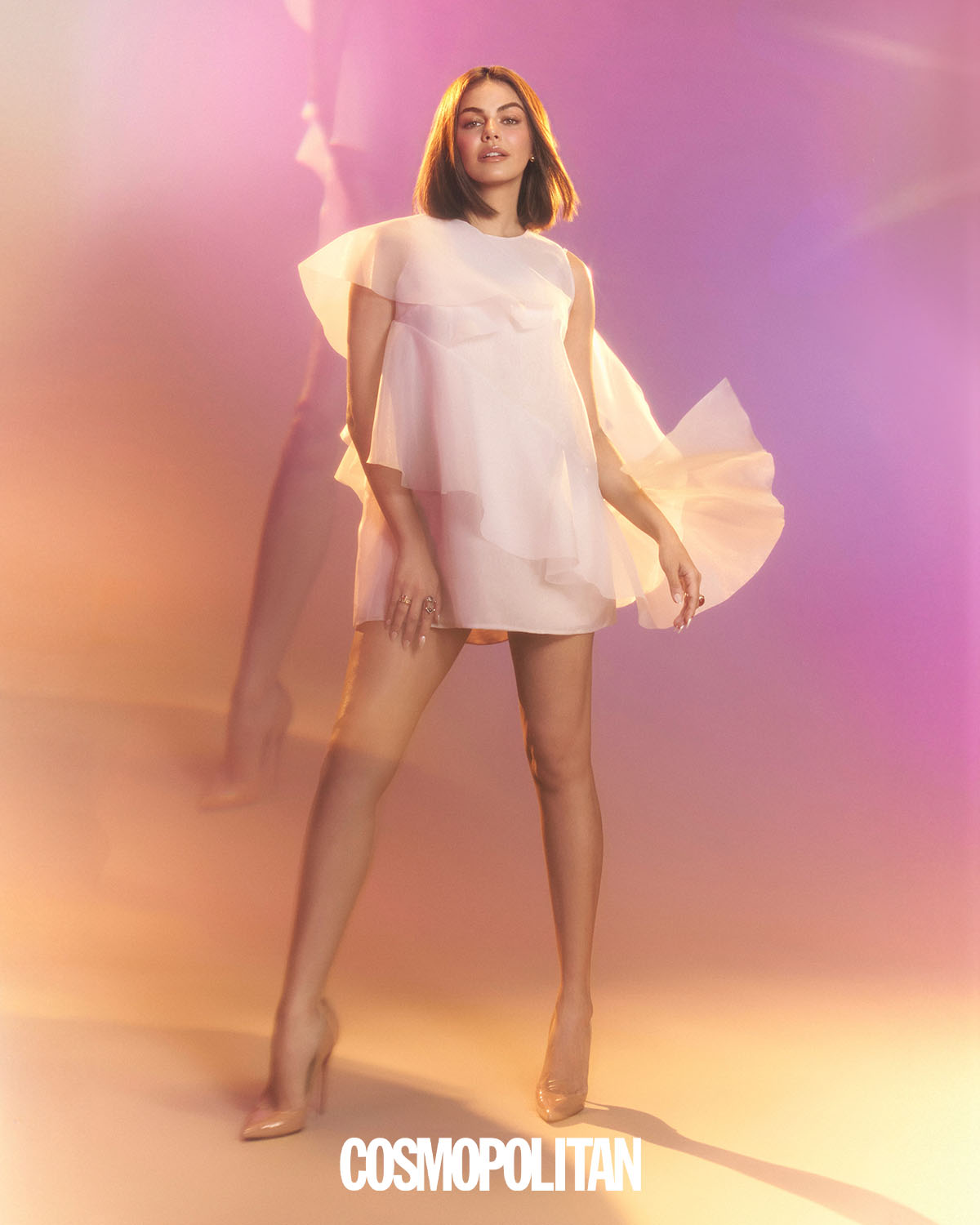
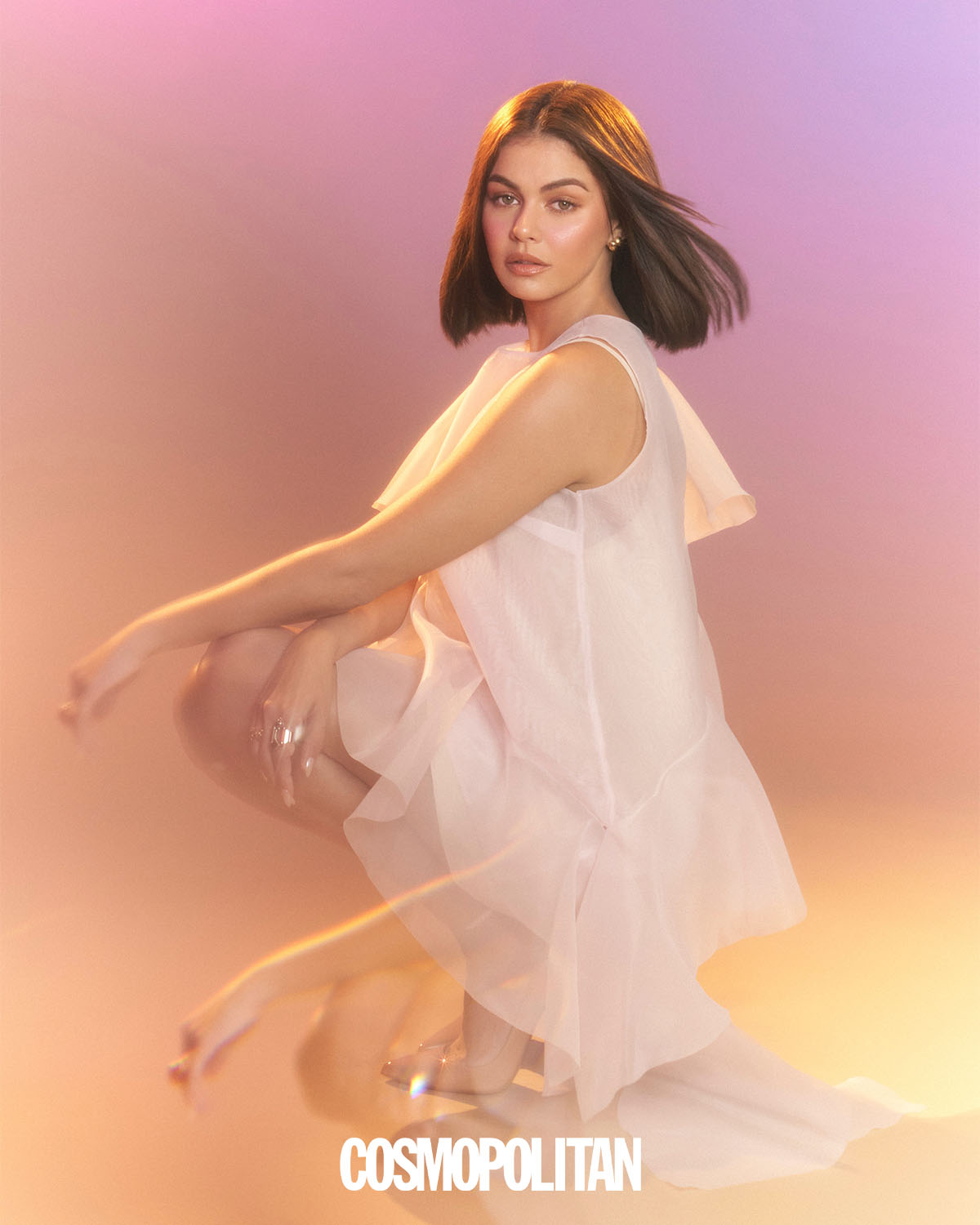
Janine Gutierrez for Cosmopolitan Philippines Women of Influence 2025
Photographed by BJ Pascual
READ MORE: Janine Gutierrez Is Intentional With Her Craft—And Destiny
Janine: I think films are also a form of activism and the themes that you choose to portray in a film can be your weapon or your medium to share what matters to you. I always like to come out of films feeling inspired and either powerful or sad. There's always an emotional effect after a good film, di ba?
Hopefully, through these characters that also inspire me, hopefully they get to touch or inspire or cause the other people who watch it to think about the issues that are present in those films. Bottomline is [laughs] I just like playing characters that I think are cool.
Janine: It would have to be Babae at Baril. I did that like after doing a teleserye that was like kind of fantasy. I was so happy to jump into Babae at Baril because I love anything that has a theme on feminism and owning your voice and your power. On the behind the scenes part, it was also made up of girls—the director, writer, the DOP, the AD, the producer. It was so cool to be part of a very female-led project.
Janine: At that time, parang medyo napapagalitan ako because I was being political on Twitter. And then, of course, a lot of people would say na, "If you're an actress, don't get involved na," or [don't] say anything about issues or politics.
And then when I first had a meeting for Babae at Baril, they said that one of the reasons that they thought I would be a good fit was because of those things that I did.
Janine: The dream career I have for myself is to have a great teleserye and at the same time have a cool film in a film festival. I feel like teleseryes are so uniquely Filipino. And I grew up watching teleseryes and I love them. And it's like the free media, di ba? I mean, it's just on TV and you can, you just turn on your TV and you watch it.
I'm also happy with my recent teleseryes because they talk about things that I'm interested in—like Dirty Linen, it was about justice. With Lavender Fields, I got to play a great character—which is something I also like to show na there are women who are capable of doing these dark things. But what pushes them to do that?
For indie films, it's so great because there's no limit to what you can show. I love the idea of how indie films are shown in festivals in other countries because you get to share a piece of what happens in the Philippines to those people who have no idea what it's like here.
Janine: Yeah, exactly.
Janine: Oh my gosh, I grew up watching... I don't want to say Pangako Sa'yo. [laughs] I grew up watching like the Claudine Barretto ones, I grew up watching Mulawin and Encantadia. And up to recently, the shows of Ate Jodi like Broken Marriage Vow.
Janine: Actually, I didn't always know. I entered showbiz like quite late in showbiz years. I was hesitant kasi I didn't want to do what everybody else in my family was doing. But deep down, I just didn't admit [it]. I guess it was too scary, considering the achievements of my relatives.
I feel like we learn by osmosis, seeing everything they went through and their choices. Pero over the years, I had to develop the confidence in myself to trust my gut. Kasi when I was starting pa lang, I would listen to everything. Everybody else would say, "This is the right thing for you." Somebody else chose like, "Oh, you go to this network. This is what you're gonna do."
I kind of just let things happen, which I think is normal for a young person. Then, over the years, I think it's important to develop your own confidence and listen to your voice. Kasi I've made mistakes where I just followed what someone else said—which I guess is safer din because if it doesn't go well, you can blame someone else. But then I realized, you really have to take accountability for your own choices and make your own career path.
Janine: Yeah, I wish we had more government support because it's so important and that's been evident in Korea. They had so much support from their government when it comes to the arts and now they're a global powerhouse, 'di ba? So I wish that the creatives and the filmmakers were afforded as much support as possible to make projects and get their work out there and [get] support with education and budget.
Janine: I guess the differences in policies and how it is from a developing country—we're the last country to not have divorce aside from the Vatican. I'm sure a lot of other nationalities and countries don't know the realities of how it is to be in the Philippines today, in 2025—that there are still many things that we struggle with what should be given already. So I think it's always good to have our issues out there because they always promote discourse.
Janine: Oh my god, that's so good. I would want like an epic historical film about a female historical figure.
Janine: [laughs] I personally love history kasi. I always think it's so fun to watch a period film and be transported to like that time. And then compare how it was then to how it is now or is it the same? And where did we go wrong or what can we do? I think there's so many cool female characters.
Janine: If we're talking about a specific project, then I'll share what I learned about the whale sharks. There are two popular tourist sites for butanding sightings and it's Oslob and Donsol.
Janine: Yeah, in Donsol.
Janine: They're like a bus! It's such a small operation, right? So it doesn't harm [them]. It's so controlled that it feels natural to where they are. It was in partnership with WWF. It's eco-tourism. We don't disrupt anything about the whale sharks. We'll adjust to them. We'll try to sight them. If they're not there, then that's fine.
So just really be conscious of eco-tourism and especially in our country, which is an archipelago. We have oceans everywhere and we really have to be vigilant in supporting accommodations and tourist packages that are friendly to the environment and to the people in that community.
Janine: Well, first off, you can only control and start with yourself. So those little changes within yourself—bringing baon and being as sustainable as possible with your clothes and shopping, and being mindful of all the material things that you need for work and for every day.
At the same time, I'm also lucky to have been on sets where they're also really mindful about that. In my Lav Diaz film [Phantosmia], there were never any plastic containers. For lunch and dinner, we'd go back to base camp and eat together to save on waste. Hopefully, even the bigger scale productions can adapt to a similar way.
But in terms of our age and our likes, be as mindful as possible when it comes to fast fashion. Get your hand-me-downs from your mom and your lola and shop at ukay. Just be really mindful when it comes to your purchases.
Janine: I think being conscious or specific with the work I wanted to do have been the reason why I don't feel burnt out. Because I only accept projects that I really, really want to do and I'm really, really excited about and I'm so lucky to be able to do that.
Janine: Before, it got to me, especially when I was turning 30. Because 30 sounds like such a big number. You grow up hearing all these titas asking you to like, "O, ano na? Tumatanda ka na." Pero when I turned 30, I was like, "Oh, okay, this is great. There's nothing to be afraid of." If anything, I've grown more confident and I got more agency with my decisions. And I feel like now, age is an advantage.
Your timeline is yours. Your life is yours. You can choose to do whatever you want with it. I hope you're never swayed by pressure from any external factors. Because at the end of the day, it's your life and your happiness. To each their own.
Janine: You know what, I don't have an answer. Because if you had asked me like five years ago, what I look like in five years, I would never have guessed. So, I can't answer because I'll probably give you a wrong answer. But hopefully, I'm able to produce projects that I have chosen and I built the team and they have a really wide audience and I'm still happy doing what I love with the people I love.
Janine: Both. I wanna be like Nicole Kidman who produces all of these things and she stars in them as well. She's everywhere. And because of that, she's also provided so many jobs for women and female directors. It's a whole movement. It's not just who she wants to be on screen. She's really providing jobs for so many people. That's super cool.
Janine: I think I learned this in the past couple of years. Kasi I grew up as a panganay. So, I've always been like a very masculine energy. And, in my younger relationships, I would always be rejecting help, like, "Kaya ko to, kaya ko to." Then, in recent years, I really leaned into my femininity. And, the power of that as women, we're so magnetic and productive.
I always felt like I had to protect myself and be rough and strong. Pero when you're confident pala, you could really lean into your femininity and their strength and being soft and vulnerable and expressing your emotions.
Janine: Yeah. And everything falls into place pala when you don't have to force things. Good things will come to you because you put in the work and you deserve it.
Janine: Oh, my gosh, yes. I can think of something. Accepting compliments.
I feel like it's a super Pinoy thing na, "Ang galing mo kanina." Yung response mo always has to be like, "Hindi, wala yun, wala yun."
Pero it's important din pala to accept compliments because it's a way of acknowledging your hard work, that other people value you. It's also important to give yourself a pat on the back if you tried something or put yourself out there.
Janine: I always try to be part of projects that are for the girls, you know? Like for the girls and the gays. [laughs] I think that for roles that they might relate to or see as a friend or issues that mean something to them or even with WWF. Right now, I'm also trying to be part of the World Food Program.
So, girlhood has always been about a sense of community for me and lifting each other up and being a safe space. I also hope to provide that safe space and be a friend to everyone I encounter whether it be on social media or through my roles.
Janine: I think… I'm gonna say... Oh, my god. [laughs] This is so funny. Maybe destined.
Because I've had a lot of moments where I was rejected from something or I didn't get a job or they chose someone else over me or a missed opportunity. And then in that moment, of course, I'm heartbroken and like, "Why? What did I do wrong" or "Bakit kaya?"
But then, I learned that every rejection, may kapalit siya, like a better role or a better experience or a better trip. It comes back in another form and then a better form. I've learned that everything that I lose will get replaced with something better that's really for me.
I just can't think of a more accurate word.
Janine: A wider array of roles, maybe. When I was younger and I first entered showbiz, I thought that you had to be a sweetheart. The rom-com was the way to success. And through my different films, I've learned that there are so many characters that you can play. I really love playing gray characters.
That's one of the things I do hope also for the industry, especially for the younger girls who are constantly online and they see all the bad things that can be said about them. But hopefully the press also helps and [stops] pitting women against each other for clickbait or clout.
There's space for everyone and not everyone is competing with someone. You can just be like on your own path and people can be successful at the same time. There doesn't have to be someone better than the other.
Janine: I'm gonna go back to compliments because I feel like confidence is so hard to achieve, especially in the Philippines where you're kind of trained to be humble and meek and quiet.
I've been helped by people who have given me strength and told me na, 'Oh, okay yung ginawa mo" or "Maganda yung eksena mo." It's fuel for you to keep trying and keep pushing forward. So if I see something nice on someone else or see the effort that they put, I really let them know. Because it's those small words of affirmation that can be a huge validation for someone.
Janine: I watched Taylor Swift kasi when she first came here in like 2010. And I was lucky enough kasi my friend had a backstage pass. Dinala niya ako. And then Taylor Swift told her, "I love your shirt." So parang, woah, mindblown kami na, "Oh my god, gusto niya yung T-shirt mo." That's when I really felt the impact of being nice.
Janine: Girl, it was just a black-and-white striped shirt, which was super uso at the time. [laughs] So sobrang na-inspire ako kay Taylor Swift. And I try to share that same energy.
Janine: Oh my gosh, Jane Fonda. It's such a random answer. Pero she's my pinaka-pinaka-idol. I started admiring her when I watched her documentary called Jane Fonda In Five Acts, and then it shows her life in five parts.
It starts na she's like a sweetheart, nepo baby, starting out at a job, and then she becomes an activist. And then, the Vietnam War. Then she becomes an Academy Award-winning actress. In the end, she also has her workout era phase. She always used her films to champion the causes that she believed in, whether it be peace or women's wages. Ang galing kasi her work and her filmography was really also her activism.
***
PHOTOGRAPHER: BJ Pascual
ART DIRECTOR: Ica Del Mundo, assisted by Bea Bognot
ASSOCIATE EDITOR: Ida Aldana
PRODUCER: Alyana Olivar
MAKEUP: Anthea Bueno
HAIR: Jay Aquino
STYLING: MJ Benitez, assisted by Laiza Dionisio
STORY: Ida Aldana
VIDEO: Cherrie Julian, Jino Del Mundo, and Olan Pingco
SOCIAL MEDIA: Aina Lizarondo, assisted by Elsa Macanilao