Read more stories about
As a dietitian, Jo is all about adding, not restricting.

NPC Seal of Registration
Cosmo.ph has been granted the NPC Seal of Registration in recognition of the successful registration of its DPO and DPS
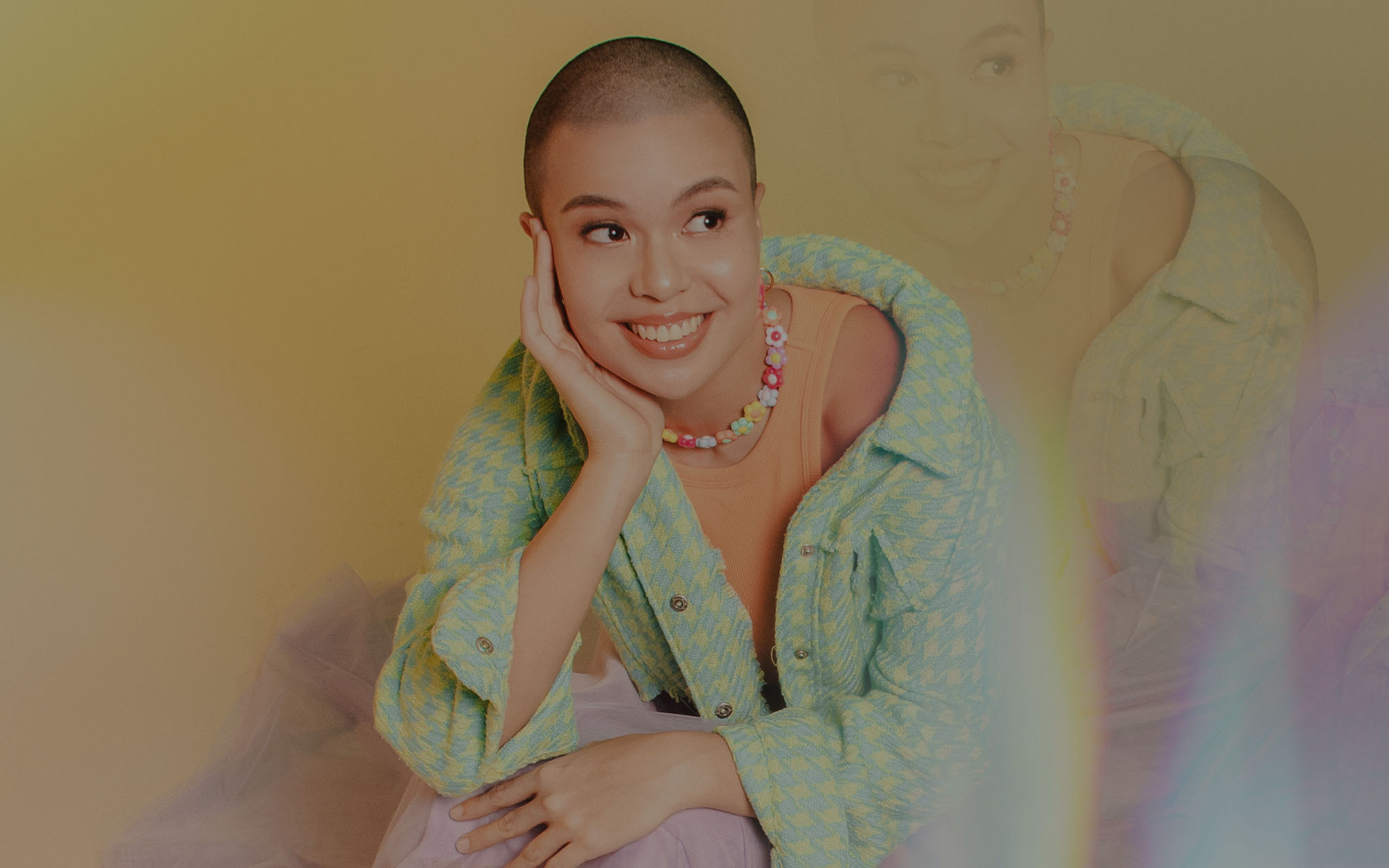
As a dietitian, Jo is all about adding, not restricting.

Jo Sebastian's younger self had no idea that her love for performance would eventually lead her to the path she's on today. What started with ballet has blossomed into a community that she's cultivated by empowering a real and healthier relationship with food and body. In a time when social media glorifies shortcuts and unrealistic routines, Jo champions an approach that focuses on "adding, and not restricting."
As the Wellness Guru among the Cosmopolitan Philippines Women of Influence 2025 awardees, Jo—a board-certified nutritionist—advocated for a healthier approach to body image and eating. Slowly but surely, through her creativity and self-expression, she works to undo years of toxic beauty and diet standards, especially those imposed on women.
With Internet trends like "girl dinner," "mouse moments," and "hot girl breakfast," shaping the way people think about food, Jo is reclaiming the narrative, turning them into more empowering messages. Her content is as welcoming as it is realistic—encouraging anyone who wants to start their wellness journey, without judgment.
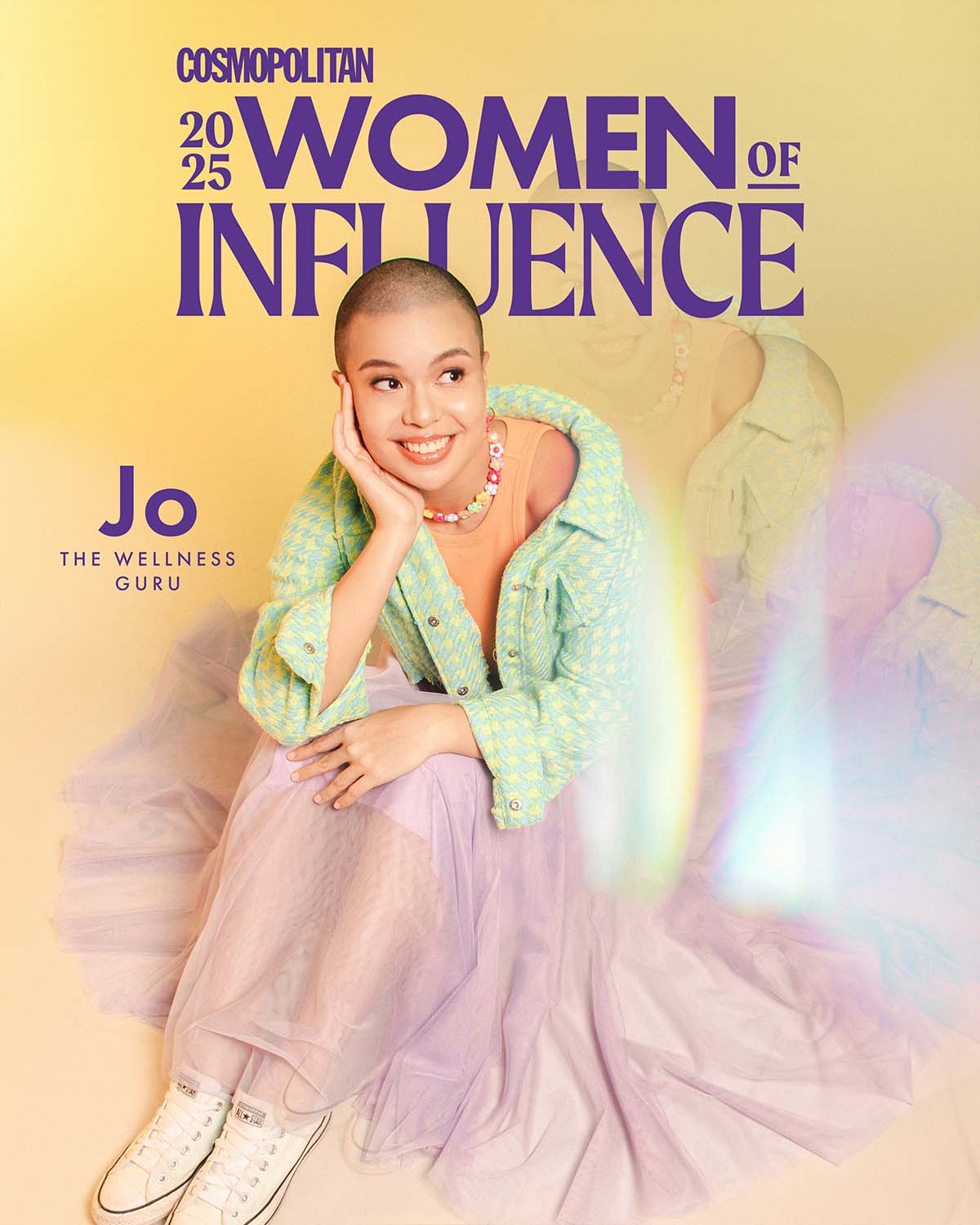
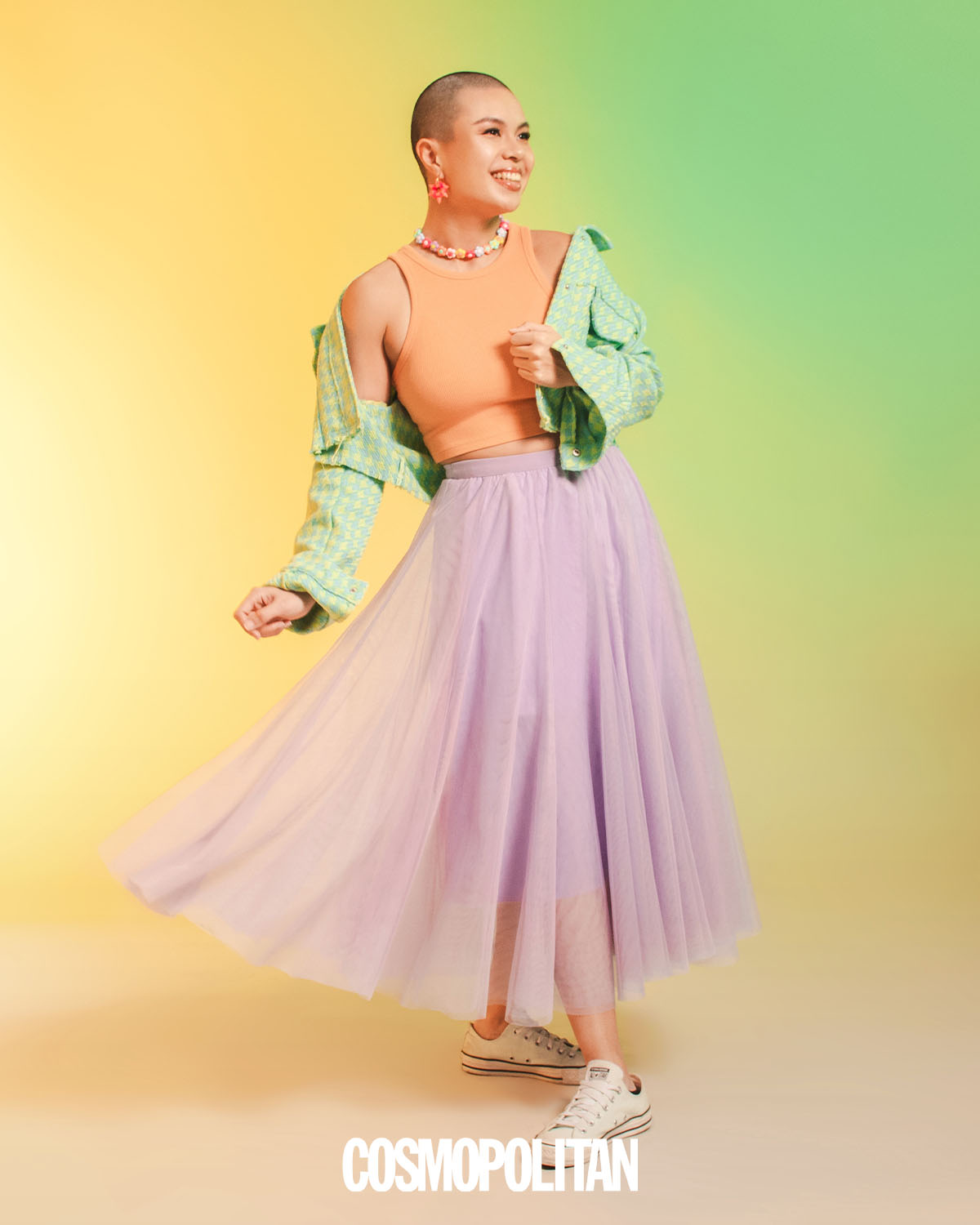
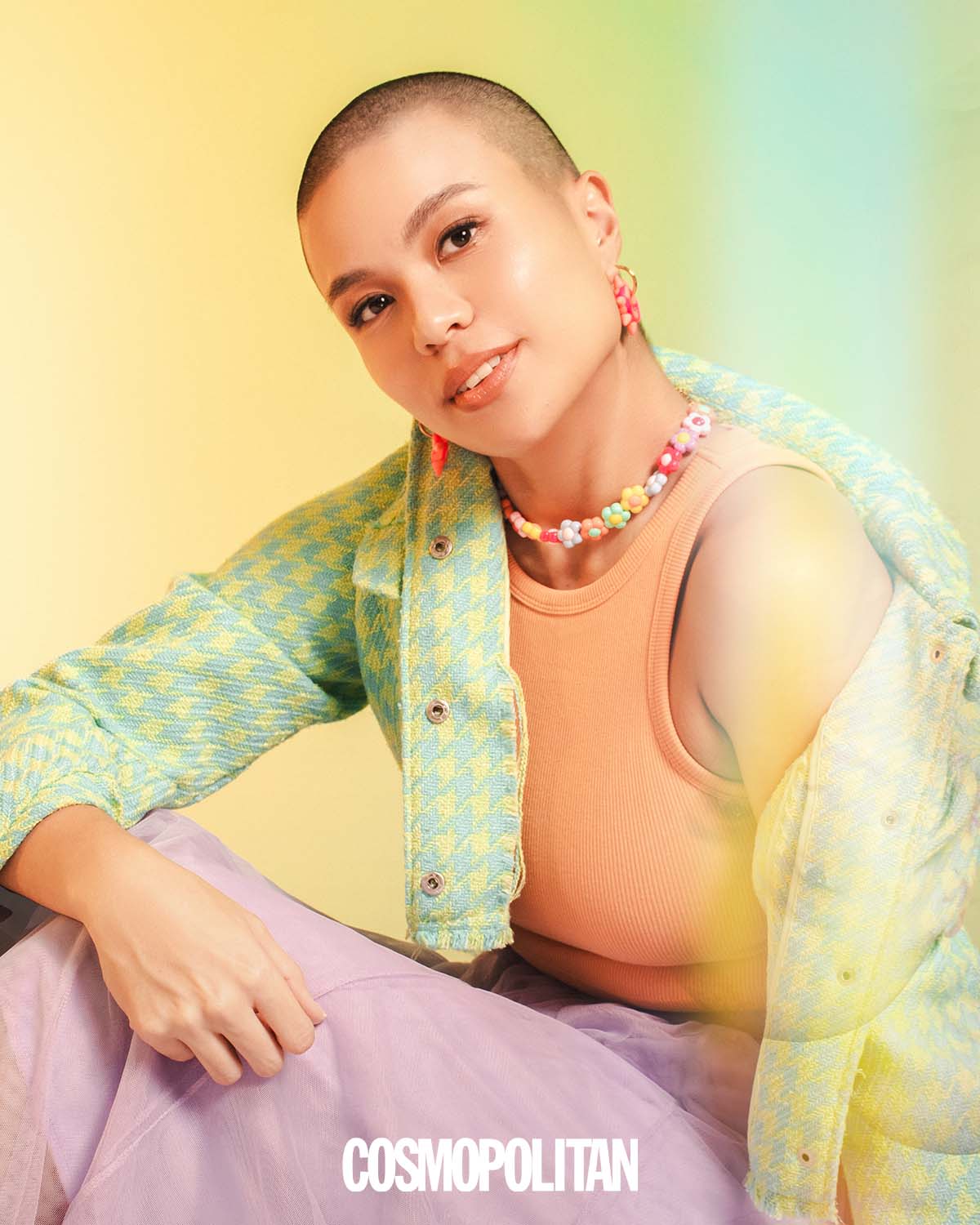
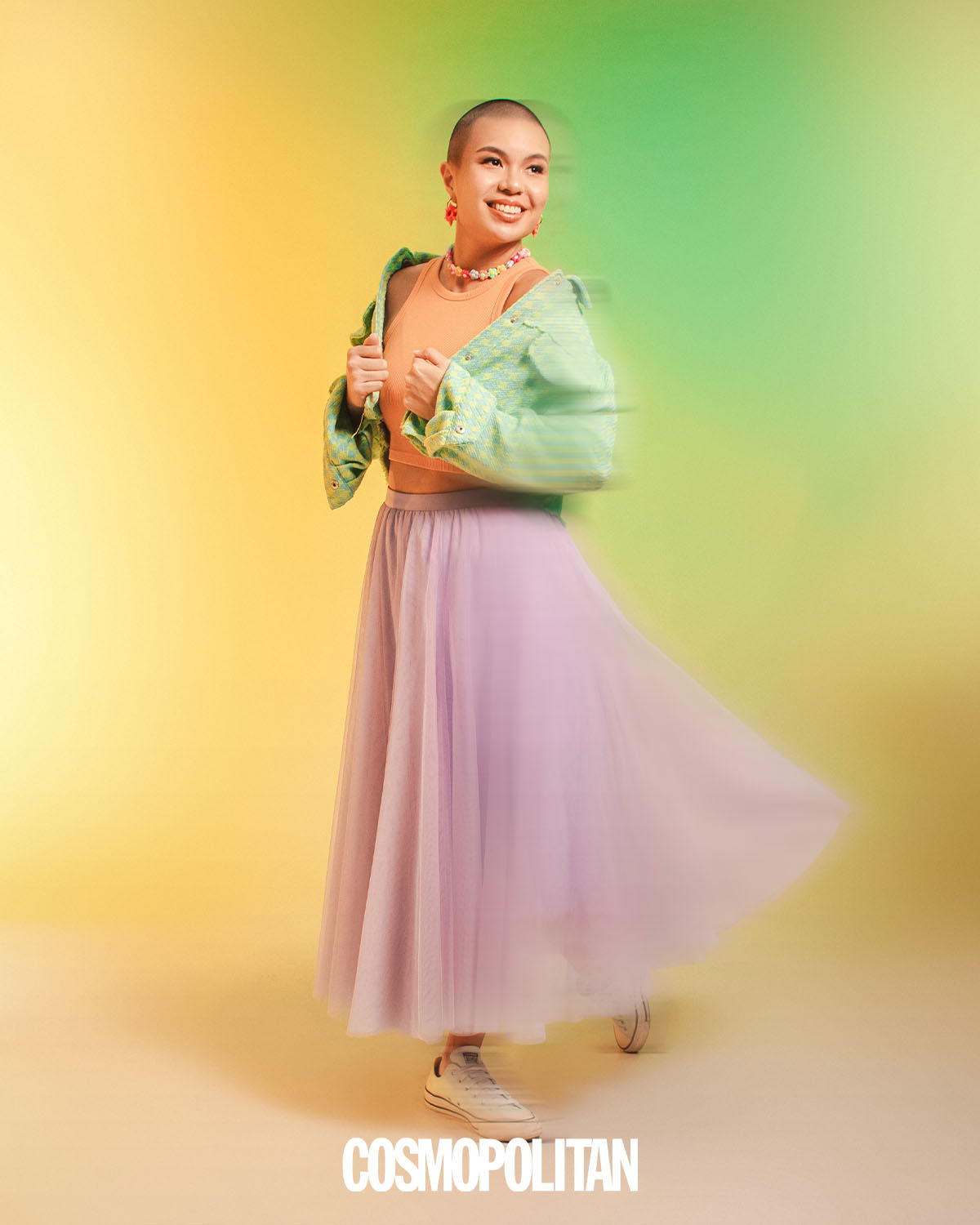
Jo Sebastian For Cosmopolitan Philippines Women Of Influence 2025
Photographed by Miggy Broño
READ MORE: The Cosmopolitan Philippines Women Of Influence Awardees Of 2025
Jo: It looks very different every day 'cos I'm mostly freelance, so it's hard for it to look the same with multiple projects happening all the time. But a typical day would look like me waking up in the morning, and then the first thing that I always want to do is to get some movement in. Usually, I'll go play tennis for an hour and a half. I'll come home, and then we'll have my actual breakfast, and then I'll start getting to work.
The day would either look like me writing scripts, filming, or editing, or sometimes all of them at the same time. Some moments of the day will be spaced out for meetings or consultations with my clients because I have a program for those who are struggling with their relationship with food.
Depending on how much work I'm able to go through, it would be dinner time and to wind down usually, I'll play board games with my sisters or we'll watch a show. But if I'm not yet done with my editing, then I'll try to edit until I'm too tired. That's an ideal day. If I'm productive. *laughs*
Jo: It was during the "beauty guru," "lifestyle guru" era of YouTube. I was watching Bethany Mota's video, and then I was like, "Wow, she seems not exactly the most confident, but she's confident enough to put herself out there." And because at that time, I was very uncomfortable with my body. I felt like I needed an outlet or I wanted to be confident. So, that was kind of my moment of, "I want to do that."
I started to create YouTube videos first, mainly around fashion and lifestyle. But later on, when I graduated [from] nutrition, that's when it became more of the content it is today. I started just to gain confidence and just to have an outlet because I used to dance ballet. That used to be my form of performance or creativity. And now, it's shifted to video format where I'm able to express myself.
Jo: It's a big factor in intuitive eating because intuitive eating has a book. It's 10 Principles of Intuitive Eating. And the goal of intuitive eating, most people think, "intuitive eating, just eat whatever you want, and that's it."
Partially yes, eat whatever you want. But it also focuses on the 10th principle, which is to honor your health. And when we say honor your health, you're also focused on what your body needs.
The intuitive eating framework really introduced this idea of focusing on the nutrients that you need, focusing on taking care of your body, and also understanding what your body needs. It was more of the intuitive eating community trying to get that message out. How does that work in the Philippine context? So that was my goal.
Jo: It would be first, to really look at your intentions. That's so important. Because most of the time, especially when it comes to health, more often than not, we're looking at weight loss as our main goal. And if you ask yourself, why do I want to lose weight? It's usually because everybody works on weight loss when they're trying to be healthy rather than looking at what I actually want or want to feel when I want to be healthy.
Usually, that's more energy, better sleep, or to have more confidence. Those don't have to only show up through weight loss. Those can show up in many ways, especially in building your habits.
So really set your intentions and then take it one step at a time. I know that you want to do it overnight. We all want to just see results instantly overnight. But the faster you try to make it happen, the slower it takes. So if you work on one thing, let it stick, and then go on to the next, that's when it's going to work.
Jo: It's hard because I think a lot of teenagers are very set in their thoughts of what they want and what they need. And they're also very impressionable. When I started doing a lot of restricted diets, I was 13. Nobody could stop me. If anybody told me to stop because it was bad or harmful, I'm like, "Whatever. You can say whatever you want."
What's most important is just to show what health can look like. Because, as we said, they're very impressionable. What they see—maybe in magazines—are very skinny bodies, only one size and shape, only one skin color, all of those things. Then they will think that that's the standard, and they won't feel comfortable in themselves.
So I think it's just to show the diversity of human beings, of reality, that everybody is different, and what you want to focus on is feeling your best and taking care of yourself in the best way possible. Not necessarily through dictating that to them, but just through showing them that it's possible and it exists. That's what I probably needed when I was younger.
Jo: If you're just starting, test them all—within your means of what you can do. Of course, sometimes some classes are a little bit pricey and maybe that's not what can fit for you to test out. But test out as many as you can. Run, walk, dance at home, lift some weights, or do some bodyweight exercises.
Let's say, weightlifting is good for building muscle, cardio is good for your heart and good for your stamina and all these things. While we have those, the best workout that you could ever do is going to be the one that you enjoy the most. That's the one you can stick with. But you have to figure out what that is.
You might not always find it right away, but if you could try movement and find the one that feels good for you, don't just do it once. Try to do it at least five times to know if you like it or not, so that you can stick with it.
Jo: In general, I think they are kind of just these things that we do. Like sometimes I have my girl dinner when I'm too lazy, and I just do a bunch of random stuff, right? But I also think it kind of perpetuates this idea that girls are supposed to be small, tiny, don't eat, skip meals. We're highlighting or emphasizing that again. So it's like re-branding a lot of old diet culture into this new term or anything like that.
They can be empowering in a sense. Hot girl walk can be empowering. I like the video where they were like, if you put hot girl blank on anything, now they're like hot girl taxes. Maybe it inspires people to do something.
But it's really important to look at the massive thing. If you say girl dinner, and it's like, yeah, well sometimes really just end up having a bunch of random stuff at home, that's fine. But if now you're also kind of emphasizing that, oh, "girls should have very tiny dinners, or should have only little bits of food, or should skip breakfast." If that's not what we're emphasizing, then we gotta turn it around. But if it's more of just like, "Well, this is life, and it happens like this, okay." We gotta be mindful of that lang.
Jo: I didn't even know what it was until my fourth year of high school. I was filling up my college applications, and I was supposed to dance, because I danced for most of my life. But I was already at that point in my relationship with dance that I wasn't doing it for myself. All of those pressures had come in, so I wasn't doing it for myself anymore.
I was looking for something else, and then I was really into diets at that time. I was like, "Oh, okay, I'll try this nutrition course, because maybe that will help me eat whenever I want to lose weight." Little did I know that it was so much more than that.
Another thing was I realized that the struggles I had with food, a lot of the girls in ballet were struggling with the same thing. Maybe if I were able to learn more about food, then I could tell them that they don't have to do that themselves, that they don't have to starve themselves, and food is going to be very helpful when you're dancing. So it was a bit of those two when I realized that, okay, maybe this is something that I wanted to do.
Jo: When I think of women in STEM, I think of the people who are doing so much to advance science. And I feel like I'm just posting videos. I don't know if I would consider myself a woman in STEM. But I understand that [nutrition] is science, and it is part of that. So while I don't see myself in that way, maybe that's just me putting myself down.
But I do feel like more women should take up space in science. Because a lot of studies and a lot of things are usually done around men. For example, women's periods. A lot of that is not yet known to how that affects your body and the diet. There were barely any studies on intermittent fasting in women, most of them, are around men. So there are so many different studies that we have that don't include women.
So I think if more women were there, more of the things that we are concerned about would be better. We would have answers to that. That would be great. I would like to contribute to that, but I feel like my space is usually just online. So I'll contribute here.
Jo: One is that all dietitians can cook. I would say no. That's more of chefs. [laughs] We're knowledgeable about what foods would make up the best nutrients. But we're not all good at cooking. And I say that from me as somebody who is not the best cook.
Another one is that we're only here for weight loss. People think that they can only come to dietitians if they need to lose weight. But actually, you can come to a dietitian for anything under the sun.
Whether that's a health condition or you just want to create better habits or a better lifestyle around food. And even when it comes to nutrition for diseases, dietitians are the ones you want to go to. Doctors know some things about food. But they never really get in-depth training around nutrition just in the same way that we don't get in-depth about medicine.
It's important to remember that dietitians are not just there to cook. They're not just there to make you lose weight. But they're there to help you create a better relationship with food. And also to learn how you can work with what you have in the context of your life.
Jo: I always say "You always deserve to eat." You deserve to eat because you are human. Because you need fuel.
But also, it encompasses the fact that access to food should be something that we all have. So the affordability of it. Not being shamed for your food choices or what you can afford. Contextualizing all of those things.
What I mean is that we deserve to eat because we need food. We're human. We need survival. So we deserve access, affordability, education, and awareness of how we can fuel our bodies. And hopefully, that message is really what resonates with everyone. That we recognize from an individual level that we deserve to eat.
Jo: This is the hardest one. But I'm going to say... Type A.
I think it's because I'm a little bit hard on myself in that way. But I think it's also a good thing because it helps me put things that I want to do in perspective and order. My sisters will say that that's who I am. Because it resonates with some of my content but also in my everyday life. I need things to be in a specific order and I need specific schedules and that's just how I am.
Jo: Girlhood is about connection. It's about support. It's about learning from other people so that we can become the best versions of ourselves. Sometimes it's positive experiences with other girls and sometimes it's adolescence too. The lives of the teenagers being teenagers that shape you into who you are.
And that's just part of it. It shaped me because it made me realize what I have to work on for myself. It shaped me because I realized also what I wish I had when I was younger and what we can do now to help those going through that transition. To make it easier for them, to help them feel more confident, and more authentic in themselves.
So I think it's just experiences. That's what girlhood means to me. It's experiencing life and just experiencing things that will help shape you into a better version of yourself that can now help the future do the same.
Jo: Honestly, I think it would be that we would take more space—because especially in nutrition, there aren't a lot of spaces. Usually it's food service, the clinic or hospital, or it's also public health.
I think it would be great if we could take up more space and not just in the three main ones that are usually considered nutrition, but in all different aspects for people to realize that, "Oh, dietitians are needed in all of these spaces."
Whether that's corporate, whether that's in the household or individual level, or anything like that. If we were able to make more space, that would be great. And just to help people realize that there's so much more to nutrition and dietetics than just telling people what to eat. But it's also shaping a lot of our food culture as well.
Jo: Compliments. I think those go a long way. Real, authentic compliments don't have to be necessarily related to our body or how we look, but more related to the energy that the people have. Just like, "Oh, you have good energy, or you're doing great, or I'm so proud of you, or take up space."
Those little bits of encouragement, I think, every day that we get will just remind us that we've got to keep doing what we're doing.
****
PHOTOGRAPHER: Miggy Broño
ART DIRECTOR: Ica Del Mundo, assisted by Bea Bognot and Bea Malonzo
ASSOCIATE EDITOR: Ida Aldana
PRODUCER: Alyana Olivar
STORY: Clara Umali
VIDEO: Cherrie Julian and Jino Del Mundo
SOCIAL MEDIA: Aina Lizarondo, assisted by Elsa Macalinao