Read more stories about
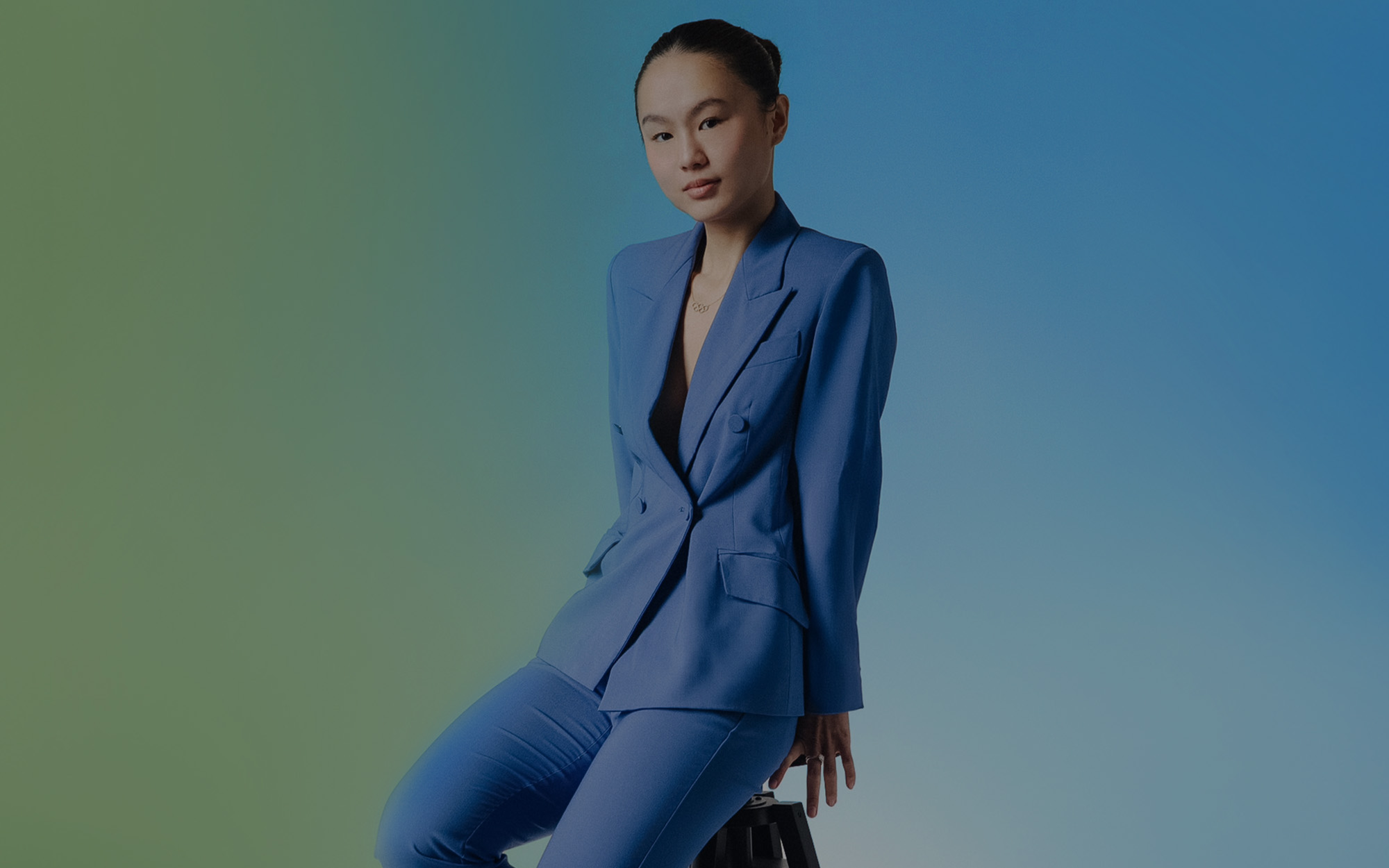
Maxine is changing the game on and off the piste.

NPC Seal of Registration
Cosmo.ph has been granted the NPC Seal of Registration in recognition of the successful registration of its DPO and DPS
Maxine is changing the game on and off the piste.

Maxine Esteban used to wear a "lucky shirt" before a battle on the piste.
Superstitious rituals aren't ancient history yet for athletes. Olympians themselves have a fair share of sacred routines or lucky charms, from cute tattoos to customized socks. The playing field can prompt overwhelming pressure, as you're lifting an entire team—and oftentimes even a whole nation—with every point, and sometimes it can be comforting to cling to something familiar.
However, Maxine's connection with her chosen item was short-lived. "[I always wore that], but then, I started losing so I didn't believe in that anymore," the Gen Z foilist tells Cosmopolitan Philippines. But while Maxine didn't technically triumph, it wasn't entirely a loss, either. "After that, I didn't really have anything in particular. I just pray before a competition and during the competition, I usually confine myself to taking sports drinks or eating nutritional food, like bananas," she shares.
Determination, after all, has always been in her arsenal. Not to mention that one of her strongest suits is being laser-focused—also a major requirement in fencing, her Olympic sport. These traits also helped her deal with the more complicated setbacks outside the scoreboard, like getting an ACL tear while representing the Philippines at the World Championship in Egypt in July 2022. Given the required recovery period, Maxine wrote an excuse letter to the Philippine Fencing Association (PFA). However, Maxine would later discover that her name wasn't included in the list of national athletes anymore, driving her to change nationalities—which the PFA also released a statement about.
READ MORE: Fencer Maxine Esteban Says Her Nationality Switch Is All About 'Regaining Self-Respect'
Maxine has been representing the Côte d'Ivoire or Ivory Coast since 2022. Eventually, she qualified for the Paris Olympics 2024, and her journey wrapped up after a defeat against Pauline Ranvier of France.
But of course, Maxine is not one to completely back down. In 2025, Maxine is in en garde mode, sharing that "things are looking really optimistic." With her sword's tenacity, she's her own lucky charm.
"I actually took a six-month break from fencing after the Olympics for a much-needed rest and recovery. But here I am, back in training and hopefully competing again soon. I'm really motivated and excited," she says. "There are a lot of World Cups and Grand Prix in the next few months. These are the next competitions that I'm preparing for."
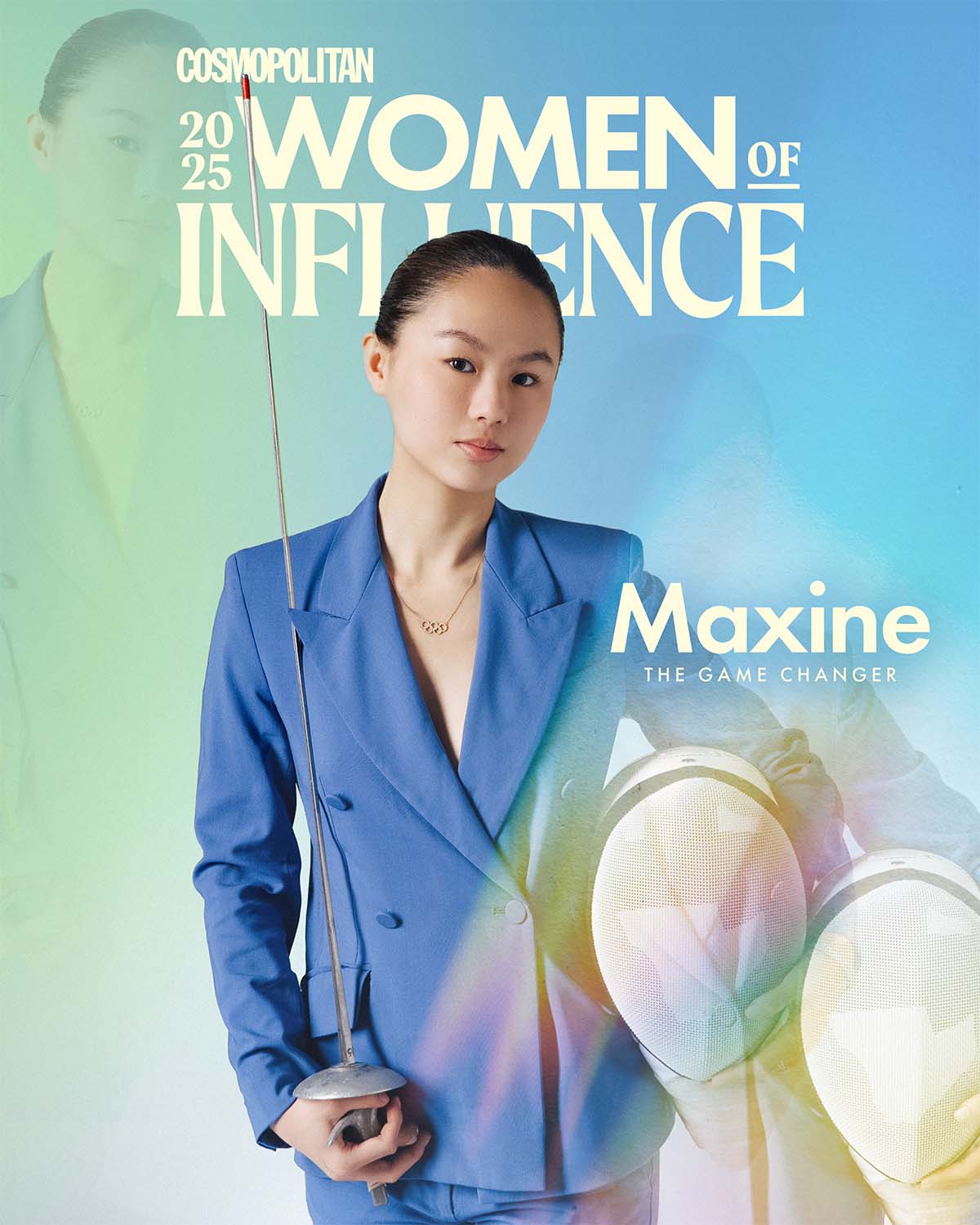
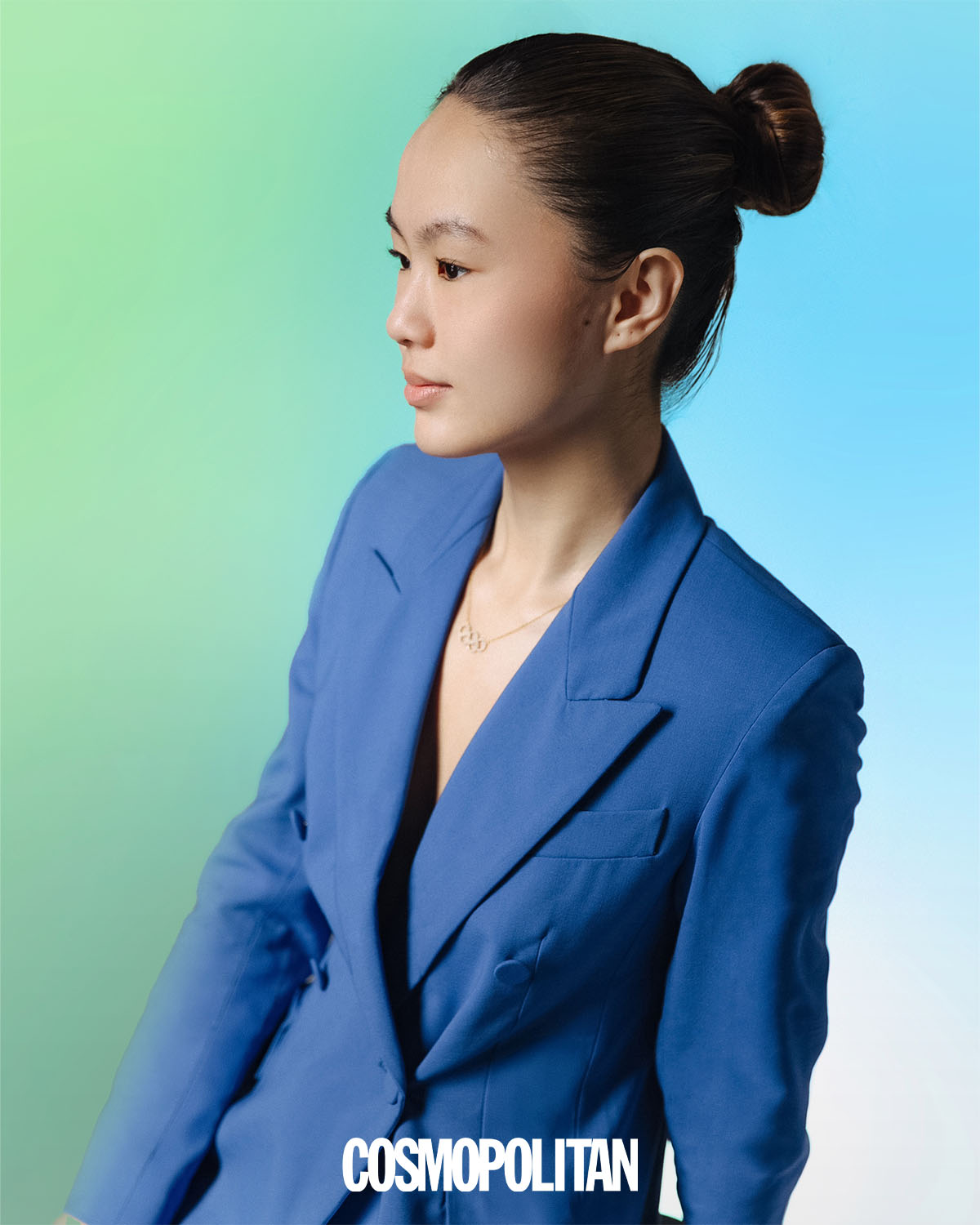
Maxine Esteban for Cosmopolitan Philippines Women of Influence 2025
Photographed by Lena Nugent
We dive further into Maxine's fencing journey, talk about being a woman in sports (and gaming!), and discover the multitudes of the World no. 27 fencer and one of Cosmopolitan Philippines Women of Influence Awardees as The Game Changer.
[This interview has been edited and condensed for clarity.]
READ MORE: This Is Girlhood: Meet The Cosmopolitan Philippines Women Of Influence Awardees Of 2025
I think what's different with my situation is that I'm born to athlete parents. My dad was in the varsity of track and field and table tennis, and my mom was also a volleyball player. So they really believe that sports instill important values, especially in the youth. When we were younger, they really immersed us and encouraged us to find a sport that we will really enjoy. So I tried many different sports, and there really was no pressure on me. It was purely just for exercise and for fun.
Fencing gave me the mental high that I got to experience every time I'm able to score a touch. Fencing requires not only agility and grace, but also a lot of mental strategizing. So you can imagine, like, playing chess, but really with a lot of action. This is why I really fell in love with fencing.
I think living and traveling alone for the past four years really helped me a lot with learning life skills. I think I told many people about this, but I find parallelism between playing a bout and fencing and just taking a train ride with many transfers in [a] limited time.
We may think that taking a train ride is a simple and easy task, but many times it actually takes a lot of strategizing and last-minute split decision-making. When you book a train ride, you also need to check the timeline. It needs to coincide with other transportations, and I always choose the ones with lesser stops, but I also have to make sure that the stops have ample time for [me] to make it to the next transfer.
There's a lot of decision-making, and you need to be very alert, because being in a new country and being unfamiliar with the train system and stations will cost you a missed ride. So when you make a mistake, you need to think fast and to strategize. Just the same in fencing—it gives you the ability to be calm, to be alert and to think fast, even when you're under pressure.
I would say a direct lunge attack, because I'm very impatient, and I really like it when I surprise people. But sometimes, it puts me [in] trouble. But, you know, I don't like waiting, and I'm a doer, so when I have a task at hand, I want to do it quickly, immediately and finish it.
I guess from my family and everyone who believes in me and supports my quest. All throughout these trials and challenges, I'm really grateful that my family was the rock that I could lean on, and the shoulder that I could cry on. And for all the Filipino sports enthusiasts and the masses who really believed in me and supported me, that I could make it, and who really believed in my story and continues to support my advocacies—I'm really, truly grateful for them.
I have to remind myself that taking breaks is okay. Sometimes I know that I really want to push myself every single day, especially since me and my family [put] a lot of sacrifice [to make my] training and [me] being here [possible]. So every day, I will really push myself to the best that I can. But sometimes it's also okay to take breaks and to remind myself that it's okay [and] I should also reward myself for all the sacrifices that I put [into] the sport.
I think playing with guys is both challenging and fun because they're really strong and good. But when you get a kill, you could almost feel that their pride is coming. So I never really experienced sexism, because my dad mostly played along with the group, and since almost everyone knew that my dad was in the game, we were more careful with trash talking. I really cherish the moments, because I get to hit two birds with one stone. I get to do what I really enjoy doing. Plus, I get to spend a lot of time with my dad.
I was very disciplined in both, because to excel in both, you really need discipline, and I think that's one of my biggest assets. Being immersed in sports at a very young age instilled this value in me. I learned how to multitask. I'm very competitive, and as much as possible, I try to reach for the top in both school and sport. My strategy is to always think that I'm late or I'm behind—that way I end up pushing myself harder, and I think that really worked for me.
I think growing up, we always wanted to be appreciated by the opposite sex, and it's like our value is very much dependent on how many guys are attracted to us. But I realized that girlhood is just how confident and satisfied we are with ourselves, and it's not being afraid of rejection or being alone.
I always believe that insecurity is one of the main causes why friendships [don't] last. In sports, just like in any other setting, I was always very secure of myself, because I have never been deprived of love, affirmation or support. I'm happy with what I have. I'm grateful and appreciative of what I've accomplished, and I know that the losses I've encountered are meant to make me a better person or a better athlete. These will make friendships on and off the piste with athletes with the same principles become faster [to build].
Yeah, I think I faced this challenge when I was younger and training at an all-boys school. So when I started beating them in practice, some of them actually resorted to rough play, and to be honest, I was bruised most of the time. Looking back, I never really backed down, and it really encouraged me to try harder.
So [on the] world stage, gender inequality is not much of an issue anymore, because—I'm talking about fencing in particular—the International Fencing Federation gives a lot of effort in ensuring safe sport and fencing. So fencers, coaches, [and] parents worldwide are well educated about gender equality, and are very informed about violating this, because there are many avenues installed by the FIE for complaints.
I just treat it as something that can better me, and I learned from the mistakes that I made during that competition. Actually, looking back, I have no idea how I managed, but like all the trials that I've been through, especially when I was removed from the [Philippine] team.
But only God's grace could have made everything possible, and sometimes it still gives me a lot of rollercoaster of emotions when I think about everything that happened—the injuries, the removal from the Philippine National Team, and the warm welcome from Côte d'Ivoire and the victories that followed, and then my direct qualification in the Paris Olympics.
I know that no one knows the darkness, the chaos, the fear, [and] the anxiety—all the emotions that I was subjected to—but I just really prayed hard during that time and asked for guidance and strength. Through it all, I kept telling myself that I can do this, and I've come such a long way. I've trained all my life for this moment, and as long as I've done nothing to hurt anyone, then God will carry me through.
First, I will always be Filipino at heart. Circumstances have led to a shift in my representation, but that won't stop me from wanting Philippine sports to improve and ensuring that Filipino athletes' voices are heard with my advocacies in education and legislation. I envision Filipino athletes who are well-equipped, not only in education, but also with good training and facilities.
Filipino athletes with skills that are world-class and can compete [on the] world stage, This is really two-fold—having world-class skills and being able to compete [on the] world stage are two different things. They need to always come hand in hand and to make this into a reality, one of the most important things we need is an environment of professionalism, safe sports, and fair play. I believe that if Filipino athletes want to make it globally, then there should also be a lot of changes in the way that sports federations are being run in the country.
In the piste, [it is] to be the first homegrown Filipina to win an Olympic medal in fencing. Off the piste, [it is] to be able to have a legislation approved for the protection of our national athletes.
For me, girlhood is defying restrictive gender roles and embracing one's identity beyond labels. Girlhood is about individuality, confidence and resilience—it motivated me to keep going despite all the challenges that I faced.
[I hope for them] to not just look at results, but also enjoy the process.
By not putting other women down online and trying to create a safe space on the Internet, and by not leaving any hate or negative comments to judge other women.
Dangerous. I guess I look sweet in person, but then if you really get to know me, I could actually be really dangerous.
For example, in fencing, before, they always overlooked Filipinos, and sometimes they’d even forget to put the Philippine flag in some competitions. But then I start to win medals and prove to them that Filipinos are very, very talented. And then the next day I see the Philippine flag. They overlook Filipinos, but we could actually be really dangerous.
***
PHOTOGRAPHER: Lena Nugent
FINAL ARTIST: Miggy Brono
ART DIRECTOR: Ica Del Mundo, assisted by Bea Bognot and Bea Malonzo
ASSOCIATE EDITOR: Ida Aldana
PRODUCER: Alyana Olivar
STORY: Jelou Galang
SOCIAL MEDIA: Aina Lizarondo, assisted by Elsa Macanilao
[::{"articles":["90126","90159","86073","88888"], "widget":"More from cosmo"}]