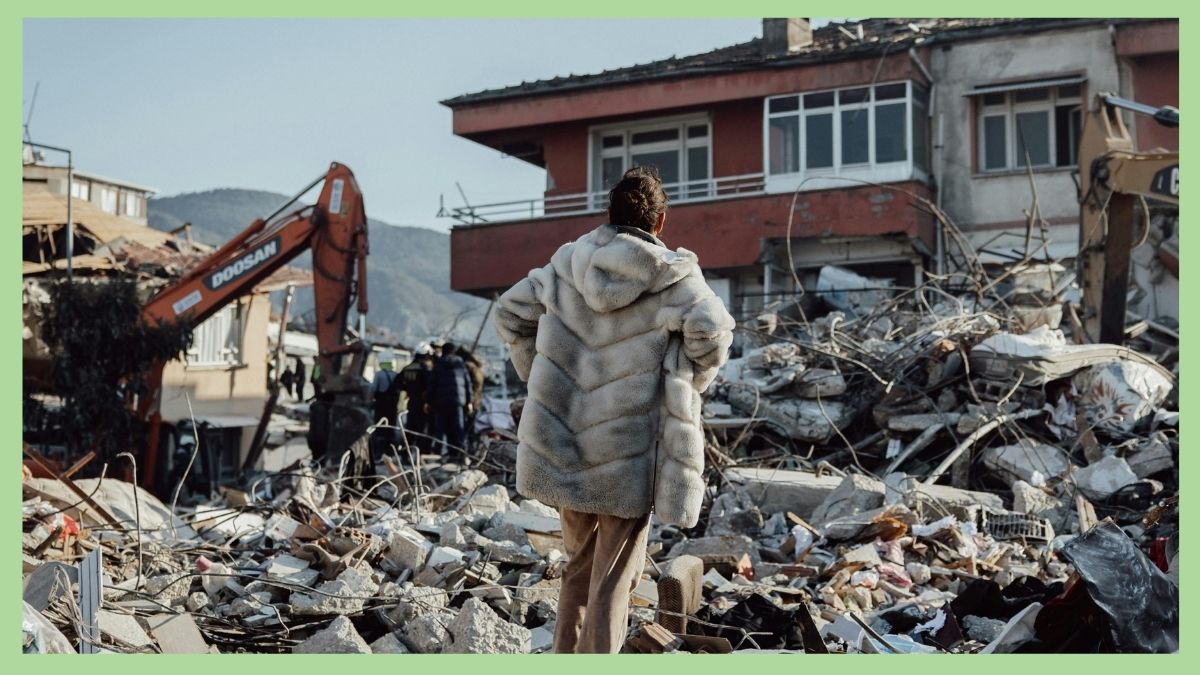
With discussions about "The Big One" resurfacing, many may wonder if it's just another scare tactic. But since the Philippines is one of the countries sitting on the Pacific Ring of Fire, the reality is that a powerful earthquake can strike us at any time.
If a magnitude 7.2 earthquake were to hit along the West Valley Fault, the impact could be devastating, leading to the collapse of at least 168,000 buildings and claiming more than 33,000 lives according to the Philippine Institute of Volcanology and Seismology (PHIVOLCS).
If that doesn't sound alarming enough, it should! And if you're unsure about what to do, here's a guide to help you prepare before, during, and after an earthquake.

What to do before an earthquake
1. Monitor developments
Staying informed is one of the best ways to prepare for an earthquake. To do this, you should follow credible news sources and the official social media pages of the Philippine Institute of Volcanology and Seismology (PHIVOLCS) for real-time updates. Government agencies frequently release earthquake preparedness guides, hazard maps, and advisories.
2. Build your emergency essentials.
In Japan, where earthquakes are frequent, authorities recommend that households have a standard emergency kit. As the Japan Times has said, this should include a flashlight, portable radio, extra batteries, phone chargers, a can opener, a first-aid kit, blankets, rain gear, and copies of your important documents such as passports, bank details, and land titles. Keeping cash on hand is also crucial since ATMs and digital transactions may be unavailable after a natural disaster.
You should also store enough water and nonperishable food for at least three days. Having a similar emergency kit in your car can be useful in case you need to evacuate quickly.

3. Earthquake-proof your home
While not everyone can afford to retrofit their homes, simple measures like securing heavy furniture such as cabinets, bookshelves, and large appliances can help reduce the risk of injuries. Ensuring that electrical and gas lines are properly maintained can also prevent sparking a fire after an earthquake.
4. Know your evacuation routes
Identify the nearest evacuation centers and emergency exits in your home, workplace, and school. Local government units (LGUs) and barangays usually have disaster preparedness plans, so make sure to familiarize yourself with them. This knowledge is important if an earthquake occurs while you are outdoors or in an unfamiliar area. Being aware of designated evacuation sites ensures that help is accessible to you and your family when needed.
5. Save any important phone numbers
Aside from your loved ones' contact numbers, you should also save the hotlines for any emergency services you may need in case you get injured or trapped during the disaster. We've done the work for you and compiled them below:
National Emergency Hotlines:
- National Emergency Hotline: 911
- (02) 925-9111
- (02) 928-7281 [telefax]
- +63966-5000-299 [Globe]
- +63932-318-0440 [Smart]
- Philippine Institute of Volcanology and Seismology (PHIVOLCS): (02) 8426-1468 to 79
- Bureau of Fire Protection
- (02) 426-0219
- (02) 426-3812
- (02)426-0246
ADVERTISMENT - CONTINUE READING BELOW ↓ - Philippine National Police
- (2) 722-0650
- +63917-847-5757
- National Disaster Risk Reduction and Management Council (NDRRMC)
- 8911 1406
- 8912 2665
- 8912 5668
- 8912 3046
- 8911 5061 to 65 (TRUNK LINE) Local : 100
Metro Manila Emergency Hotlines:
- San Juan City: 137-135 / 7004-0432
- Paranaque City: 829-09-22
- Muntinlupa City: 925-43-51
- Valenzuela City: 292-14-05/0915-2598376
- Makati City: 870-11-91/870-14-60
- Caloocan (south): 288-77-17
- Caloocan (north): 277-28-85
- Mandaluyong City: 532-21-89/532-24-02
- Marikina City: 646-24-36/646-24-26
- Pasig City: 632-00-99
- Pateros: 642-51-59
- Manila: 927-13-35/978-53-12
- Taguig City: 0917-550-3727
What to do during an earthquake
If you are indoors, remember the "Duck, Cover, and Hold" technique. Drop to the ground to prevent being knocked over, take cover under a sturdy table or desk to protect yourself from falling debris, and hold on until the shaking stops. If no shelter is available, cover your head and neck with your arms and stay away from windows, mirrors, and anything that could shatter or fall. Avoid doorways unless they are strongly reinforced since most aren't structurally safe during a quake.
If you are outside, move to an open space away from buildings, trees, power lines, or anything that could collapse. If you are driving, stop safely at the side of the road and remain inside the vehicle until the shaking subsides. Do not stop on bridges, overpasses, or underpasses because these structures are vulnerable to collapse during strong quakes.
What to do after an earthquake
1. Stay alert for aftershocks
Earthquakes are often followed by aftershocks which can sometimes be as strong as the initial tremor. These can cause additional damage to already weakened structures. If you are indoors, be cautious of falling debris. If you're outside, stay in an open area away from damaged buildings.
2. Conserve battery power and stay informed
Communication lines may be disrupted, so use your phone only for emergencies. Listen to battery-powered radios for updates from authorities regarding aftershocks, evacuation orders, and rescue efforts.
3. Proceed to evacuation centers if necessary
If your home has sustained severe damage or if you are in a high-risk area, go to the nearest evacuation center. Authorities will provide temporary shelter, food, and medical assistance. Follow official instructions and avoid entering damaged buildings.
4. If you are trapped, remain calm and signal for help
Avoid shouting excessively—this can drain your energy v v quickly. Instead, tap on pipes or walls to alert rescuers to your location. Cover your nose and mouth with a cloth to prevent inhaling dust and debris. If possible, use a whistle or flashlight to make yourself more visible.
Even if you're not living in an earthquake-prone area, it's still best to keep these preparation tips in mind. We never know what may happen. Stay safe, CGs! *hug*