
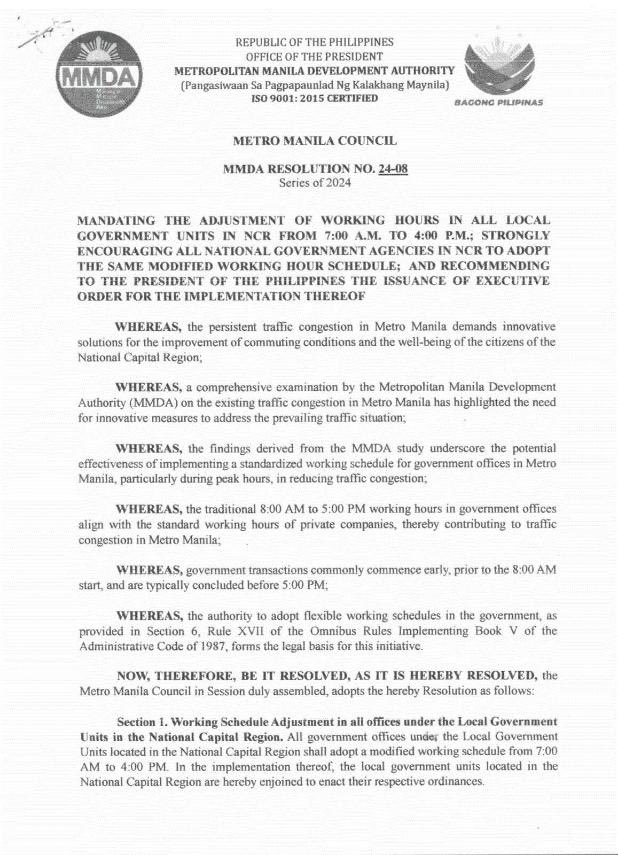
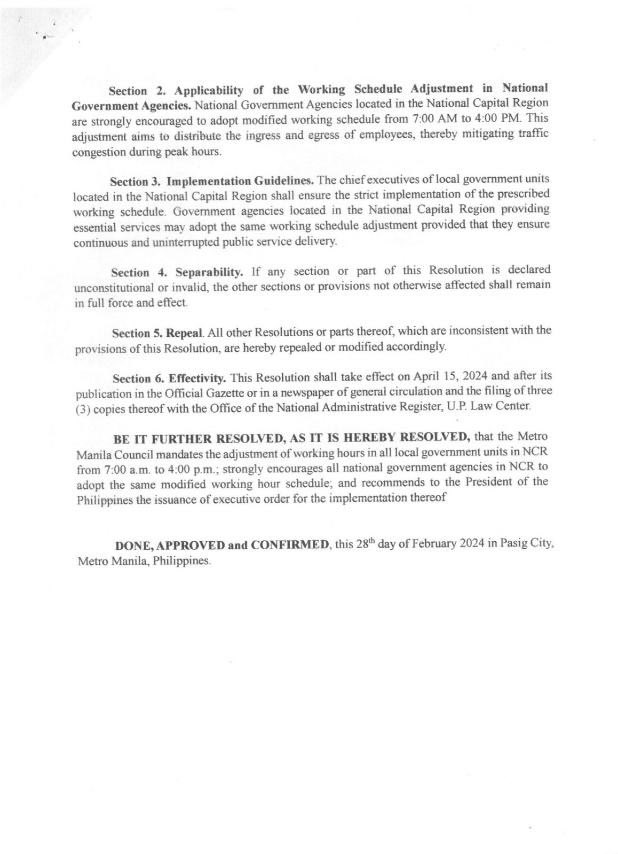
Attention everyone! The Metro Manila Council (MMC) just approved a resolution setting a new adjustment to the working hours of local government units (LGUs) within the National Capital Region (NCR).
It may look like good news to some employees, as it means earlier clock-out time from work. Scrapping the existing 8AM to 5PM working hours in the metro, the MMC is set on implementing a 7AM to 4PM working hour scheme starting Monday, April 15, 2024.
Why was Metro Manila's official working hours adjusted?
According to the resolution released by the Metropolitan Manila Development Authority (MMDA), Metro Manila's infamous traffic congestion is the main reason for the adjusted working hours.
"The persistent traffic congestion in Metro Manila demands innovative solutions for the improvement of commuting conditions and the well-being of the citizens of the NCR," the resolution read.
It furthered, "The findings derived from the MMDA study underscore the potential effectiveness of implementing a standardized working schedule for government offices in Metro Manila, particularly during peak hours, in reducing traffic congestion."
All local government units are expected to strictly follow the new working hours. "All government offices under the Local Government Units located in the National Capital Region shall adopt a modified working schedule from 7 AM to 4 PM," the MMDA resolution signed last February 28, 2024, stated.
Netizens react to the adjusted working hours for LGUs
Netizens immediately expressed their thoughts on the newly reported resolution by the government. Some questioned the move and argued that operating hours for trains and other modes of transportation in the metro should also be adjusted.
"Improvement sa public transport ang kailangang gawin para mabawasan ang mga [private] cars sa kalsada," one netizen commented.
Another suggested that a 4-day work week might actually be the solution to all the traffic problems. "Ang reality ay may daily exodus in and out of Metro Manila. Dapat gawing efficient ang public mobility infrastructure," they wrote.