If you receive a text reminding you about an unclaimed parcel from the Philippine Post Office or PHLPost, it's probably a phishing scam.
PHLPost is continuously reminding Filipino citizens to be wary and vigilant towards text scams spreading. There had been a surge of messages from unknown and foreign numbers indicating that a package for the receiver's number has arrived at the PHLpost warehouse and confirmation should be completed by clicking a link.
In a statement, PHLpost has clarified that they have not in any way authorized the messages to be sent to numerous individuals, hence all are fake. The Philippine national courier has also noted that the messages are what they call "phishing scams" where hackers can access your private information online once you've clicked on the link they sent.
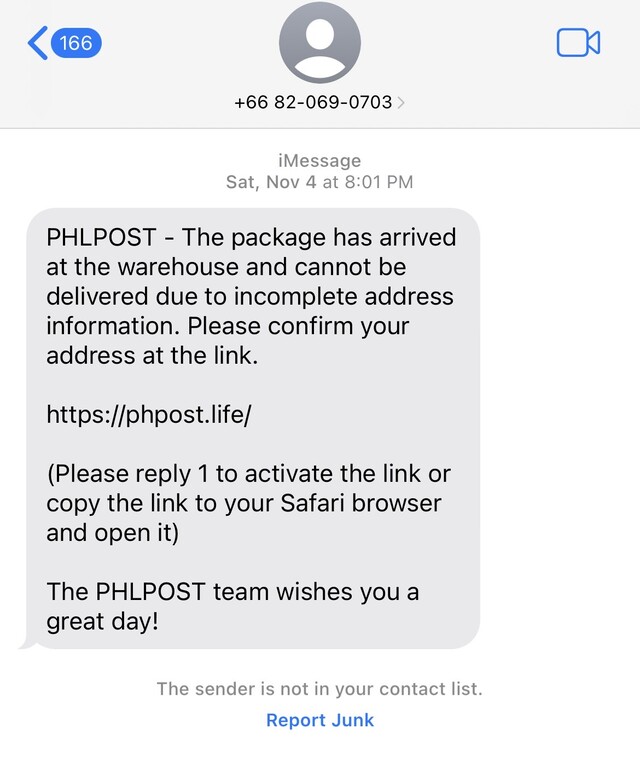
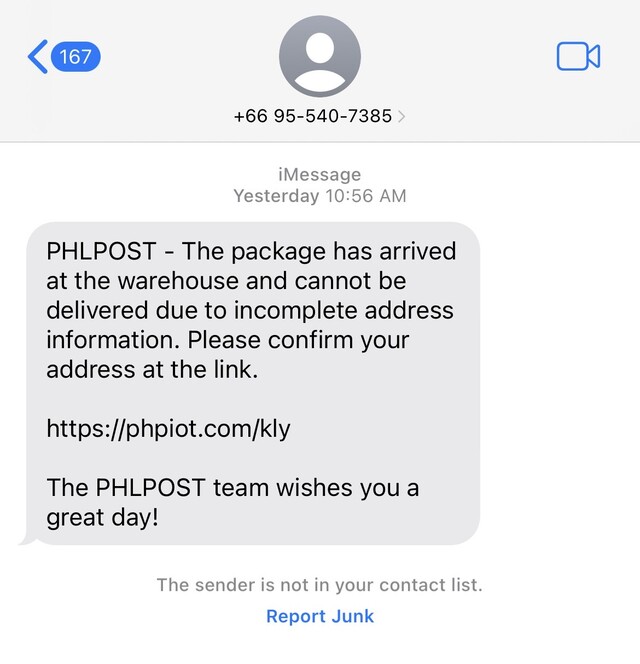
What you should do when you receive a message asking you to click on an unfamiliar link:
- DO NOT click the link.
- DO NOT reply. DO NOT engage with the sender of the message.
- Immediately block the number and report it as spam. (Take a screenshot if you're filing a complaint!)
- Delete the messages.
- You may report to NTC.gov.ph through a complaint or call the hotline at 1682.
Text scams in the Philippines
In 2022, the Philippine government addressed the alarming rate of text scams proliferating in the country. The text messages range from fake job offers, to fake bank transactions that would ask for a one-time PIN code that will access vital financial information from users, and also fake delivery transactions as well. The Cybercrime Investigation and Coordinating Center (CICC) once reported that millions of dollars from Filipino victims were lost due to text scams.
With this, the SIM Card Registration Act or Republic Act 11934 was signed into law by President Ferdinand Marcos Jr. in a bid to decrease the alarming status of text scams. Under the law, mobile users are required to register their SIM cards using their legal and personal identification.
Some telecommunication companies have also taken action against digital fraud. Globe Telecom had implemented its "anti-spam blocking" which was reported to have blocked 2.2 billion scam messages during the first semester of 2023. SMART Communications reportedly blocked 23 million scam messages in just one week in June 2022.
As of May 2023, the Department of Information and Communications Technology (DICT) disclosed that nearly 96 percent of SIM cards sold in the country have been registered. However, scammers still found a way to conduct their modus operandi. Recently, they have conquered the realm of social media messaging apps like WhatsApp and even iMessage.
In September 2023, Globe Telecom Chief Sustainability and Corporate Communications Officer Yoly Crisanto elaborated on the shift from text scams to online fraud nowadays. "Just as we learn how to optimize these new technologies, fraudsters also do the same and come up with ingenious ways to corrupt the best technologies for criminal ends. We, therefore, appeal to mobile users to also take personal responsibility in protecting themselves,” Crisanto stated in an interview.
If you receive spam text messages or even calls, you should immediately block the number or lodge a complaint via the National Telecommunications Commission's official website, NTC.gov.ph, or call its hotline at 1682.
Your complaint must include your complete name, address, email address, contact number, government-issued ID, and a screenshot of the text or call together with the mobile number used by the sender.
Stay safe, everyone!