It’s 3pm on a Sunday in the summer of 2015. I’ve taken a break from politely disagreeing with my boyfriend (who either hasn’t noticed that my opinion differs from his, or doesn’t care), and I’m sitting in a cinema. Alone. The film projected onto the screen before me is a horror, the audience mostly teens and couples, the atmosphere one of excited anticipation. And then there’s me, eyes fixed on my lap, tears streaming silently over my face as I finally, finally, finally allow myself the chance to cry like nobody’s watching. Because, I suppose, nobody is.
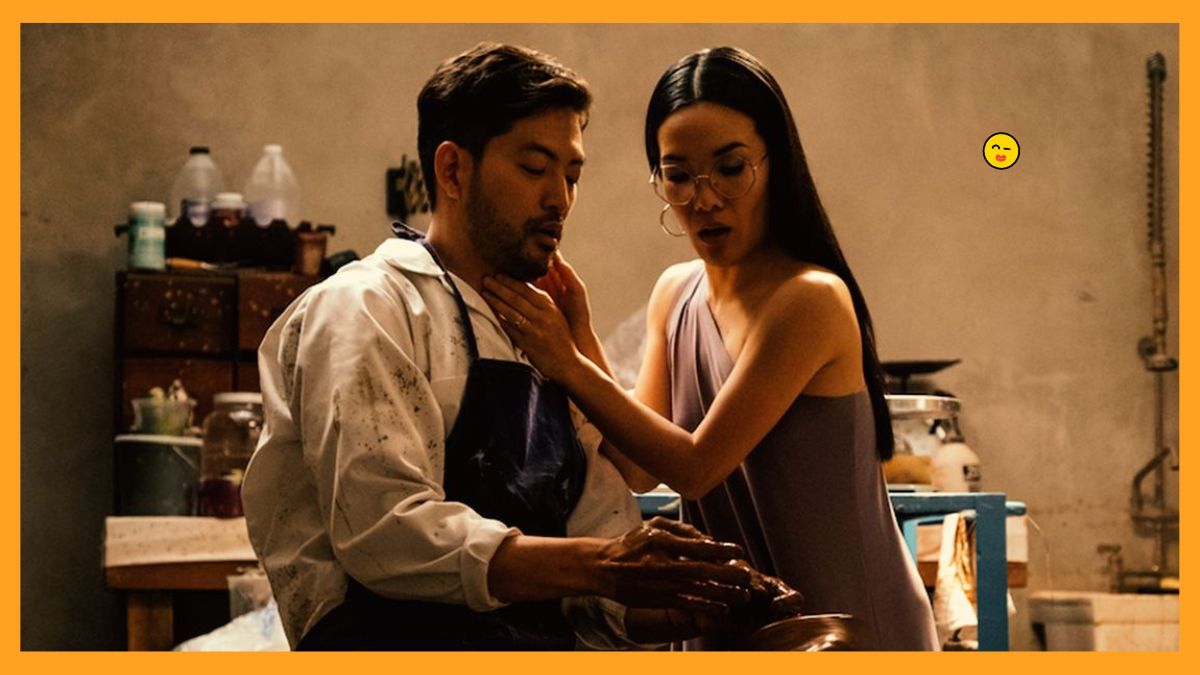
Speed-forward to 2023, and I’m still reeling from my feverh weekend of bingeing Netflix’s Beef. Created by Silicon Valley’s Lee Sung Jin, the ridiculously watchable 10-episode series follows two strangers: Danny Cho (Steven Yeun) and Amy Lau (Ali Wong). He’s a failing contractor who just can’t seem to catch a break; she’s a self-made entrepreneur with the sort of picture-perfect life that we’ve seen play out a thousand times on Instagram. She’s always impeccably dressed, wears the sort of cool vintage specs that’ll have you scouring Vinted for your very own pair, and owns a palatial home decorated in omnipresent beige. And let’s not forget her hot, arty, and fluent-in-therapy-speak husband, too.
In short, Danny and Amy hail from polar-opposite worlds which soon collide, almost literally, during one unforgettable road rage incident. As both become increasingly hellbent on revenge, they find themselves embarking upon an all-consuming feud that threatens to upend their lives forever.
On paper Beef sounds like it has zero to teach us about love and long-term relationships. But as someone who instantly felt an affinity with Amy and her increasingly desperate attempts to hide all of the messiest parts of herself from her partner, I’m here to tell you otherwise. This is a woman who outsources her rage. Who patiently pastes a smile on her face at home, no matter what. Who rants, raves, screams and ugly cries just as soon as she is granted the anonymity that comes from being among strangers. Who is, to be entirely honest, the exact sort of person who might, say, take herself to the cinema alone so she can cry in peace when she’s sick to death of playing the perfect partner.
Not to get all Taylor Swift about it, but it’s me, hi. Amy’s problem was once my problem: it’s me.
Once upon a time, I used to be scared to argue with whoever I was dating – no matter how long we’d been together. Sometimes I’d quietly murmur my dissent, but it was always bookended with the romantic equivalent of a “no worries if not!” sign off. There were always, though, so many worries if not. And these worries used to build up over time, like water in a blocked sink, until they’d have to spill out somewhere.
If I wasn’t crying at the movies, I’d be walking around the city for hours and dreaming about the argument I wished I’d had IRL. I’d be singing Alanis Morisette songs in the shower at increasingly antisocial volumes. I’d be waiting for the nights I was home alone and furiously talking to myself out loud – not about my ex’s flaws, but my own. I’d berate myself for being stupid and weak. And then I’d berate myself for talking to myself. Obviously.
While my coping mechanisms might be considered unique, my issues were not: plenty of us perceive an arguing couple as something incredibly negative. And, in this era of social media perfection, is it any wonder that so many of us prefer to bury the nasty bits of ourselves away – even from the people we claim to love most?
“Social media presents us with an illusion of perfection, and the more we buy into this facade, the wider the gap becomes between our 'self-perception' and reality,” explains psychologist Dr. Kalanit Ben-Ari. “Consequently, we may start to question our own circumstances, self-image, desires, vulnerability, and confidence to fully participate in our lives.”
After one particularly nasty breakup (one which I should have seen coming a thousand miles off but didn’t because I got so good at pretending everything was fine), I decided I had to do something about my inability to share my authentic self with the people I was dating. I took myself to therapy, spent months letting myself get vulnerable, and promised never again to let myself fall in love with someone who I wasn’t comfortable getting emotionally naked with.
I learned that my “no worries if not!” approach to life and love was a defence mechanism forged in response to feelings of disconnection and hurt that I adopted as a child. As Dr Ben-Ari puts it, “our defensive reactions to pain are learned early in life, and what may have served us well during childhood could hinder the kind of relationship we desire with our partner as adults.”
Beef’s Amy experiences a similar revelation about herself and her neatly-compartmentalised rage – although hers is fuelled by violence, berries, and an impassioned blood feud. In the process, she teaches us a vital lesson about the importance of sharing our inner thoughts, hurts, feelings and desires with our partners.
Dr. Ben-Ari explains: “Every relationship experiences ups and downs, and healthy long-term relationships will inevitably encounter disagreements. It’s not the differences themselves that are problematic, but rather how we react to them and manage them. If we view differences as a threat, something we cannot tolerate, it can trigger anxiety and defensive reactions. However, if we see differences as an opportunity to grow, both as a couple and as individuals, we may approach them with wonder and curiosity.”
She continues: “When we approach conflicts with our partners with love and care, maintaining a safe and respectful conversation without blaming or shaming, we create an environment for healing and growth. By taking care of our connection and treating our partners with respect, we can learn from these experiences and strengthen our relationship.”
As for me, I finally met someone with whom I can be my most authentic self. Who I am more than happy to argue with, if and when the need arises. Who I feel comfortable enough to messy cry at without the darkness of the cinema to shroud my red and blotchy face. Someone who loves me, metaphorical warts and all. No matter how much beef we have.
Dr. Ben-Ari’s tips on how to share your ugly side with your partner
Develop a deeper understanding of yourself
“This means delving beyond the surface and getting closer to your true essence, beyond the limitations of your ego. If you’ve been holding onto something for some time and haven't shared it with your partner, take a moment to reflect on the reasons behind that. What fears underlie your reluctance to share? And where did you learn that certain thoughts or feelings can't be shared with someone close to you?”
Engage in journaling
“Write down your thoughts, edit them, and continue refining until you gain clarity on what lies at the heart of your issues.”
Consider therapy
“By taking the time to reflect on our feelings and experiences, we can navigate challenging situations with greater clarity and self-awareness, ultimately leading to healthier relationships.”
Avoid blaming and shaming
“You can create a safe and productive conversation by using ‘I’ statements. This means speaking about your own thoughts, feelings, and desires rather than criticising your partner. You can start your sentences with phrases such as ‘I feel…’, ‘I think…’, ‘I wish…’, or ‘What I want more of in our relationship is…’
“It’s important to avoid statements that blame or shame your partner, as they will likely trigger a defensive reaction and create more disconnection. By speaking openly and honestly about your own experiences and desires, you can foster a deeper level of understanding and connection.”
Finally, be a safe space for your partner
“By creating a safe and non-judgmental space for your partner to express themselves, you can foster a deeper level of trust and understanding in your relationship.
“Taking the time to listen, validate and empathise with your partner’s feelings can help you both navigate difficult emotions and work towards a stronger, more fulfilling partnership.”
Dr Ben-Ari adds: “While none of these approaches are necessarily easy, being easy should not be our goal when it comes to personal growth and healing. It's important to remember that growth occurs when we step outside our comfort zones.”
This story originally appeared on Cosmopolitan.com.
* Minor edits have been made by the Cosmo.ph editors.