Sex toys have come a long way. From the terrifying-looking rabbits of the early 2000s, there’s now a whole host of silent, suction, dual motor, high-tech options for those wanting to keep things a little more discreet.
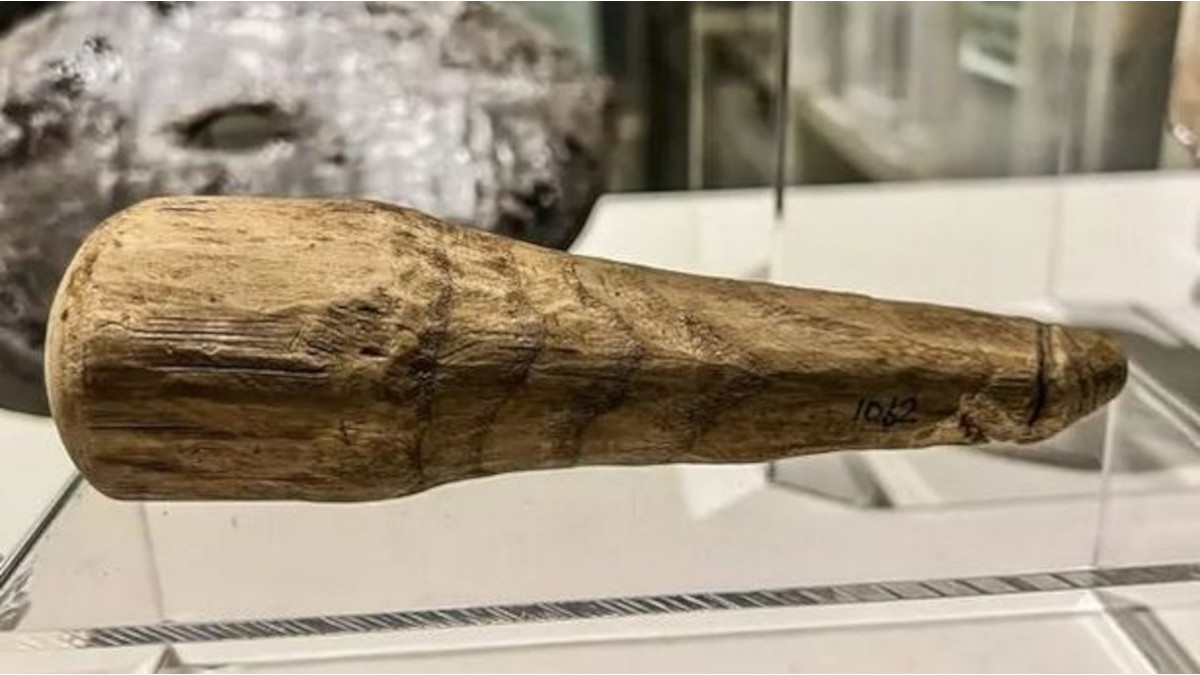
But if you happened to be living in Northumbria during Roman rule, your choices were a little more rustic. Yep, archaeologists believe they may have just unearthed the first "lifesize"dildo.
Carved from wood and measuring an intimidating 16 inches (if this is considered "lifesize," I have a lot more questions about the Romans, although the penis part itself is a more manageable 6.5 inches), it was discovered in a ditch in the northern most outskirts of Roman territory in the UK.
Researchers say the tool may have had some size issues over the years—as archaeological wood tends to shrink and warp—and may have originally been bigger at one point. Ouch?
It was first discovered and cataloged at the Roman fort of Vindolanda, close to Hadrian's Wall in northern Britain, in 1992, where it was described as a "darning tool." However, it has recently been reclassified and a lively debate has sprung up about its intended use.
"Part of me thinks it’s kind of self-evident that it is a penis," said Newcastle University archaeology senior lecturer Rob Collins. "I don't know who entered it into the catalog. Maybe it was somebody uncomfortable with it or didn’t think the Romans would do such silly things."
However, dick motifs were all the rage in ancient Rome—often appearing in mosaics, on pottery, or even as necklaces.
While Collins said he "hoped" the object was used for sexual pleasure, he also explained that it could have been used for any number of reasons, including as a pestle or for "warding off evil"—which is basically the same as masturbating instead of texting your ex.
"Often in archaeology when we find an object we can tell what it was used for or deduce what it was used for," said Collins "That wasn't the case for this object. We have had to cast our nets wide in thinking what would a six-and-a-half-inch wooden carving of a phallus be used for."
The researchers noted that the object had smoother ends, suggesting that it has been used for something over a period of time.
You can read the team's other theories and discussion points in their write-up called "Touch wood."
***
This article originally appeared on Cosmopolitan.com/uk. Minor edits have been made by the Cosmo.ph editors.