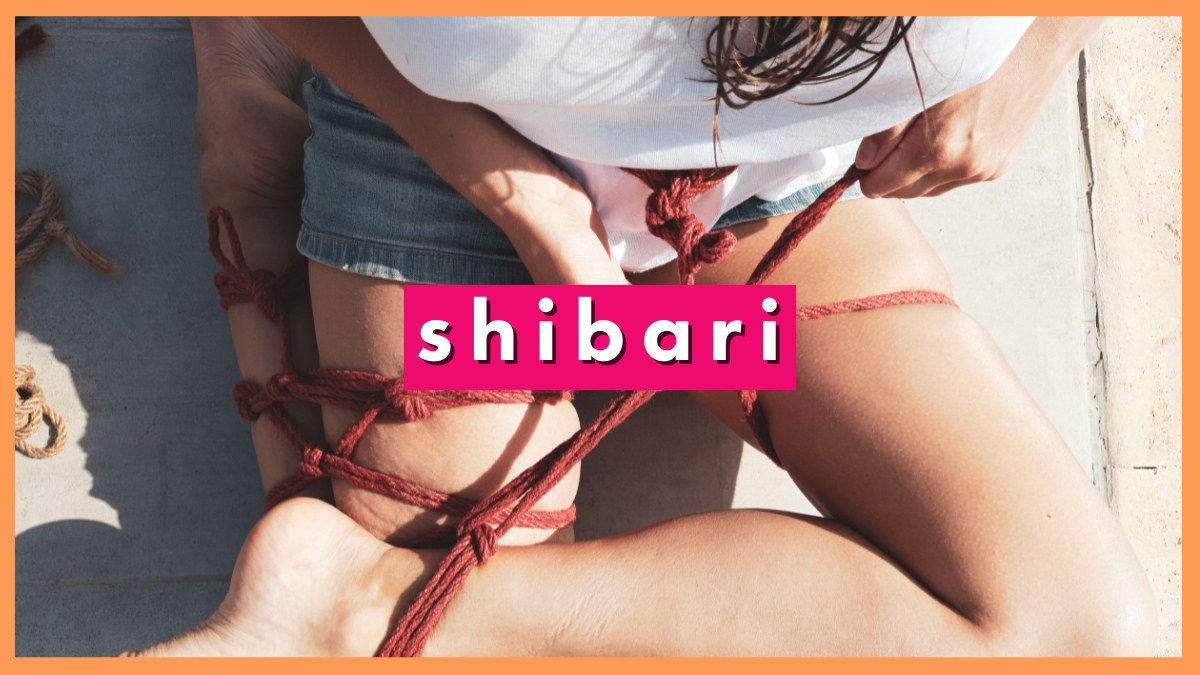
Whether you're kink-curious or consider yourself a bona fide kinxpert (that's "kink expert," in case that wasn't clear), one thing about sex on the kinky side is that there is always more to learn. Hence why we're on a never-ending journey to provide you with the kind of top-notch kink-ed your high school health class definitely didn't. Which brings us to today's lesson. Hi, let's talk about a form of BDSM that is definitely not for the under-educated: shibari.
Shibari, or kinbaku, is the art of Japanese rope tying. It falls under the "B" in BDSM—bondage. Kinbaku actually means "tight binding" and shibari means "tying."
"Shibari, or Japanese rope bondage, is a style of kink or BDSM play that comes from Japan and is firmly rooted in the adult entertainment and image-making industry of the early 20th century," says sex educator Midori, author of Seductive Art of Japanese Bondage and founder of Rope Dojo and ForteFemme Women’s Intensive. "It originated as an underground form of culturally specific erotic fantasy play that centers on the erotic nostalgia of bygone eras."
It's a true art form that takes great skill and practice—we're talking tying people into human chandeliers and tying countless, intricate knots for hours on end. Mastering Shibari can take years and years of dedication. This advanced kink practice isn't for everyone, but for the (deeply patient) shibari lover, it is everything.
Sex expert Julieta Chiara, a certified kinbaku instructor, says shibari's appeal is layered and can be almost spiritual: "It's the erotic nature, blend of pleasure and pain or restraint, and the immense connection and trust that is built between the rigger (the one tying) and the rope bottom (the one getting tied)."
When practiced safely and effectively, Shibari can be a fantastic way to explore a whole new kind of erotic experience. Keep reading to find out all about shibari’s exquisite history, how to learn more about the practice, and even some sexy positions that beginners can try (plus a cute tip on how to work shibari into a date night out).
What Is Shibari?
Also known as Japanese rope bondage or "kinbaku," shibari is a contemporary form of rope bondage that originated in Japan, says Midori.
Simply put, shibari is the act of tying a person up for aesthetic purposes—maybe in a pretty or intricate pattern, typically by using some form of rope. And while shibari is most often used as a means for sexual pleasure, it's historically been used as a form of meditation, relaxation, and a trust-building practice between two partners, says sexpert Gabi Levi.
You may remember that this sex practice had a little cameo on Netflix's series Too Hot to Handle when the contestants tied each other up, but trust, it goes so much deeper than what the show depicted.
ALSO READ: Is Reverse Cowgirl Really The World’s Most Dangerous Sex Position?
How Is It Different From Regular Bondage?
Bondage, in general, can use any kind of restriction—handcuffs, tape, ties, scarves, etc.—but shibari refers exclusively to the practice of using rope, or rope-like material, to bind yourself or a partner, says sex educator Rev. Rucifer. "Shibari is often not just about the sensation of restriction but also about the intimate connection between the rigger and receiver."
And while rope bondage is used commonly in BDSM practices anyway, "shibari stands out for its striking visual aesthetic and emphasis on the emotional and psychological connection between the participants," says rope artist and instructor Jonathan Ryan of Seattle Shibari.

The History of Shibari
The origins of shibari are steeped in myth and legend. Chiara says its history is lengthy and often unclear. "The wives' tail is that it stemmed from the Edo period, being used as a form of imprisonment and restraint," she explains. "There are also martial arts like Hoj?jutsu, which also uses ropes in a restrictive way that mirrors much of kinbaku's core elements. Along that road, with its many iterations, we eroticized it—as humans usually do with any part of human behavior and history."
The modern concept of shibari as we know it today—the art form of tying and being tied for pleasure—seems to have emerged from a kind of nostalgia that is culturally specific to Japan. It is a callback to the storybook-like beauty and mystery of ancient Japan. Much of modern kinbaku is based in folklore and fantasy.
"In the same way that kinky people of European heritage have incorporated legends and tools of medieval European incarceration, such as Saint Andrew's Cross and shackles, into their sexual shadow play, so have Japanese folks found carnal inspiration from historical fables of their captured maidens and incarcerated heroes," Midori adds. While in Europe, non-consensual incarceration often used metal and leather, in Japan it was usually rope. "Every culture finds its muse of sexual transgression in dark moments of its history," she says.
Midori also stresses that sex work and adult entertainment is an important part of shibari's history, which, she notes, can sometimes get overlooked in the culturally appropriative version of shibari that has become common in the western world today. "The thing I caution against is when imagined history paints shibari as something sacred, honorable, and secret and ignores its gloriously, deliciously messy history."
For more on this gloriously messy history, check out Midori’s essay, “The History & Myths of Japanese Bondage: Censorship, Sex Work, and Othering in the World of Shibari.”
Understanding the Different Roles in Shibari
There are two main roles in shibari: The rigger and the model.
The Japanese word for the rigger is "nawashi," or "rope artist." The model is often referred to as the "bunny," "rope bunny," or "rope bottom." These roles often function in the same way as a Dominant and submissive in BDSM. The rigger is the Dom and the bunny is the sub.
…But not always. Chiara says the ways the rigger and bunny relate to one another varies depending on what each person wants out of the scene. "In my tying, I like to make our session a collaboration, as I’m not dominant in BDSM spaces," she explains. "I tie designs and prints on a model's body and take them through a sensory experience. This can include pain, pleasure, sensuality, or somatic release."
The bunny may not be the one tying the knots, but it’s still a big job. "Shibari pushes you to surrender," Chiara explains. "Building trust, connection, and safety is a huge part from both sides, not just the rigger." Not to mention, you have to stay perfectly still while your rigger ties you into intricate positions.
Some folks practice in a more versatile way, shifting the roles in ways that work for them. "There are instances where people like me explore self-tying (tying oneself, also known as self-suspension) or engage in more fluid roles where both partners share tying and being tied responsibilities interchangeably," Chiara says.
In order to have a healthy, pleasurable, and safe kinbaku experience, everyone needs to thoroughly communicate and negotiate. "Communication is vital for the model to express their comfort levels, physical limitations, and any concerns or preferences they might have regarding the tying process."
Crucially, Chiara says it's highly advised that you are fully trained as a rigger before practicing shibari—this stuff is actually dangerous. This isn’t your old "throw on some handcuffs and mess around" kind of kink. It's truly a cultivated skillset.
What Are Some Misconceptions About Shibari?
The biggest misconception about shibari is that people tend to paint it as a purely spiritual art form, basically ignoring the horny side that has roots in adult entertainment. "The myth that it's precious and sacred and honorable—that’s actually sex negativity dressed in a polite bow," says Midori. "It can be spiritual, it can be insightful, it can be romantically bonding, it can be straight up hot sex, or no sex," she says.
ALSO READ: This Sex Position Is Good For Super Deep Penetration (Y'Know, If You're Into That)
***
This article originally appeared on Cosmopolitan.com. Minor edits have been made by the Cosmo.ph editors.